Natural diamonds shine in polki, mixed-shape designs at Luxury show
Natural diamonds at Luxury leaned into polki, mixed shapes, and 1970s references, signaling a shift toward jewelry with personality and provenance.
Natural diamonds got the loudest response at Luxury in Las Vegas when designers abandoned safe symmetry for polki clusters, marquise silhouettes, and vintage references that feel collected rather than manufactured. In the invitation-only setting at The Venetian, those choices read less like decoration and more like a market signal: buyers are looking for diamond jewelry that carries a story, a point of view, and enough irregularity to feel personal.
Why Luxury became the clearest read on the market
Luxury ran May 27-June 1, 2026, at The Venetian in Las Vegas, with the show spread across the Venetian ballrooms and the NouvelleBox ballroom. Its setup is built for serious buying, with concierge services, lounges, exclusive events, complimentary meals, and elevated dining, so pieces have to communicate fast and hold their own in front of retail decision-makers.
That matters because the show is not simply a beauty parade. It is designed for new business and strong retail relationships, which is why the strongest natural-diamond pieces on the floor were the ones that could be explained in a sentence: polki in platinum, mixed-shape settings, marquise forms, and vintage-inspired design cues. In other words, the market is rewarding jewelry that looks distinctive from across the room and gets even better when you lean in.
Polki moved out of its comfort zone
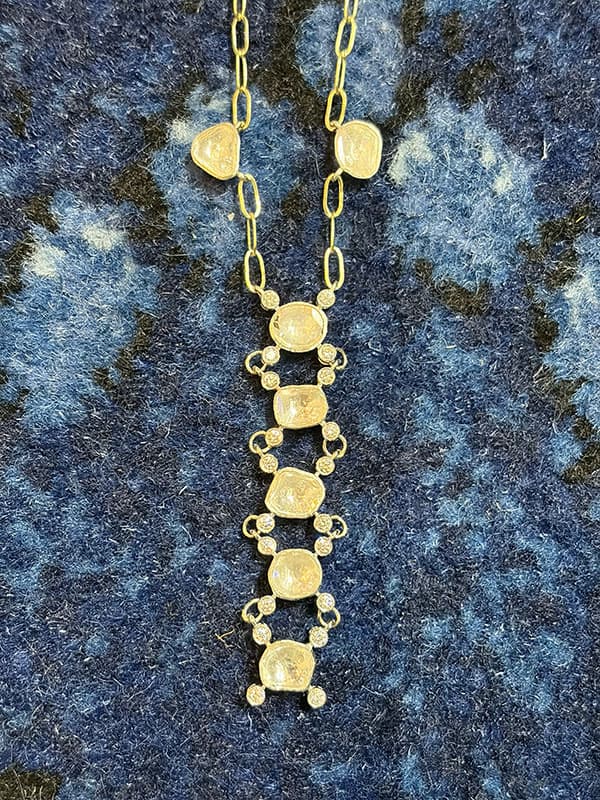
At Willow Diamonds, founder and owner Jacquie Earle brought polki diamonds into a setting that immediately changed their mood: platinum. Polki is traditionally set in 22k yellow gold, so the cooler metal made the flat, uncut stones feel sharper and more modern without stripping away their rough-hewn identity. The stones were shown in small clusters that emphasized their irregular forms, which is exactly what gives polki its appeal in the first place.
Earle’s comment that “mixed shapes have gotten very popular” gets to the heart of the shift. Buyers are no longer chasing a perfectly matched, conventionally polished diamond look alone; they want movement, contrast, and a little tension inside the piece. Willow leaned into that with new hoop earrings accented by tiny diamond danglers and a fishnet chain with laser-cut diamonds interspersed between gold links, details that make the line feel engineered for texture rather than uniform sparkle.

The platinum setting is especially interesting here because it reframes polki for a customer who may love heritage craft but does not want it presented as costume. Rather than flattening the material’s origin story, the metal choice sharpens it. That is a useful reminder that tradition does not have to stay visually fixed to remain authentic.
Wyld Box made vintage references feel current
Wyld Box Jewelry took a different route to the same destination, using the past as a design engine. Designer Rosanna Fiedler unveiled the Pietre collection, a name that means “stones” in Italian, and traced its inspiration to a 1970s vintage Saint Laurent necklace she found on Poshmark. That kind of resale-market sourcing is telling: the new luxury mood is increasingly being shaped by pieces that have already lived a life.
Pietre centers marquise-shape diamonds paired with high-polish 18k yellow gold, including a standout design with two stacked marquise silhouettes, one set with a sizable natural diamond and the other rendered in plain gold. The result is spare but not minimal, a look that relies on proportion and contrast rather than excess. Fiedler said clients were not resisting prices and kept saying they wanted something unique, which helps explain why the design landed: it offers individuality without relying on oversized carat weight as the only cue to value.
Wyld Box also introduced Eclipse, a collection inspired by a 1970s unsigned Mexican silver open collar with a wrap motif and pavé diamonds. That reference matters because it shows how jewelry now borrows from multiple histories at once, from fashion archives to anonymous vintage objects, then translates them into something crisp enough for a contemporary luxury case. Earlier in the week, Wyld Box had already been flagged as one of the design-driven newcomers because of its 18k gold styles and spectacular natural diamonds, and Luxury made clear why that formula is resonating.
Why provenance and identification feel more central now
The trend toward storied-looking jewelry is not happening in a vacuum. JCK’s broader Las Vegas Jewelry Week coverage showed natural diamonds, especially elongated and fancy shapes, leading the conversation across the city’s major shows. When buyers are already primed for less standard silhouettes, pieces with visible references to the past and unusual stone arrangements have a stronger chance of standing out.
That is also where provenance enters the conversation. GIA’s presence at JCK underscored how seriously the industry is taking origin and identification, with natural diamond fluorescence demonstrations and, for the first time at JCK, colored stone identification and origin services with reports printed on-site. For shoppers who care about where a gem comes from, that kind of service is not background noise. It reinforces the idea that the story attached to a stone should be verifiable, not just evocative.
This is where natural diamonds have an edge if brands handle them honestly. A stone can be presented as romantic, archival, or unusual, but if the material claim is vague, the story thins out fast. GIA’s on-site work points in the opposite direction, toward a market where buyers want both the emotional charge of a beautifully made jewel and the practical assurance that the stone’s identity can be checked.
What the show floor said about buyer taste
Taken together, the best pieces at Luxury pointed to a narrower, clearer idea of desirability. Buyers seem less interested in diamonds that look interchangeable and more interested in pieces with recognizable shapes, tactile settings, and references that feel discovered rather than manufactured. Polki in platinum, stacked marquise forms, and 1970s-inspired collars all serve that appetite.
The deeper change is that “meaningful” jewelry is becoming visual as much as symbolic. The meaning now comes from the evidence in the piece itself, the rough edge of polki, the asymmetry of mixed shapes, the archive reference that can be named, the metal that makes the stone look newly considered. At Luxury, natural diamonds did not win by looking more polished. They won by looking more specific.
This article was produced by Prism’s automated news system from verified source data, official records, and press releases, then run through automated quality and moderation checks before publishing. The system is built and supervised by the people who set the standards it runs under. Read our full AI policy.
Did this article answer your question?