New book spotlights 33 Ukrainian jewelry designers amid wartime upheaval
A new book turns 33 Ukrainian jewelry makers into a wartime archive, showing how craft, identity and survival now share the same setting.
1. A 33-voice archive
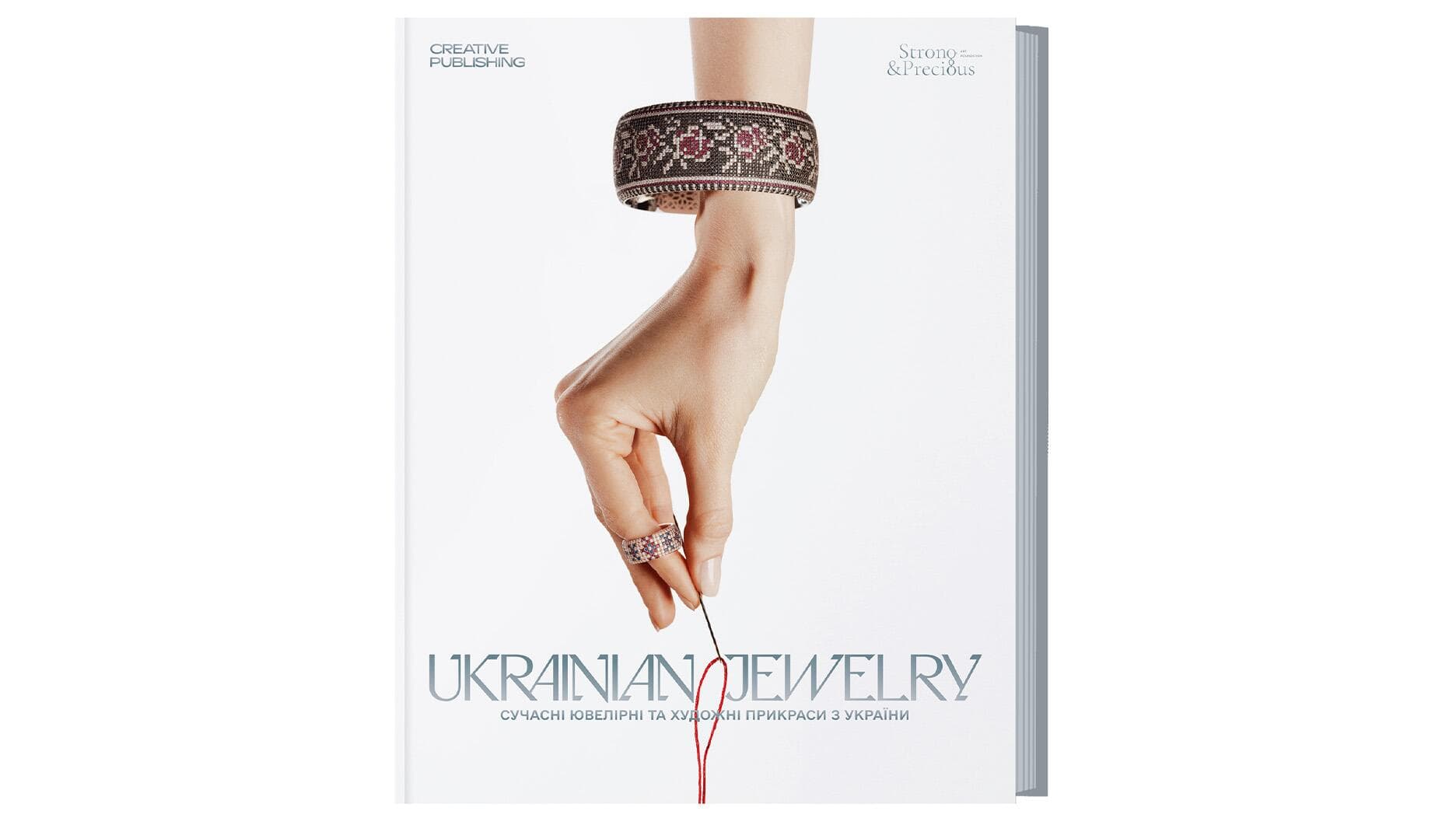
“Ukrainian Jewelry | Contemporary Jewelry and Art Jewelry from Ukraine” treats Ukrainian jewelry as a living cultural record, not just a market category. By bringing together 33 jewelers, designers, and artists, it gives collectors a way to read beauty through the pressures that shaped it.
2. Lucia Bondar’s editorial frame
Lucia Bondar authored the 224-page volume with a clear curatorial instinct: show how the field has broadened while staying rooted in craft. Her framing matters because it pushes the conversation beyond ornament and into identity, memory, and survival.
3. Strong & Precious Art Foundation’s wartime mission
The book carries informational support from the Strong & Precious Art Foundation, which was founded in 2022 by Olga Oleksenko. The foundation was born from wartime reality and is built to champion Ukrainian jewelry artists through exhibitions, publications, and global platforms.
4. A bilingual object built for reach
The book is published in Ukrainian and English, which makes it more than a local document. That bilingual format turns the volume into an exportable record of a scene that wants to be seen, understood, and collected beyond Ukraine.
5. Precious stones, metals, and alloys at the center
The largest section focuses on designers and studios working with precious stones, metals, and alloys, which tells you where the industry’s strongest commercial and technical backbone still sits. For collectors, that is the part of the book most closely tied to traditional fine-jewelry value.
6. Ceramics expand the vocabulary
The book does not stop at the classic hierarchy of gems and gold. By including ceramics, it signals that Ukrainian jewelry is also speaking in a more sculptural, tactile language, one that values concept as much as carat weight.
7. Experimental materials widen the field
Unconventional materials appear alongside the precious ones, and that breadth is one of the book’s strengths. It shows a scene willing to test form, texture, and meaning without surrendering to decorative sameness.
8. Established brands anchor the story
The mix of established brands and younger studios gives the book a useful range. It suggests a sector that is not starting from zero, but adapting a recognizable jewelry economy to a much harsher national moment.
9. Independent designers keep the scene agile
Independent designers matter here because they often move fastest when values shift. In wartime Ukraine, that flexibility becomes part of the aesthetic itself, allowing the work to absorb change without losing clarity.
10. Studios preserve the discipline of making
Studios are where ideas become objects, and the book treats them as essential rather than secondary. Their presence reinforces the fact that Ukrainian jewelry is not only a brand story, but a craft story.
11. Fashion creators bring jewelry closer to the body
The inclusion of fashion creators widens the definition of jewelry into something worn as part of a full visual language. That is important for collectors because it often signals pieces designed to live with clothing, movement, and daily ritual.
12. Ceramists bring texture into the conversation
Ceramists add a different kind of material intelligence to the book, one that values surface, fragility, and handwork. Their work helps explain why contemporary jewelry can feel both intimate and conceptually sharp.
13. Experimental makers push against category limits
The experimental makers in the volume matter because they refuse the idea that jewelry must always be precious in the conventional sense. Their presence gives the book tension, and that tension is part of what makes the field feel current.
14. Dukachi as a recognizable touchpoint
Dukachi is one of the names that helps readers locate the book in the real market, not just the museum lane. Its inclusion signals that Ukrainian jewelry has brands with enough identity to become reference points for collectors.
15. Guzema and the language of brand recognition
Guzema brings another layer of visibility, showing how Ukrainian jewelry has developed names that can travel. For buyers, that kind of brand recognition matters because it often marks the difference between a one-off object and a collectible signature.
16. Oberig Jewelry on the cover
Oberig Jewelry does more than appear inside the book, it anchors the cover image itself. A photograph by Stepan Lisowski gives the volume a visual center of gravity and places one maker’s work at the front of the conversation.
17. Alona Makukh Jewelry broadens the roster
Alona Makukh Jewelry helps show that the book is not only about a handful of flagship names. It is also about the wider middle of the field, where distinct voices build the reputation of Ukrainian jewelry one object at a time.
18. Jewelry Lab suggests the role of experimentation
Jewelry Lab fits the book’s interest in process as much as product. The name alone suggests a studio culture where testing, iteration, and material curiosity are part of the finished piece.
19. Katrina Jewelry adds another commercial voice
Katrina Jewelry rounds out the group of featured names that make the book feel like a survey of a working industry, not a mood board. That balance between artistry and commerce is exactly what many collectors look for now.
20. Anton Boyko’s path makes the war impossible to ignore
Anton Boyko left jewelry making to serve in the Armed Forces of Ukraine, and that detail gives the book its starkest reminder of what the industry has endured. His story shows that in Ukraine, jewelry has unfolded alongside service, loss, and interruption.
21. The invasion reshaped the field’s timeline
The book situates the sector’s evolution in the wake of Russia’s full-scale invasion on Feb. 24, 2022. That date is not background noise here, it is the dividing line that altered how makers think about relevance, value, and survival.
22. New brands founded after the invasion
Some brands were founded after the invasion, which makes the book read like a record of rebuilding in real time. Those newer names carry the energy of a scene that refused to pause for stability that never came.
23. Value had to be re-argued
Bondar has said the war made some creatives question whether jewelry, especially expensive jewelry, would still be in demand. The answer from Ukrainian consumers was telling: beauty and visual aesthetics still mattered, even under pressure.
24. National identity is becoming more visible
Olga Oleksenko says the book reflects the rapid evolution of the field and the rising expression of national identity. In practice, that means Ukrainian jewelry is no longer just about style, but about making heritage legible through objects.
25. Cultural preservation is part of the brief
The book positions jewelry as a vehicle for cultural preservation, and that is one of its most important claims. It suggests that settings, motifs, and workshop traditions can carry memory as effectively as archives and exhibitions.
26. Museum-level work sits beside commercial work
The Strong & Precious Art Foundation says its mission includes commissioning and presenting museum-level, non-commercial works. That matters because it keeps the book from collapsing art jewelry into mere luxury retail.
27. Global platforms now matter
Oleksenko’s foundation is built to place Ukrainian jewelry on global platforms, and the book acts as a portable part of that effort. For collectors, international visibility often turns a regional scene into a serious field of study.
28. The book’s physical details signal seriousness
At 224 pages, with a hard cover and ISBN 978-617-8417-05-5, the volume is built like an object meant to last. Those details matter because they tell readers this is an archive, not a disposable trend book.
29. Creative Publishing gives the project institutional shape
Creative Publishing frames the volume as a story of talented jewelers, designers, and artists, which is exactly how it should be read. The publisher’s role gives the book the structure of a serious editorial project rather than a simple brand showcase.
30. Stepan Lisowski’s photograph does more than illustrate
The cover image by Stepan Lisowski, featuring Oberig Jewelry’s work, is doing curatorial work of its own. It signals that the book values authorship, not just documentation.
31. The book is a map of a changing art economy
By mixing brands, studios, artists, and experimental makers, the volume maps an ecosystem rather than a trend cycle. That makes it useful to collectors who want objects with provenance and context, not just a good story.
32. The Ukrainian jewelry school is being modernized in public
Oleksenko has said the foundation aims to demonstrate the depth and modernization of the Ukrainian jewelry school. The book gives that idea a visible form, showing that modernization here means craft sharpened by crisis, not diluted by it.
33. This is the kind of jewelry story that will outlast the news cycle
What endures in this book is the sense that Ukrainian jewelry is being documented at the moment it is being remade. For collectors, that combination of technical seriousness, cultural meaning, and wartime urgency is exactly what turns a beautiful object into a lasting one.
This article was produced by Prism’s automated news system from verified source data, official records, and press releases, then run through automated quality and moderation checks before publishing. The system is built and supervised by the people who set the standards it runs under. Read our full AI policy.
Did this article answer your question?