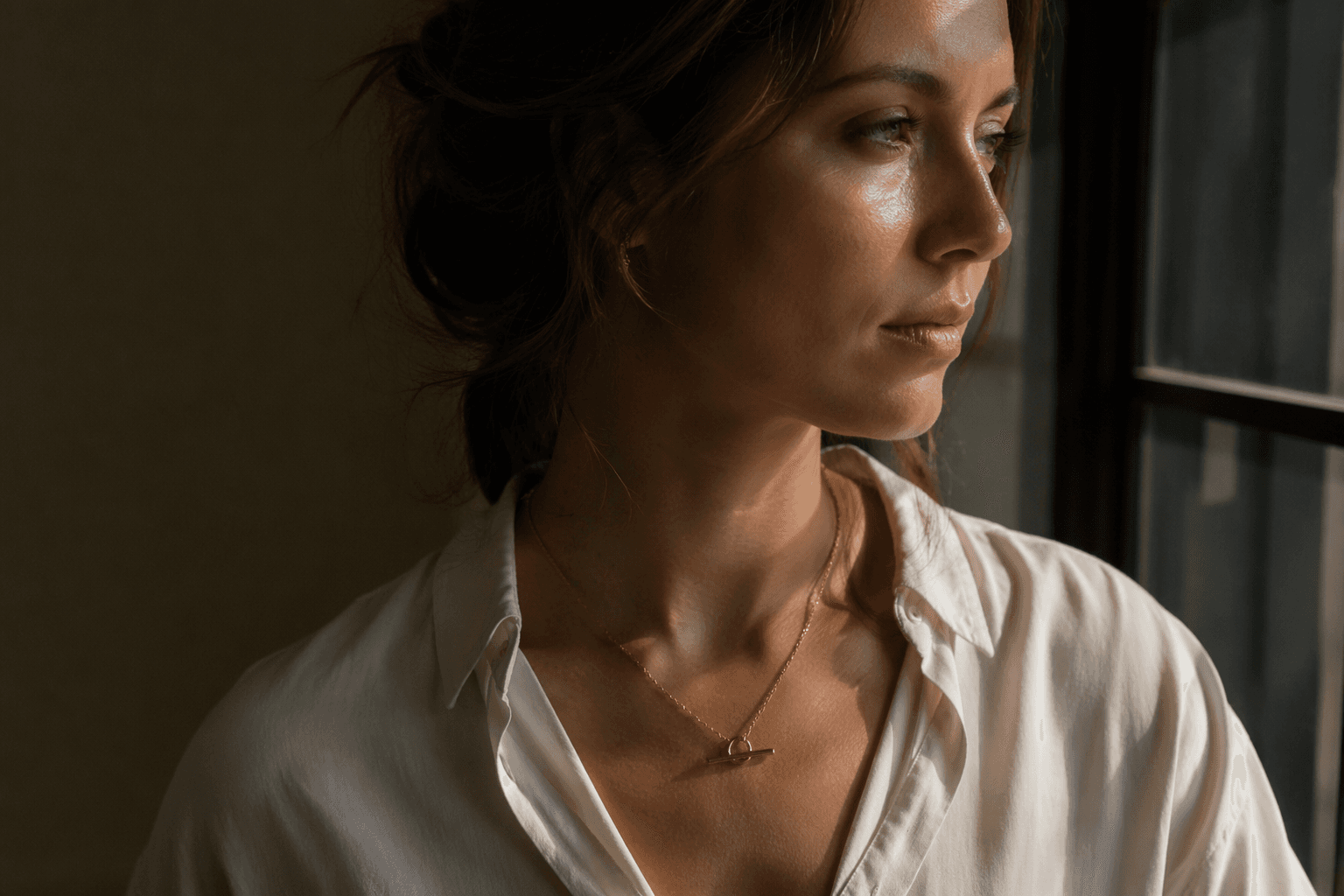
Personal meaning drives fine jewelry demand, from birthstones to hidden details
Birthstones, initials and hidden engravings are winning because they feel chosen, not generic. De Beers found 39% of Gen Z also want ethical credentials.
The spring pieces people actually keep wearing
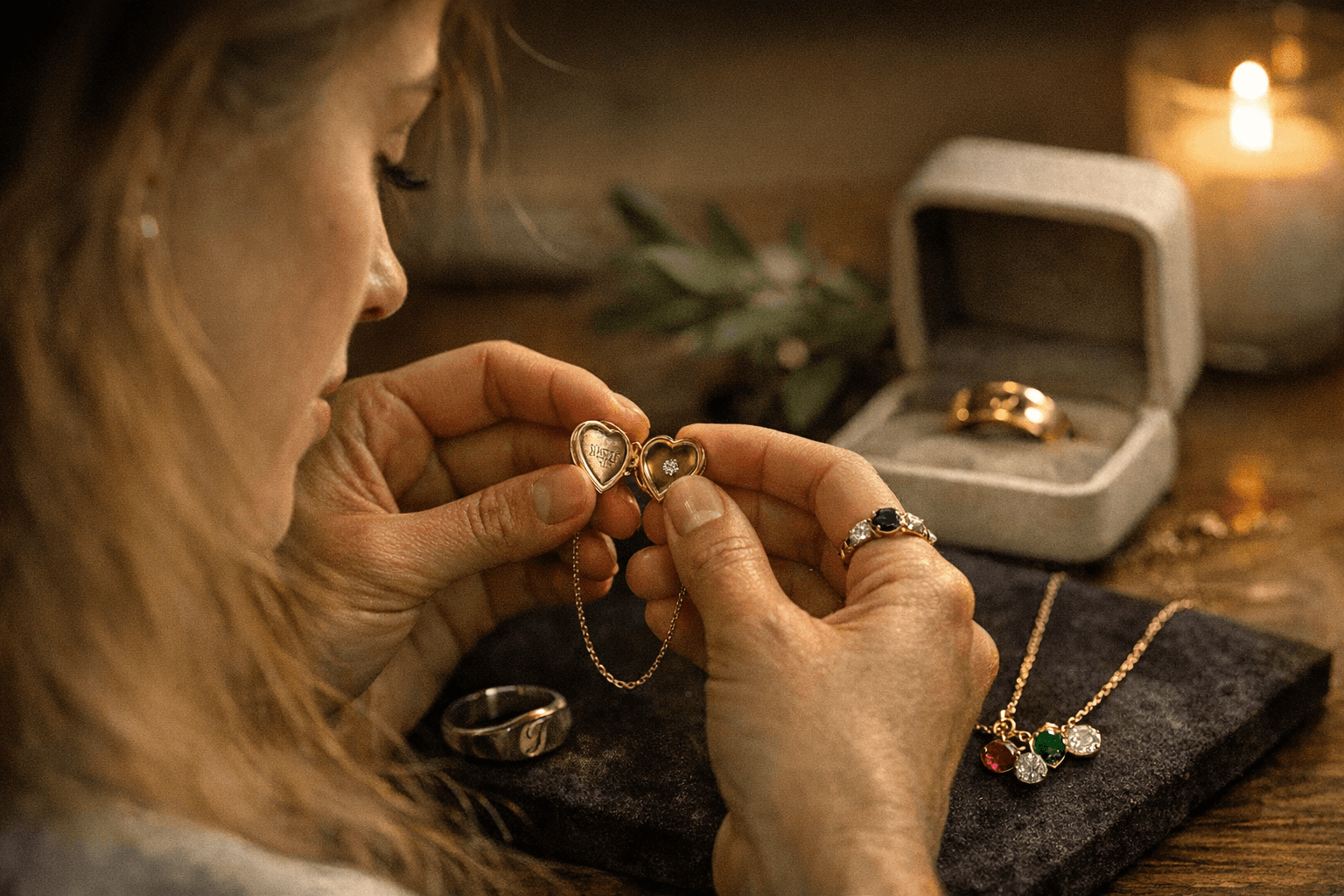
The strongest fine jewelry this spring does not shout. It carries a name behind it, a date, a symbol, or a stone that means something only to the wearer, and that is exactly why birthstones, initials, handwritten-message pendants, and layered charms are rising again. Stuller has put a name to the movement, Storyteller, and the direction is clear: jewelry that feels personal, full of meaning, and easy to wear every day.
That is the key shift. The winning pieces are not oversized keepsakes that live in a box. They are charms and dangles with birthstones, names, dates, symbols, and unusual shapes, designed with modern hinged bails so they can move from one chain to another and sit comfortably in a stack. A single pendant can hold a birthstone and an engraving; a signet can carry a signature, a date, or a message inside the face. The best versions are legible at arm’s length and intimate up close.
Why personal motifs feel fresh again
This trend works because it is old-fashioned in the best possible way. The Victoria and Albert Museum notes that jewelry has long been worn as protection or as a mark of status and rank, which makes today’s emphasis on identity feel less like a gimmick and more like a return to jewelry’s original job: to signify who you are and what matters to you. Signet rings are a perfect example. The International Gem Society describes them as one of the most ancient forms of personalized jewelry, historically used to verify identity and authenticate documents.
Birthstones carry a similar weight. The American Gem Society points out that they have histories of their own and remain popular because of the sentiment they can represent. That is part of why a birthstone pendant, when it is well made, feels more substantial than a trend-driven color story. It is a reference point, not a decoration, and it can anchor a piece that would otherwise feel purely ornamental.
The broader market helps explain why this language is resonating now. In De Beers Group’s 2022 research, 36% of women overall and 39% of Gen Z said they sought information on a brand’s ethical credentials when buying diamond jewelry. The same research says the U.S. accounted for $47 billion in natural diamond jewelry sales in 2021, about 54% of global demand. Another De Beers flash report found that 72% preferred timeless classics, while meaningful and sentimental ranked highly as gift qualities. In other words, shoppers still want permanence, but they want it to carry a story.
How to build a stack around one life event
The smartest way to wear this trend is to let one life event do the organizing. A birth, an anniversary, a graduation, a move, a memorial, or a partnership all give you a clear center of gravity. From there, the stack should feel edited, not crowded.
- For a new baby, start with one birthstone charm or pendant, then add a tiny engraved date disc or a discreet initial. The result reads as personal without turning into a scrapbook.
- For an anniversary or long partnership, a signet-style ring with a signature, date, or short message works well beside a plain band or a fine chain with one symbolic charm. The contrast keeps the piece from feeling overly literal.
- For a memorial piece, handwritten-message pendants and hidden engravings are especially strong because they can carry a name, a signature, or even a small drawing without becoming visually heavy.
- For a family stack, repeat one metal color and vary the scale. A sculptural charm, a slimmer engraved bar, and a signet or medallion can look considered rather than random when they share the same palette.
The trick is restraint. One detailed piece should do the emotional work, while the others provide structure. That is where Stuller’s hinged bail matters in practical terms: it makes the stack easier to rework, so the jewelry can shift between one chain and another instead of living as a fixed, sentimental set.
What to look for before you pay fine-jewelry prices
Meaning only justifies a fine-jewelry price when the details are real. Look for specifics, not vague language. If a brand says a piece is personalized, it should be able to tell you exactly what is being customized, whether that is a name, signature, date, message, or drawing engraved on the back or inside the design. If it is a birthstone piece, the stone should be named clearly, not just described as a colored accent.
The same logic applies to ethics. De Beers’ research shows many shoppers are asking harder questions, so a brand that talks about sustainability should be ready to explain its materials and sourcing with the same precision it uses to describe the jewelry itself. “Personal” and “responsible” only become persuasive when they are backed by real construction, clear materials, and visible decisions.
That is why the strongest storytelling jewelry right now feels so convincing. It is not sentimental because it says so. It earns its place by carrying one specific memory, one recognizable symbol, and one cleanly made form that can be worn for years, not just for a season.
This article was produced by Prism’s automated news system from verified source data, official records, and press releases, then run through automated quality and moderation checks before publishing. The system is built and supervised by the people who set the standards it runs under. Read our full AI policy.
Did this article answer your question?