Pomellato opens first Paris retrospective at Palais de Tokyo
Pomellato’s first Paris retrospective paired archive jewels and Stile Libero at Palais de Tokyo, while David Webb and Sotheby’s turned Madison Avenue into a study in house codes.
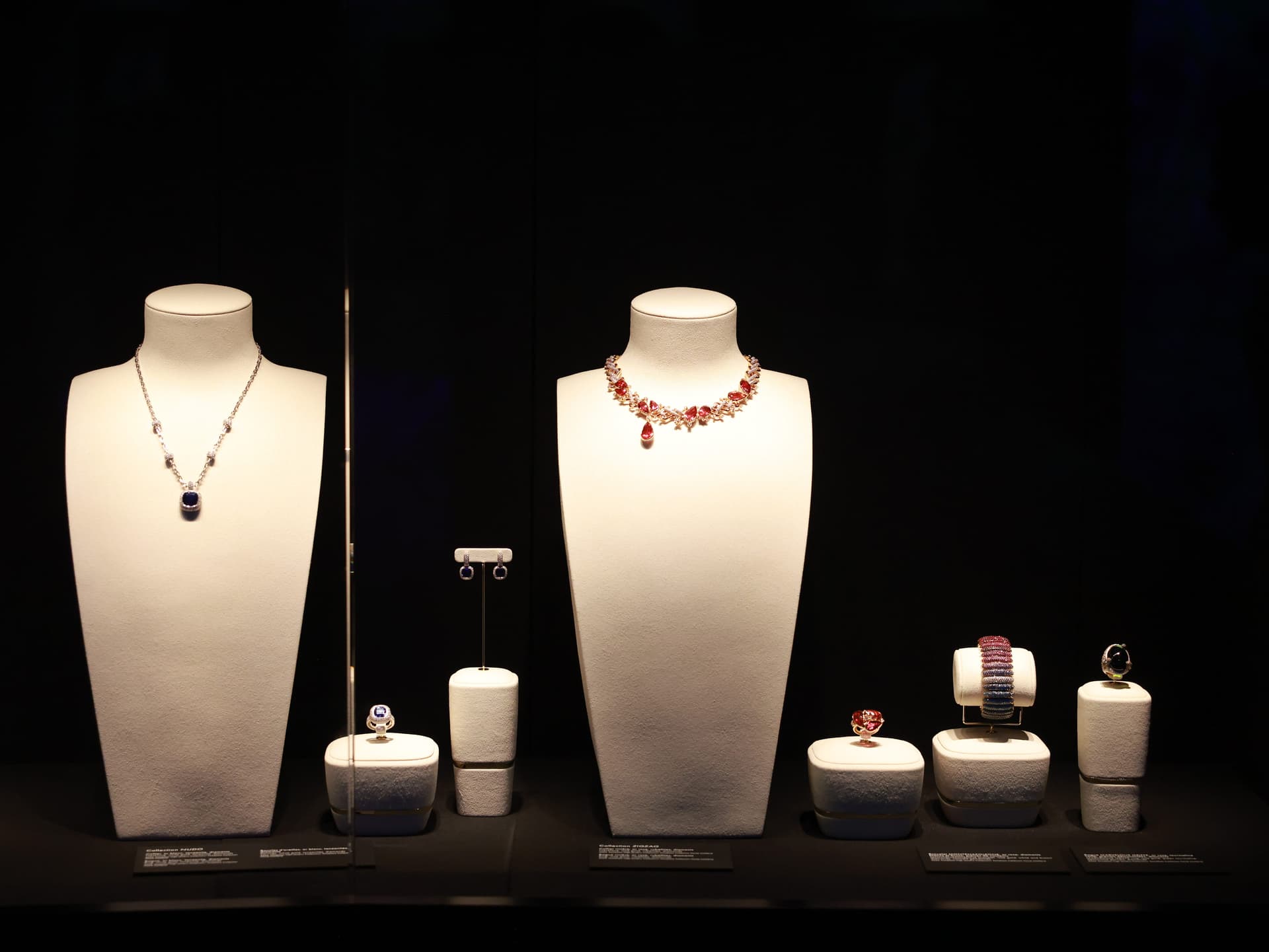
Pomellato opened its first Paris retrospective at Palais de Tokyo on June 24, pairing nearly six decades of archive material with the debut of its Stile Libero collection. The exhibition, Pomellato, Le Joaillier Révolutionnaire, runs through July 20 and gives the Milanese house a rare chance to show how its language of sculptural gold chains, cabochons and unconventional gemstones became recognizable at a glance.
Pomellato and the museum framed the show as the first exhibition in Paris devoted to the brand’s unconventional vision. The story it tells begins with the house’s founding in 1967 and moves through the revolutions that shaped its identity: style, craftsmanship, color, image and women. Pomellato said the presentation draws on the maison’s photographic archive, while Palais de Tokyo emphasized the brand’s long commitment to women, independence, self-expression and a femininity that is powerful, inclusive and self-defined.
That emphasis matters because Pomellato has always traded in a visual code rather than a single signature motif. The pieces that hold attention here are not minimal or discreet. They are built to be read from across a room, with rounded colored stones, strong metalwork and proportions that make gold part of the design language rather than a neutral setting. In a market crowded with sentiment and vague “meaning,” Pomellato’s archive is more specific: it shows how a house can turn color, volume and attitude into collectable identity.

The Paris show arrives just as Sotheby’s prepares a different kind of house portrait in New York. Sotheby’s X David Webb: Mavericks on Madison Avenue opens July 1 at 945 Madison Avenue and runs through August 16, presenting a curated selection of jewels and archival material that traces David Webb from its founding in New York in 1948. Sotheby’s places Webb in the context of American artistic achievement, and the house’s own history underscores why that framing still lands: it helped define a distinctly American voice in fine jewelry when European taste still set much of the luxury standard.
David Webb’s archive gives the exhibition an additional layer of proof. The house says every piece it has ever produced has an original order card preserved in its New York archive, a paper trail that makes its output unusually legible for collectors. Frank Everett, Sotheby’s jewelry specialist, has singled out Webb’s zebra bracelets as a consistent point of fascination for buyers and named the Anchor brooch as his personal favorite in the edit. After a first in-house exhibition in 2022, Webb’s return to the gallery circuit shows how heritage houses are now using archives not as nostalgia but as evidence, turning signatures into the clearest map for what the next recognizable jewelry codes will look like.
This article was produced by Prism’s automated news system from verified source data, official records, and press releases, then run through automated quality and moderation checks before publishing. The system is built and supervised by the people who set the standards it runs under. Read our full AI policy.
Did this article answer your question?