Queen Elizabeth II jewels headline Paris and London exhibitions
Queen Elizabeth II’s pearls and ceremonial jewels lead a season of Paris and London shows that decode royal cues, couture symbolism and modern heirlooms.
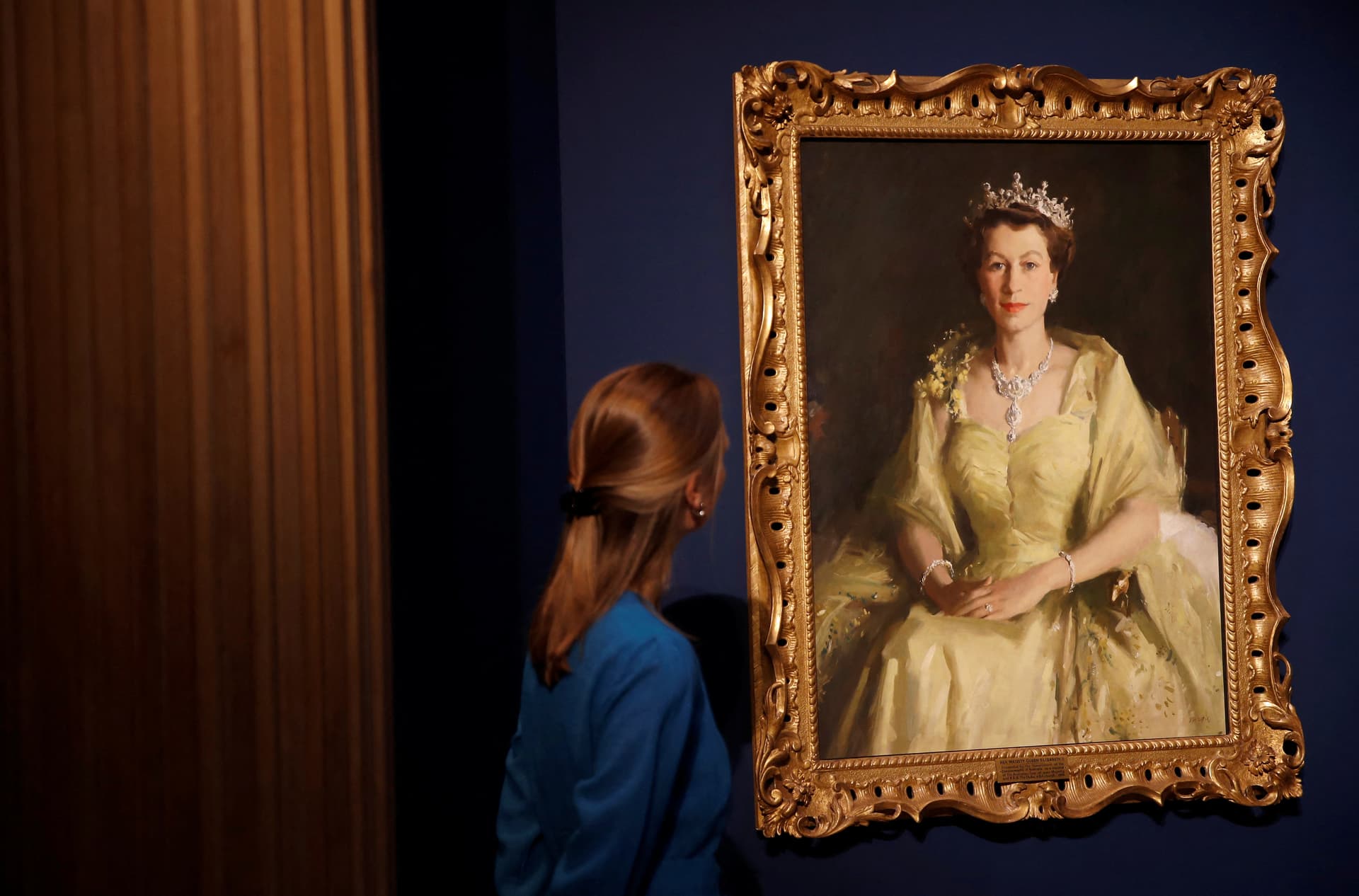
Queen Elizabeth II’s pearls and tiaras are not just on view in London this season, they are acting as a visual key for how contemporary jewelry keeps borrowing from the past. Across Paris and London, five exhibitions turn jewels into a language of status, memory, authorship and love, showing visitors how to read the details that matter most: a pearl strand with public meaning, a bridal ring that rejects convention, a couture house built on surrealist wit, and objects that move between art and adornment.
The royal archive as a style dictionary
What makes this exhibition season unusually rich is not simply that there are jewels on display, but that each show treats jewelry as evidence. In one gallery, that evidence is royal and ceremonial; in another, it is couture and experimental; elsewhere, it is intimate and personal. The result is a useful education in how motifs recur, especially pearls, heirloom settings and pieces designed to be read as much as worn.
Visitors will notice that the strongest jewelry stories in 2026 are no longer about sparkle alone. They are about the signals a jewel sends, whether that is dynastic continuity, bridal independence or an artist’s hand made visible in metal and stone. That shift gives these five exhibitions their common thread: they invite viewers to recognize the symbols that keep resurfacing in contemporary taste.
Buckingham Palace and the late Queen’s jewelry language
At The King’s Gallery at Buckingham Palace, Queen Elizabeth II: Her Life in Style opened on April 10, 2026 and runs through October 18, 2026, timed to the centenary of the late Queen’s birth. The Royal Collection Trust describes it as the largest and most comprehensive exhibition of her fashion ever mounted, and that scale matters because it frames clothing and jewels as part of a single public vocabulary.
The pieces on view, including the Burmese ruby tiara, a Prince Philip anniversary bracelet and her signature pearls, show how the Queen’s style relied on repetition, symbolism and discipline. Pearls, in particular, read here as more than decoration. They are part of a carefully maintained image of continuity, the kind of detail that taught generations how to recognize royal restraint, ceremonial polish and the quiet authority of inherited jewels.
Schiaparelli at the V&A and the jewel as couture punctuation
At the Victoria and Albert Museum in South Kensington, Schiaparelli: Fashion Becomes Art gives Elsa Schiaparelli her first exhibition in the UK, spanning the 1920s to today and tracing the house through Daniel Roseberry’s current creative direction. With more than 200 objects, the show makes a strong case for Schiaparelli as a designer who understood that jewelry can be surreal, theatrical and sharply modern without losing precision.

That is the lesson in the house’s lasting influence. Schiaparelli’s legacy rests on the idea that adornment should not merely finish a look, but interrupt it, surprise it and make it memorable. For jewelry lovers, the takeaway is easy to spot: when a piece feels sculptural, witty or slightly off-kilter, it often owes something to the Schiaparelli instinct for turning ornament into visual punctuation.
Tomfoolery London and the rise of the anti-conventional bridal ring
In Muswell Hill, North London, Tomfoolery London’s LOVE Ring 2026, running from April 18 to July 4, 2026, takes a pointedly modern view of bridal jewelry. Framed as a showcase of alternative engagement and wedding jewelry, it favors the idea of a modern heirloom over the strict script of the classic solitaire.
That distinction is more revealing than it first appears. Traditional bridal jewelry often centers on a single, highly legible promise, but Tomfoolery’s framing suggests another priority: a ring should reflect the wearer’s identity, not just a ritual. In that sense, the show broadens the definition of heirloom jewelry, shifting value from inherited convention to pieces designed to carry a personal story from the start.
L’ÉCOLE and Daniel Brush’s line between object and artwork
In Paris, L’ÉCOLE, School of Jewelry Arts, supported by Van Cleef & Arpels, presents Daniel Brush, the Art of Line and Light from June 8 to October 4, 2026 at Hôtel de Mercy-Argenteau. The exhibition brings together more than 75 jewels and objects, and several are leaving Brush’s New York studio for the first time, which gives the show real significance for anyone interested in how contemporary jewelry crosses into the realm of fine art.
Brush’s work is compelling because it treats line as a structural idea and light as part of the design, not just a surface effect. The accompanying book and public programming extend that conversation beyond the vitrines, but the exhibition itself is the main draw: it shows how a jewel can feel both intimate and architectonic, a finished ornament and a study in form at once.
Taken together, these five exhibitions show why jewelry remains one of fashion’s most eloquent forms. A pearl strand, a surrealist flourish, a modern heirloom ring and a studio-made object can all carry memory, status and emotion, but only when the viewer knows how to read the motifs beneath the shine.
This article was produced by Prism’s automated news system from verified source data, official records, and press releases, then run through automated quality and moderation checks before publishing. The system is built and supervised by the people who set the standards it runs under. Read our full AI policy.
Did this article answer your question?