SNAG Detroit conference spotlights Labor and Legacy in jewelry making
Detroit’s SNAG conference makes labor the real heirloom, pairing Tiff Massey and Tiffany Momon with sessions on pay, pipeline, and the future of repair.
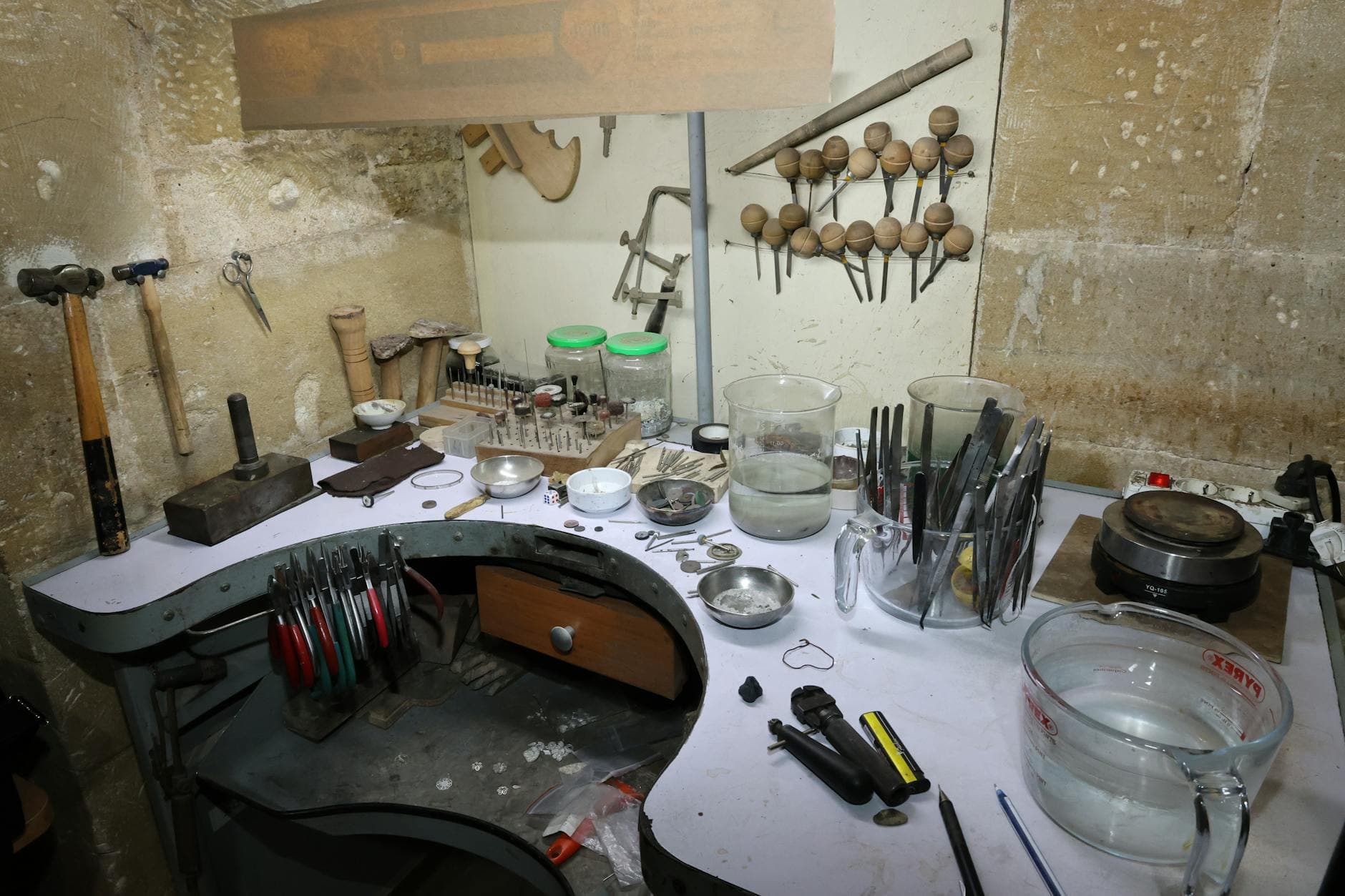
Labor, legacy, and the value of a finished piece
A sentimental jewel is never just a jewel. It carries a promise of memory, but that promise depends on the people who cast, solder, stone-set, polish, teach, and repair it long after the original moment of purchase has passed. SNAG’s Detroit conference puts that hidden labor at the center, making the case that the future of meaningful jewelry depends on whether the trade can still pay, train, and keep skilled hands at the bench.
The Society of North American Goldsmiths is bringing its 52nd conference to Wayne State University in Detroit from June 10 to 13, 2026, under the theme Labor & Legacy. SNAG frames the program around jewelry and metalwork as both practice and inheritance, a formulation that feels especially apt in a city shaped by industrial power, labor movements, and deep creative communities. The campus sits on Waawiyaataanong, also known as Detroit, the ancestral and contemporary homeland of the Three Fires Confederacy, a reminder that any conversation about legacy in this place has to include land, labor, and continuity.
Why Detroit changes the conversation
Detroit is not a neutral backdrop for a jewelry conference. SNAG explicitly connects the theme to the city’s labor history, its industrial past, and its music, art, and design scenes, which gives the gathering a sharper edge than a generic professional meetup. In a city where work has long carried political and cultural weight, questions about who gets paid, who gets trained, and whose craftsmanship is recognized land with more force.
That matters for readers who buy jewelry for emotional reasons. The ring inherited from a grandmother, the pendant given to mark a milestone, or the repaired chain that keeps a daily-wear necklace in rotation all depend on an ecosystem of skills that is increasingly fragile. If the bench pipeline weakens, the objects people want to keep become harder to restore, reinterpret, and pass on.
Tiff Massey opens the door to scale, labor, and pride
The June 11 keynote from Detroit-based artist Tiff Massey is the kind of choice that tells you what this conference wants to value. Massey is the first Black woman to earn an MFA in metalsmithing from Cranbrook Academy of Art, and her recent work has pushed jewelry thinking into architectural territory. A 2024 to 2025 exhibition at the Detroit Institute of Arts enlarged jewelry-scale forms to monumental size, making adornment feel civic rather than decorative.
That move is more than a formal stunt. It asks viewers to see metalwork as a discipline that can carry identity, memory, and public presence at once. For anyone who has ever wondered why bench skills are worth protecting, Massey’s career offers a clear answer: when jewelry artists are given room to think big, the medium can hold far more than ornament.
Tiffany Momon brings craft history into the room
The second keynote, Tiffany Momon, shifts the conversation from object to archive, and from adornment to the people whose names too often disappear from the record. Momon is an associate professor of history at Sewanee, The University of the South, and her work centers Black craftspeople and artisans. She also co-curated Fighting for Freedom, an exhibition built around 47 objects that highlighted Black craftspeople’s pursuit of liberty and agency through craftwork.
That perspective is crucial in a field where prestige often attaches to the finished piece while the labor behind it stays invisible. Momon’s scholarship makes a strong case that craft is not a side story to history, but one of its engines. For jewelry readers, that means every heirloom should prompt a harder question: who made this possible, and whose skill will be missing if the pipeline breaks?
The labor panel turns values into wages, training, and survival
SNAG’s June 11 panel on how labor is valued, supported, and sustained in jewelry and metalsmithing adds a practical layer to the theme. The session features Amy Peterson, cofounder and CEO of Rebel Nell, alongside jewelry artist and journalist Sarah Rachel Brown. Rebel Nell says Peterson co-founded the company in 2013 in Detroit with Diana Roginson, inspired by repurposing fallen graffiti into jewelry and by a desire to empower women, a story that links material salvage to social purpose.
That pairing matters because labor is not only a romantic concept in craft; it is a balance sheet issue. What a maker earns, how a studio is structured, and whether apprentices can afford to stay in the field all shape the future of the work. A panel like this pushes the conversation beyond inspiration and into the unglamorous but decisive realities of pay, support, and retention.
What the registration gets you
The conference registration is built to serve more than one kind of attendee, from students to working metalsmiths to collectors who want a closer look at the field’s future. SNAG says passes include access to presentations, the Pin Swap & Shop, Vendor Room, demonstrations, trunk show, SNAG Student Juried Exhibition, Adorned Spaces, Community Resource Room, Portfolio Review, special receptions, and more.
For those thinking in practical terms, the pricing is straightforward. Regular member registration is listed at $375 through April 30, 2026, then rises to $475 for the 1 Month-Out & Onsite period beginning May 1, 2026. Day passes are also available for Thursday, June 11, and Friday, June 12, which makes it easier to target the keynotes and labor-focused programming without committing to the full run.
- Presentations for broad field-wide context
- Pin Swap & Shop and Vendor Room for buying and browsing
- Demonstrations and trunk show for process and finished work
- SNAG Student Juried Exhibition and Portfolio Review for emerging talent
- Adorned Spaces and Community Resource Room for ideas and support networks
- Special receptions for the kind of informal exchange that often changes careers
Why jewelry lovers should care about the bench pipeline
The most lasting jewelry is often the kind that can be repaired, resized, re-set, and handed down without losing its integrity. That depends on a working bench culture, not just on beautiful design. SNAG’s programming around rebuilding the bench pipeline at the high school level is one of the clearest signals that the field understands its own vulnerability.
That point should resonate far beyond the trade. If fewer young makers are trained to solder, stone-set, and finish with confidence, then the future of heirloom jewelry narrows. The result is not only a labor problem, but a cultural one: fewer hands to preserve family pieces, fewer craftspeople to interpret old forms for new wearers, and less room for jewelry to carry meaning across generations.
Legacy is only real if the knowledge survives
Labor & Legacy works because it refuses to separate beauty from the conditions that make beauty possible. Massey’s sculptural ambition, Momon’s attention to Black craft history, Peterson’s Detroit-rooted model of reuse, and the conference’s focus on training all point toward the same truth: a meaningful piece is only as durable as the community that knows how to make and maintain it.
In Detroit, that idea lands with particular force. Jewelry here is not being discussed as a luxury object alone, but as evidence of who gets remembered, who gets credited, and who will still be able to repair the things that matter when the story of the piece outlives the piece itself.
This article was produced by Prism’s automated news system from verified source data, official records, and press releases, then run through automated quality and moderation checks before publishing. The system is built and supervised by the people who set the standards it runs under. Read our full AI policy.
Did this article answer your question?