Sotheby’s unveils Russian imperial jewels tied to Catherine the Great
Catherine the Great’s court jewels have resurfaced in New York, led by a Fabergé aquamarine necklace once meant for German royalty and floral diamonds tied to the Russian court.
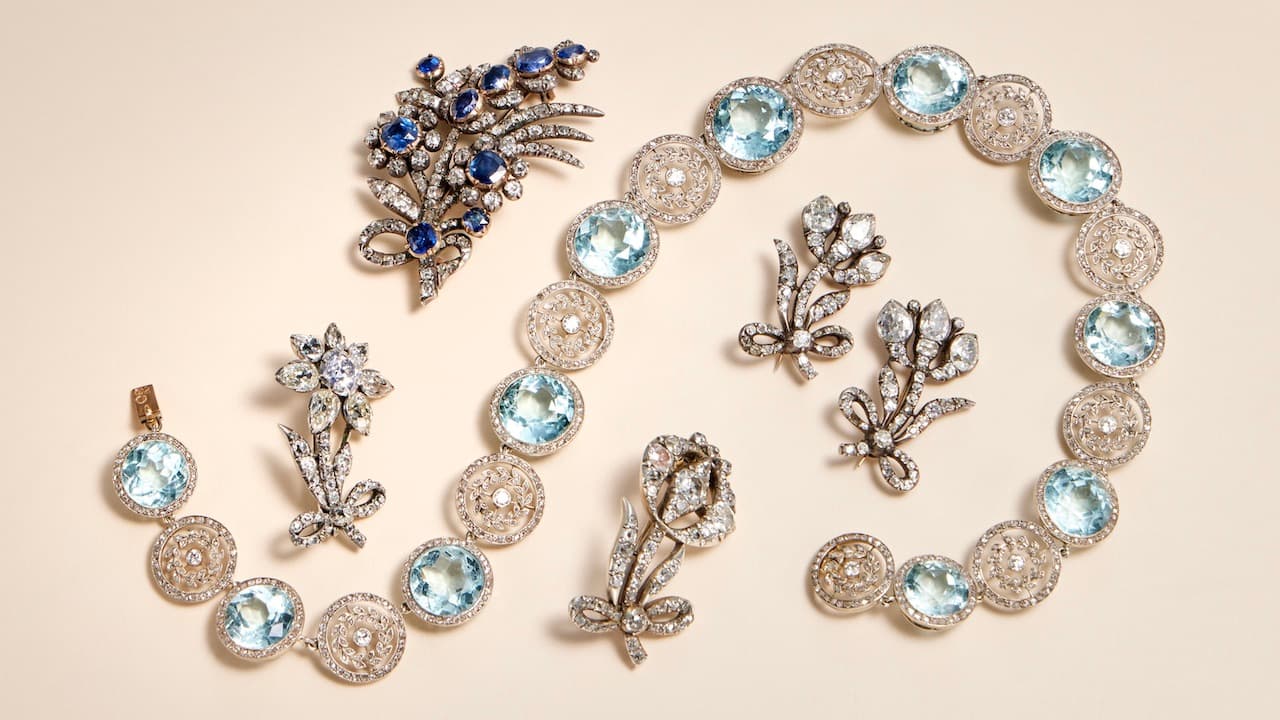
Jewels tied to Catherine the Great carry more than brilliance. They hold imperial myth, court romance and the evidence of handwork in silver, diamond and aquamarine, which is why they still command attention long after the dynasty that owned them vanished.
Sotheby’s will place that history at the center of its inaugural Artistic Luxury auction in New York, with a public preview beginning June 11 at the Breuer building and the live sale set for June 17 at 11:00 a.m. EDT. The catalog lists 168 lots overall, but the Russian imperial pieces are the headline attractions because they were confiscated after the 1917 revolution as part of the Russian State Jewels and had not been publicly seen for more than a century.
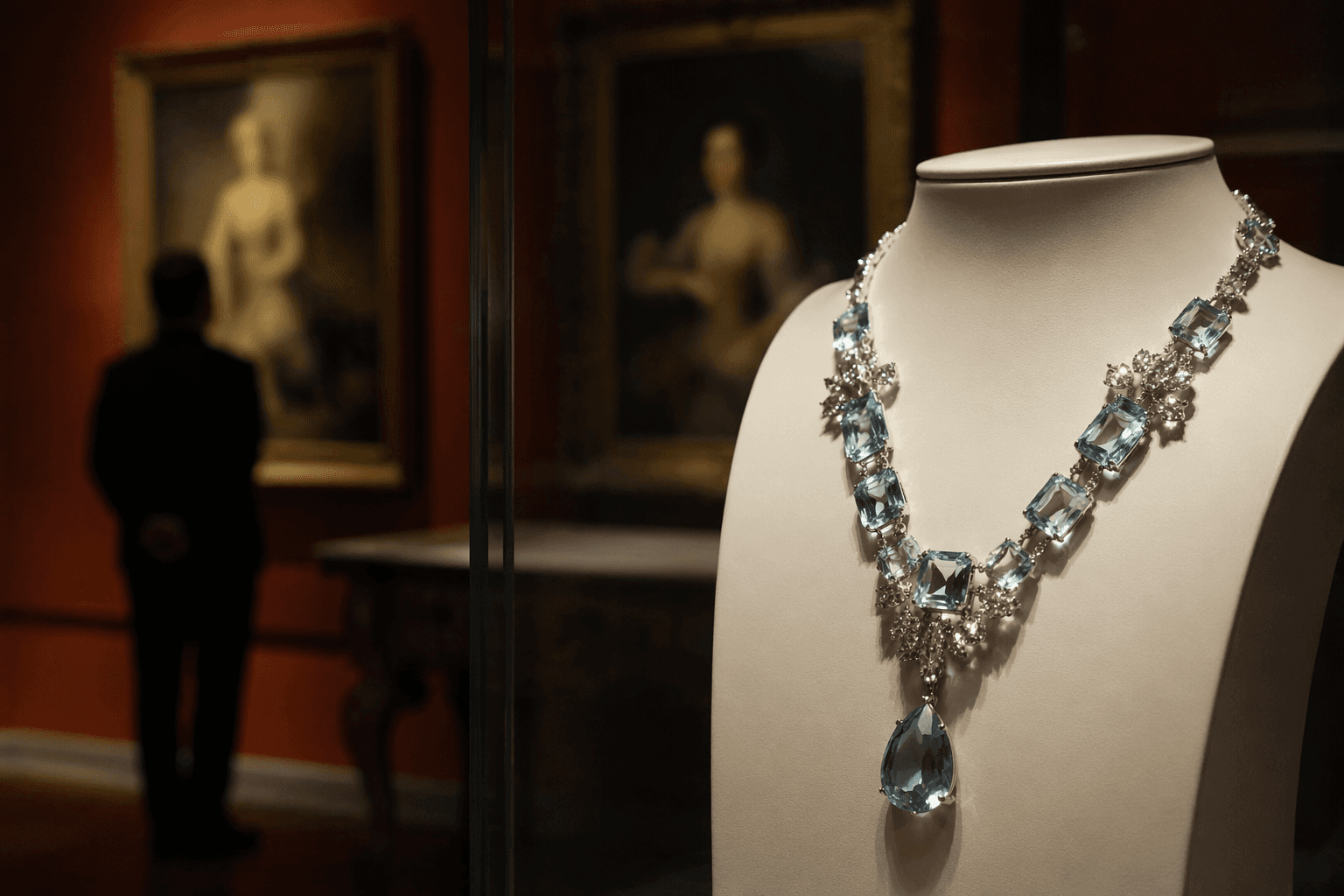
The top lot is an Imperial Fabergé diamond and aquamarine necklace from around 1911, estimated at $400,000 to $600,000. Sotheby’s says the piece measures more than 16 inches, placing it among the largest known necklaces created by Fabergé. It was produced under the direction of Albert Holmström and designed by his niece and apprentice Alma Pihl, then purchased by the Imperial Cabinet in May 1911 for 2,650 rubles as a possible gift for German Crown Prince Wilhelm and Crown Princess Cecilie. The necklace survived with its original fitted case, a detail that deepens its appeal as an object of both design and record.
The Catherine the Great material is equally specific and more intimate in scale. Among the lots are floral silver-and-diamond dress trimmings attributed to Louis David Duval of Geneva, one of the main suppliers to the imperial court. Sotheby’s has traced at least one pair through the Russian State Jewels, a Christie’s London sale on March 16, 1927, and then to S.J. Philips in London before its descent in the family of the present owner. That pair carries an estimate of $60,000 to $80,000. Related floral ornaments in the same sale are estimated at $30,000 to $50,000 and $40,000 to $60,000, while another flower ornament dates to Empress Elizabeth Petrovna, Catherine’s predecessor.
Helen Culver Smith, Sotheby’s global head of Fabergé and Russian works of art, called the pieces “a fascinating window” into the luxury and opulence of the Russian imperial court. Catherine II expanded the imperial jewelry collection by around 40 percent, and the jewels were once kept in a converted Winter Palace bedchamber she called the Brilliant room. That is what gives these pieces their charge: they are not just auction inventory, but fragments of a court culture that used floral trimmings, Fabergé workmanship and sovereign ownership to turn jewelry into enduring cultural memory.
This article was produced by Prism’s automated news system from verified source data, official records, and press releases, then run through automated quality and moderation checks before publishing. The system is built and supervised by the people who set the standards it runs under. Read our full AI policy.
Did this article answer your question?