Tactile jewelry gains momentum as consumers seek grounding, interactive designs
Rings that spin, bracelets that sway, and necklaces that invite a thumb's return are turning jewelry into a daily grounding ritual.
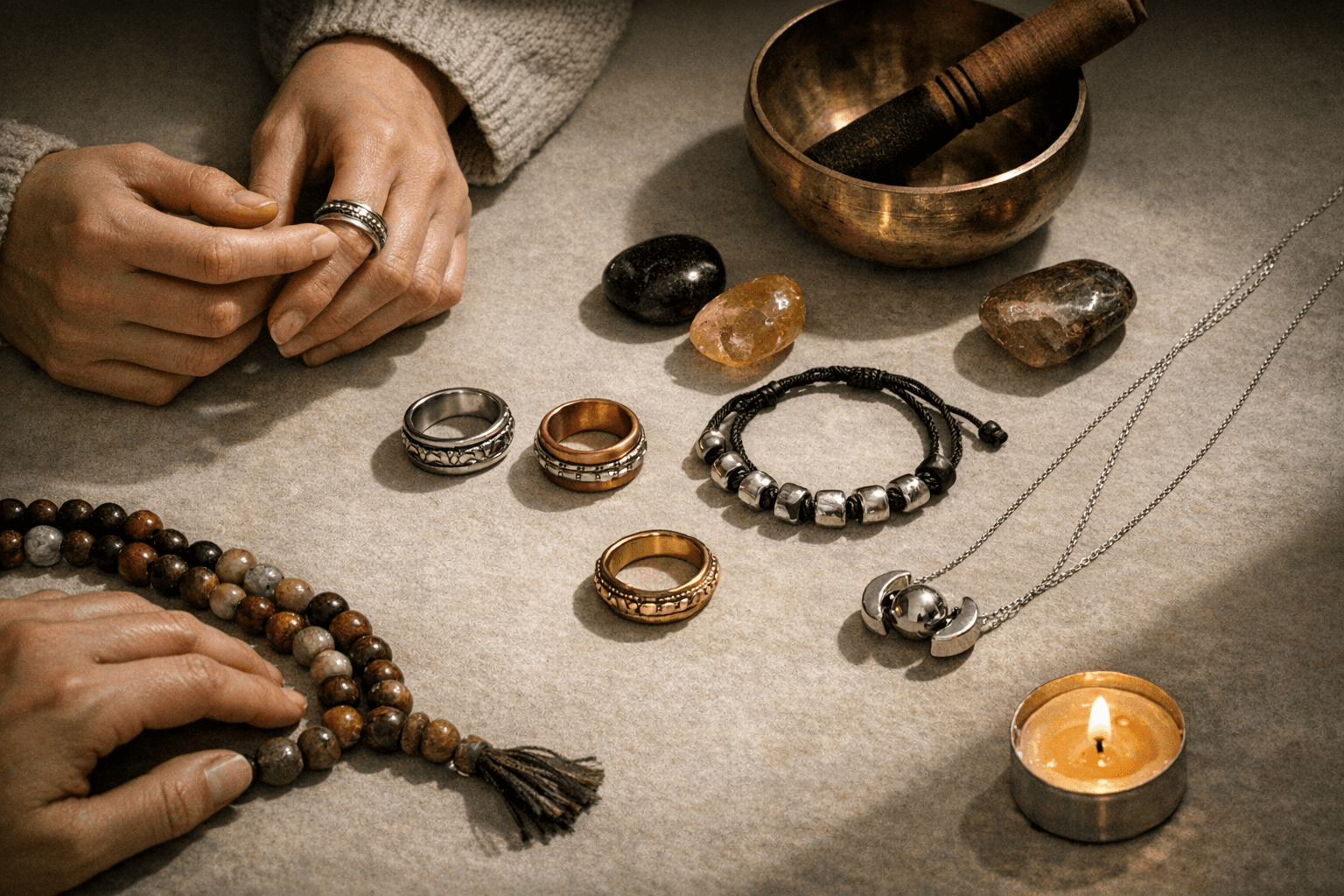
Jewelry you can feel
A raised rose on a silver Tiffany & Co. Nature collection band can outlast the moment you own it. Brittany Siminitz opens her case for tactile jewelry with that memory, a ring she sold during a recession after postgrad, and the detail matters: the piece was not only seen, it was remembered by touch. That is the emotional shift driving this trend now, where a jewel is valued as much for the way it rubs against skin, catches a finger, or shifts in the hand as for how it looks in a mirror.
The clearest pieces in this category are rings, bracelets, and necklaces built with texture, dimension, and movement. Their appeal is immediate and physical. A raised motif, a scalloped edge, a chain with swing, or a pendant with real depth makes a piece feel alive, and it also exposes the hand of the maker instead of hiding it beneath a polished surface. In that sense, tactile jewelry is less about decoration alone and more about contact, repetition, and the small private rituals people build with what they wear.
Why touch matters now
The language around these pieces has become more direct because the use case is more direct. Siminitz describes tactile jewelry as “like a fidget toy for grown-ups” and says it can offer “a small grounding moment of focus.” That framing gives the trend its present-tense relevance: these are not just statement jewels, but objects people can spin, clutch, or rub in the middle of a crowded day.
That idea aligns neatly with grounding, which Harvard Health describes as a way to shift attention away from overwhelming thoughts and back to the present moment. The sensory side of the story is equally important. The Harvard Brain Science Initiative notes that touch includes pressure, skin contact, skin stretch, and vibration, while the Autism Research Institute explains that sensory processing issues can include heightened sensitivity to textures. Put together, those ideas help explain why a textured cuff or dimensional ring can feel surprisingly personal. It is not only ornamental. It is regulating, comforting, and unmistakably bodily.
Jewelry has always had this relationship to the body. The Metropolitan Museum of Art defines jewelry by its connection to and interaction with the body, and its collections show how relief-filled, filigreed, and highly worked pieces have appeared across ancient and historic periods. What feels fresh now is not the idea itself, but the way contemporary designers are leaning into that older truth and making it obvious again.
How designers are translating feeling into form
The strongest tactile pieces do not rely on hidden mechanics. They put their construction on display. Three-dimensional motifs, visible joins, sculptural volume, and articulated elements make the object feel earned, not synthetic. A bracelet that swings as the wrist moves, a necklace that carries weight across the collarbone, or a ring with a raised surface invites touch because it asks to be experienced from every angle.
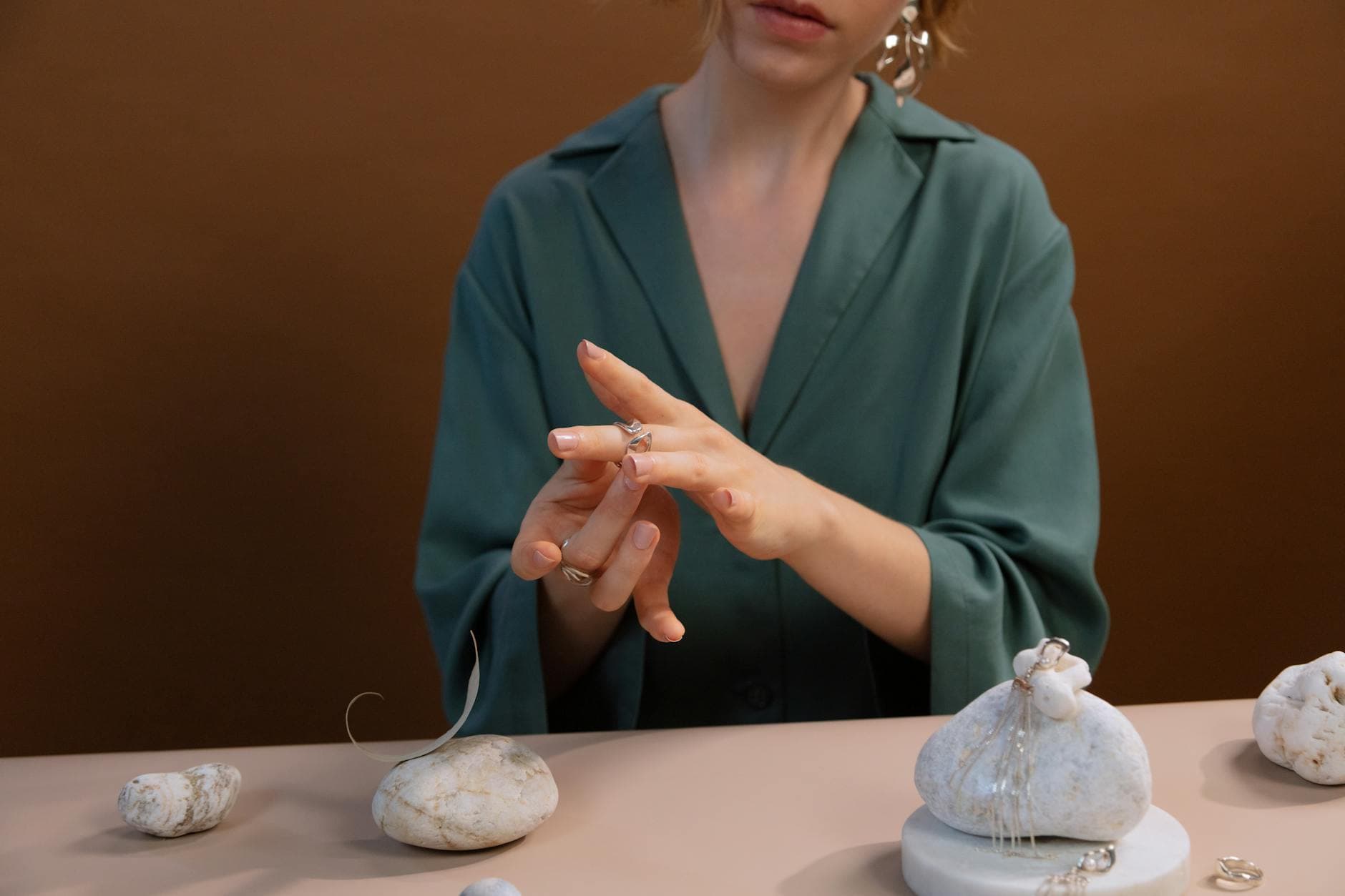
That is one reason the current conversation overlaps with earlier trend reporting. National Jeweler flagged jewelry with movement in August 2024, including fringe and tassels that feel good to the touch. By February 28, 2025, the publication’s trend forecast had widened the frame, identifying sculptural pieces and Art Deco-esque geometric designs as styles shaping 2025. The throughline is clear: consumers are responding to jewelry that shifts, lifts, and asserts dimension rather than sitting flat and silent.
- Textured surfaces that catch the fingertip instead of sliding away
- Raised or carved motifs that add depth and shadow
- Articulated parts, fringe, tassels, or movement that changes with the body
- Weight that feels intentional, not cumbersome
- Construction details that remain visible, which often signals the maker’s hand
For buyers, the practical distinction is easy to spot:
Those details matter because they change the relationship between wearer and jewel. A ring with a raised rose does not only sit on the finger; it becomes a small object of repeat contact. A bracelet with movement does not only flash in passing; it answers motion. That is where meaning turns into habit.
The market is rewarding emotion with real spending
This tactile turn is also landing inside a strong gift economy. The National Retail Federation expects Mother’s Day 2026 spending to reach a record $38 billion, and National Jeweler reports that 45 percent of consumers plan to buy jewelry for a loved one this Mother’s Day, with jewelry spending expected to top $7 billion. That is a powerful signal for a category built on sentiment, because tactile pieces add something many gifts lack: daily use.
The share hook here is simple. A gift does not need to stay in a box to stay meaningful. A ring that someone rotates at a desk, a bracelet that moves against the wrist during a commute, or a pendant that gets held during a tense call can become part of the day’s emotional infrastructure. That is why the strongest tactile jewels feel less like trend objects and more like companions.
What makes this moment notable is how old the impulse is, and how current the language around it has become. Jewelry has always carried memory, but now designers are making memory touchable on purpose. In a market where consumers want beauty with function, and sentiment with substance, the pieces gaining ground are the ones that answer back when you reach for them.
This article was produced by Prism’s automated news system from verified source data, official records, and press releases, then run through automated quality and moderation checks before publishing. The system is built and supervised by the people who set the standards it runs under. Read our full AI policy.
Did this article answer your question?