why Harriet Sperling chose the Pragnell Tiara for her royal wedding
Harriet Sperling’s borrowed Pragnell tiara made the wedding feel personal, not inherited. Its royal echo, family provenance and laurel-and-floral design gave the look its meaning.
The tiara was the point
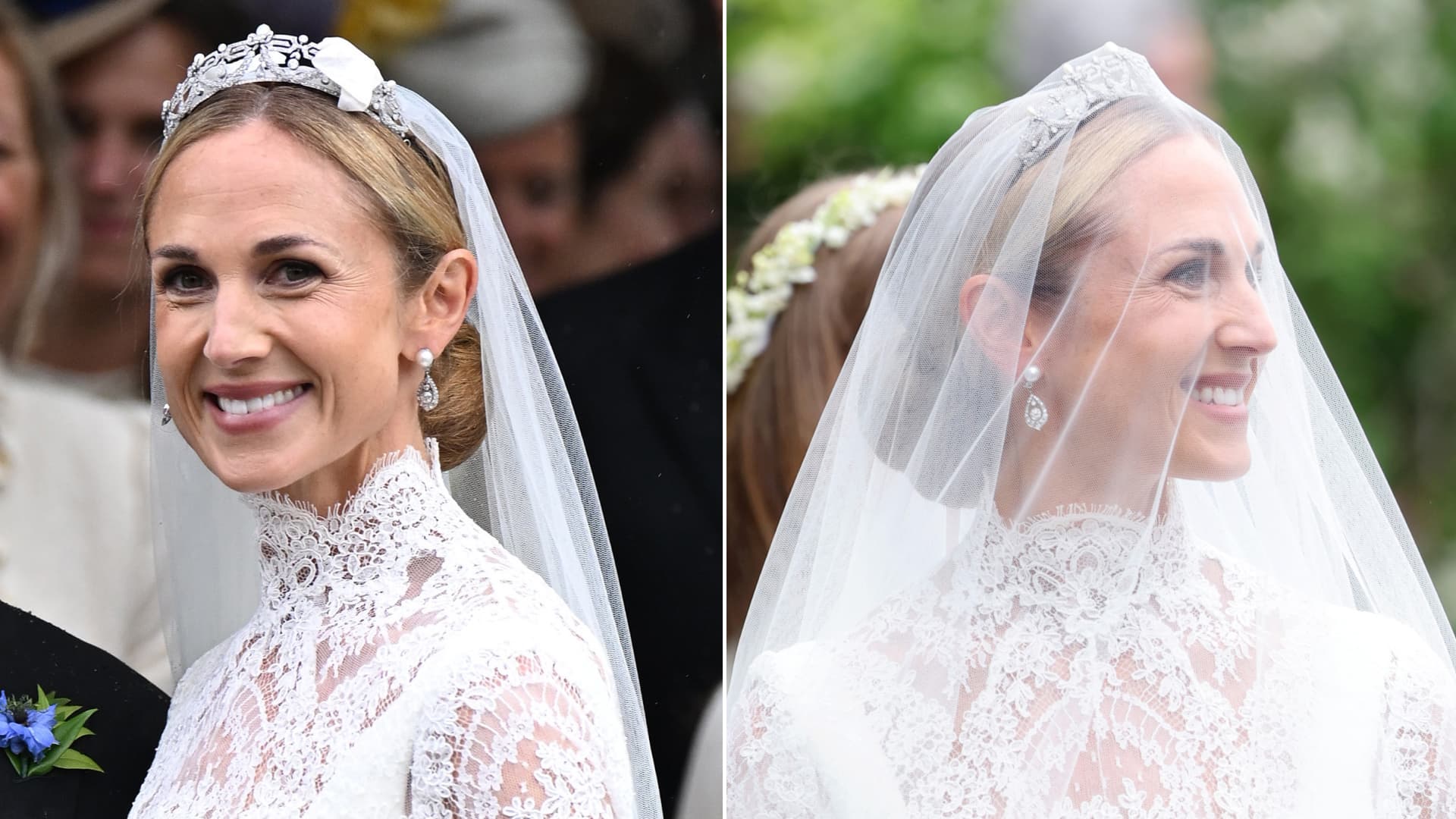
Harriet Sperling did not simply wear a royal jewel, she chose a story. For her wedding to Peter Phillips at All Saints Church in Kemble, Cirencester, she wore a loaned Pragnell diamond-and-pearl tiara with matching earrings and an embroidered veil, and that combination became the clearest signifier of the day’s mood. The look was elegant, but more importantly, it was legible: a bride using historic language without disappearing into protocol.
That distinction matters. In royal bridal dressing, a tiara can read as inheritance, permission, or pure pageantry. Sperling’s choice pushed the piece toward something more contemporary, where symbolism and personal identity sit beside tradition. The effect was not rebellious so much as selective, a reminder that the most resonant wedding jewels are often the ones that can hold both family history and the wearer’s own voice.
A jewel with archive depth
Pragnell’s tiara is not a generic sparkle piece dressed up with a royal name. The jeweler describes it as a diamond design with laurel leaves and articulated floral motifs, shaped by both Edwardian and Art Deco influences. That mix gives the tiara a balanced silhouette: the softness of botanical forms set against the crisp geometry associated with early 20th-century design.
Just as important is its provenance. Pragnell says the tiara is owned by the Pragnell family and has been worn by generations, which places it in a very different category from a one-off bridal accessory. It is a family object with continuity built into its history, and that continuity is what made it feel so right for a wedding centered on a new branch of a very public family tree. The piece’s appearance at the coronations of King George VI and Queen Elizabeth II deepens that sense of ceremonial weight without making the jewel feel frozen in time.
Why the Anne connection mattered
The strongest reason this tiara choice resonated is that it bridged Harriet Sperling’s own bridal identity with Princess Anne’s established jewelry memory. Pragnell says the tiara strongly resembles the piece worn by the Princess Royal in her official 50th-birthday photographs in 2000, and that visual kinship gave the jewel an immediate royal shorthand. It suggested continuity without requiring exact replication.
That connection is especially meaningful because Princess Anne’s own wedding history shows how flexible royal bridal jewelry can be. When she married Captain Mark Phillips in 1973, she borrowed Queen Mary’s Russian Fringe Tiara. For her 1992 marriage to Sir Timothy Laurence, she wore no tiara at all, choosing floral hair accessories instead. Together, those two choices map a bride who has never been locked into a single formula, and Sperling’s tiara lands neatly within that tradition of personal judgment over rigid convention.
A family pattern of loaned tiaras
Sperling’s wedding also fits into a clear pattern within Princess Anne’s family. Autumn Kelly wore Princess Anne’s Festoon Tiara for her 2008 wedding to Peter Phillips, and Zara Tindall wore Princess Anne’s Meander Tiara for her 2011 wedding to Mike Tindall. That history matters because it shows that these pieces are not sealed away as museum relics. They are circulating symbols, loaned across weddings and generations, each time taking on a new meaning.
That accessibility changes how the jewelry reads. A tiara worn by more than one woman, in more than one era, carries social memory as well as sparkle. It tells you that royal adornment is not only about ownership, but about trust, continuity, and the decision to let a significant object live a second, third, or fourth life on another bride’s head.
What the choice says about modern bridal luxury
Sperling’s tiara choice fits a broader shift in how wedding jewelry is understood. Brides are looking less for spectacle alone and more for pieces that feel rooted, wearable, and narratively coherent. In that sense, the Pragnell tiara functioned like the best kind of heirloom, even though it was loaned rather than inherited by the bride herself. It connected craftsmanship, family story, and visible symbolism in one object.
The Pragnell name adds another layer. The jeweler behind Sperling’s engagement ring and wedding earrings says its tiara collection is inspired by historic royal pieces and British craftsmanship, and that context helps explain why this look felt so considered. The earrings were not an afterthought, but part of a coordinated language, with the tiara and veil framing the face and pulling the ensemble into a unified bridal statement. This is where meaning and luxury meet most convincingly: in design that is specific enough to carry memory, yet open enough to belong to someone new.
The reception was royal, but the message was personal
King Charles III and Queen Camilla attended the ceremony, but they were unable to stay for the reception at Gatcombe Park because of another engagement. Even that detail reinforces the day’s central tension between public duty and private celebration. The wedding was undeniably royal in its orbit, but Harriet Sperling’s styling kept the emotional center close to the couple.
That is why the Pragnell tiara stood out. It was not chosen simply because it was rare, or because it came from a famous drawer of jewels. It was chosen because it could translate between worlds, from coronation-room grandeur to bride-specific meaning, from inherited symbolism to personal expression. In a wedding landscape that increasingly values provenance as much as polish, that is the kind of jewel that feels not just beautiful, but right.
This article was produced by Prism’s automated news system from verified source data, official records, and press releases, then run through automated quality and moderation checks before publishing. The system is built and supervised by the people who set the standards it runs under. Read our full AI policy.
Did this article answer your question?