Blue Nile debuts Montana sapphire jewelry for America’s 250th anniversary
Blue Nile’s Montana sapphire trio pairs muted blue-green stones with 14-karat yellow gold, starting at $1,450 as it leans into America’s 250th anniversary.
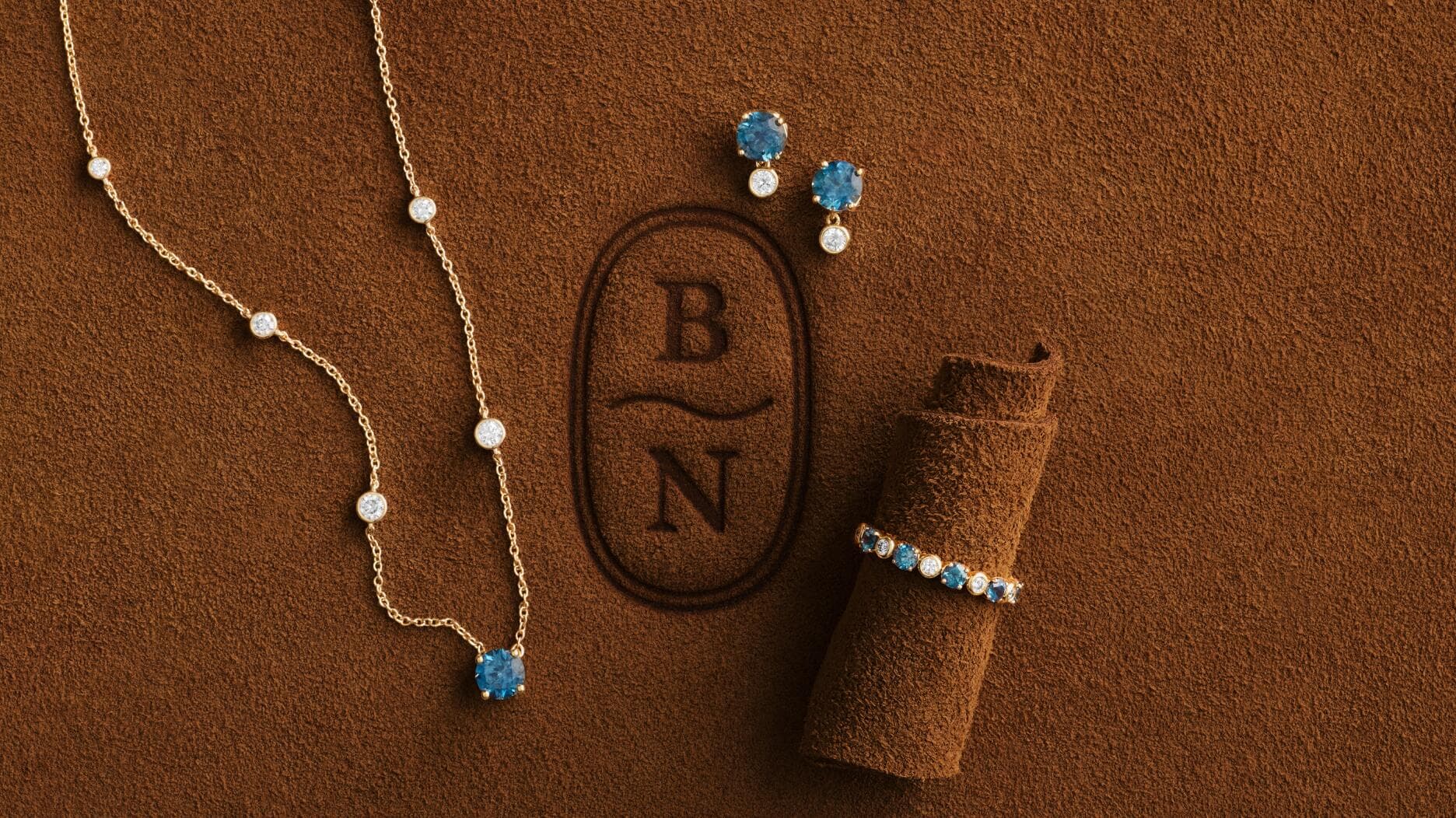
Blue Nile has added a three-piece Montana sapphire set to its America’s 250th anniversary curation, pairing blue-green American sapphires with natural diamonds in a ring, necklace and earrings rendered in 14-karat yellow gold. The prices put the collection squarely in accessible fine jewelry territory, with the ring at $1,450, the necklace at $3,200 and the earrings at $3,900.
The launch matters less as three new stock keeping units than as a signal about what is getting traction in mainstream fine jewelry: smaller stones, softer color and a traceable U.S. origin story. Blue Nile’s broader 250th anniversary assortment spans rings, earrings, necklaces, bracelets and pendants in gold, platinum and white gold, but the Montana sapphire pieces are the most pointedly specific, built around a distinctly American gemstone rather than around size or flash.
JCK said Blue Nile sourced the stones from the Rock Creek mine, also known as Gem Mountain, and placed the debut in the final stretch before July 4. That timing fits the larger America250 program, the national nonpartisan organization created by Congress in 2016 to commemorate the 250th anniversary of U.S. independence, with the semiquincentennial running through July 4, 2026. Blue Nile’s parent, Signet Jewelers, bought the retailer in 2022 in a $360 million all-cash transaction, and the anniversary curation now gives the brand a patriotic frame for materials that would otherwise read as simply pretty.
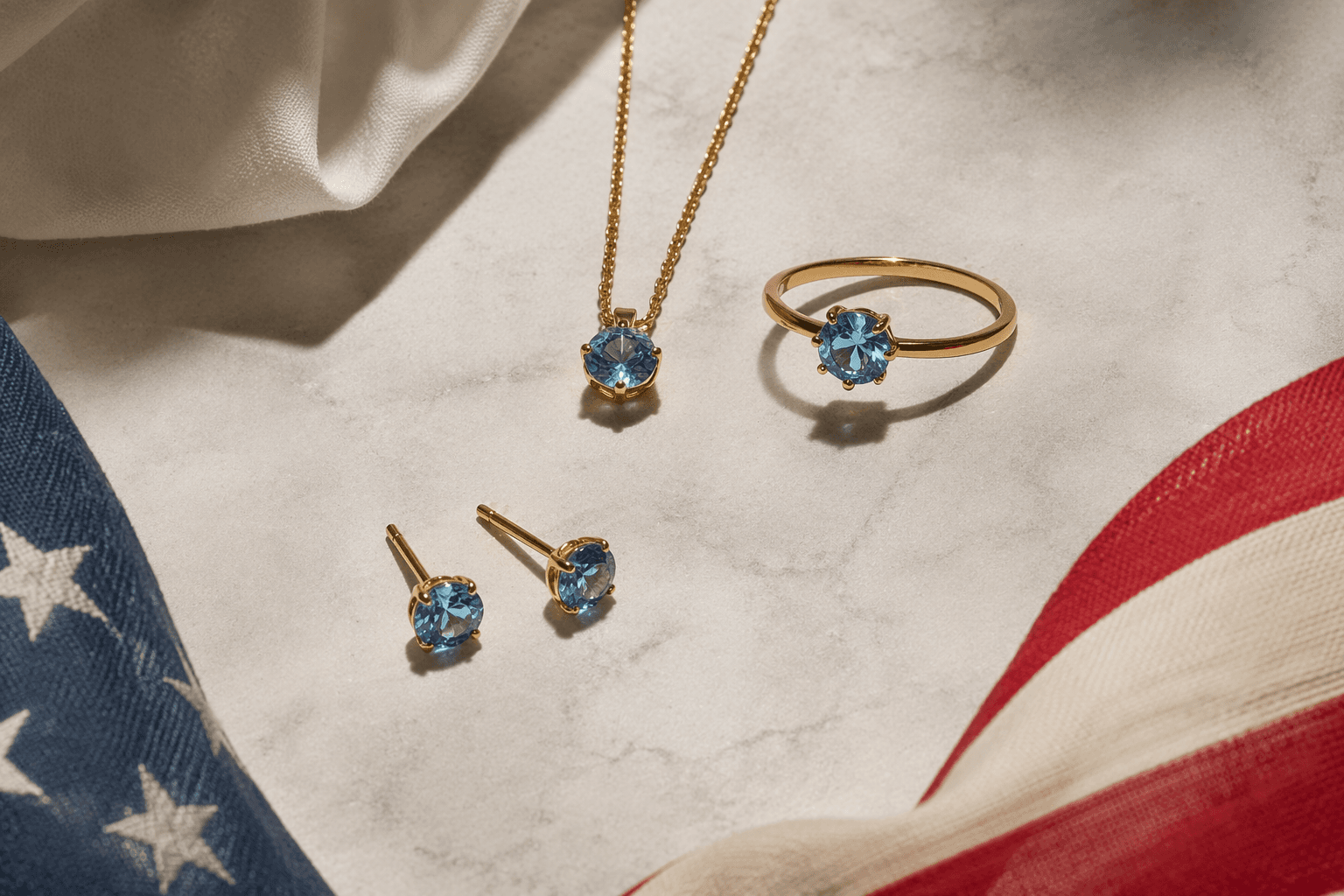
Montana sapphires bring more than a flag-waving story line. The Gemological Institute of America says sapphire deposits in Montana were first discovered near Helena, with later deposits at Rock Creek and Dry Cottonwood Creek. That geological history gives the stones a domestic provenance that is rare in fine jewelry, where origin often remains vague or hidden behind broad claims. The Montana Bureau of Mines and Geology, which says its geology office has documented the state’s geology for more than 100 years and published more than 1,400 maps and reports, gives that sourcing narrative real weight.
That combination of muted blue-green color, modest scale and American origin is exactly why Montana sapphires work so well for minimalist jewelry right now. They offer distinction without shouting, and they let a customer buy into both craftsmanship and place. In a market crowded with oversized center stones and generic luxury language, Blue Nile’s bet is that subtle color and documented sourcing can carry as much allure as carat weight.
This article was produced by Prism’s automated news system from verified source data, official records, and press releases, then run through automated quality and moderation checks before publishing. The system is built and supervised by the people who set the standards it runs under. Read our full AI policy.
Did this article answer your question?


