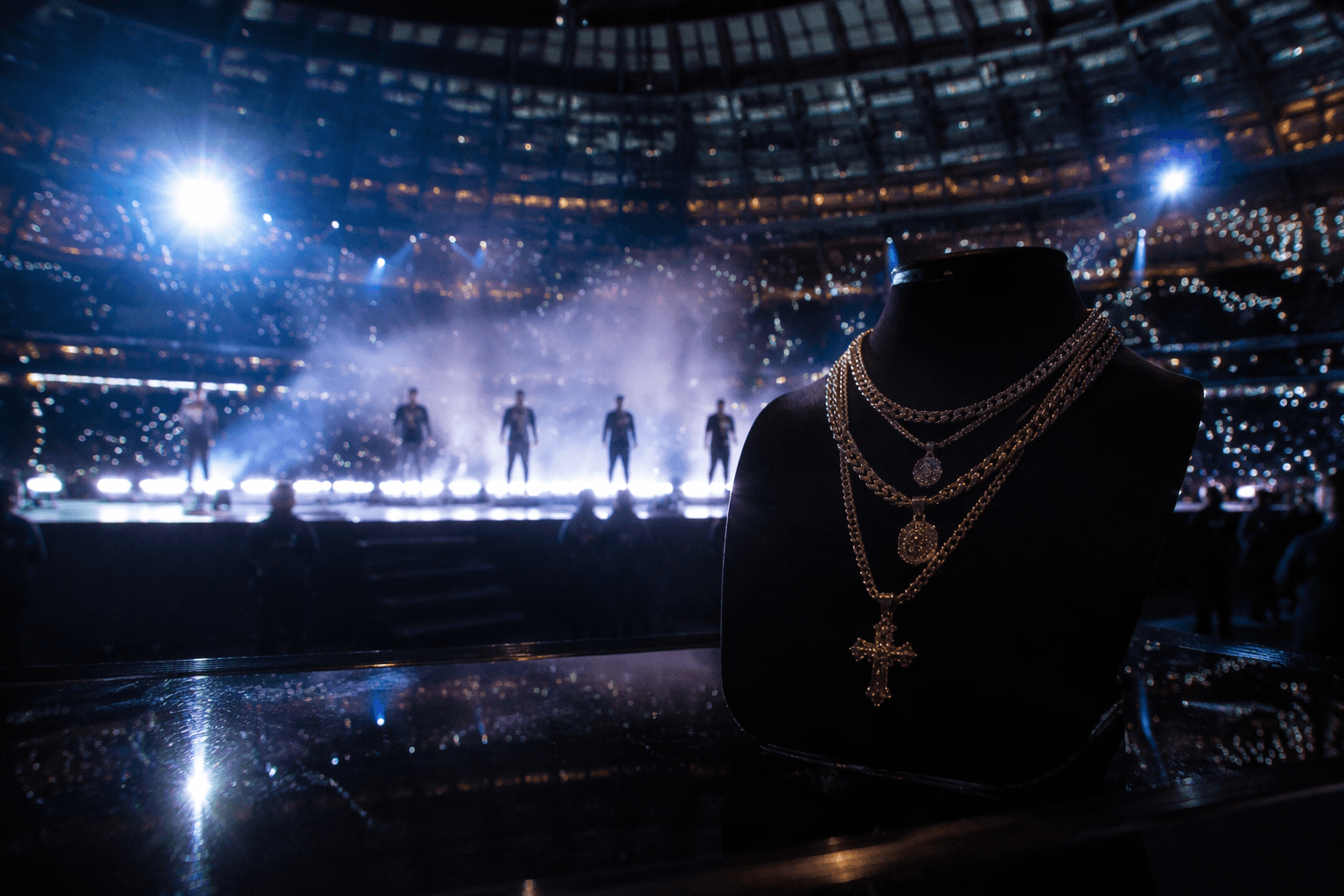
Blue Nile’s chain guide decodes the minimalist necklace look
Minimalism in necklaces is really a chain decision: cable, snake, paperclip, and omega each change how clean a look feels. Here’s how to match the right profile to daily wear and pendants.
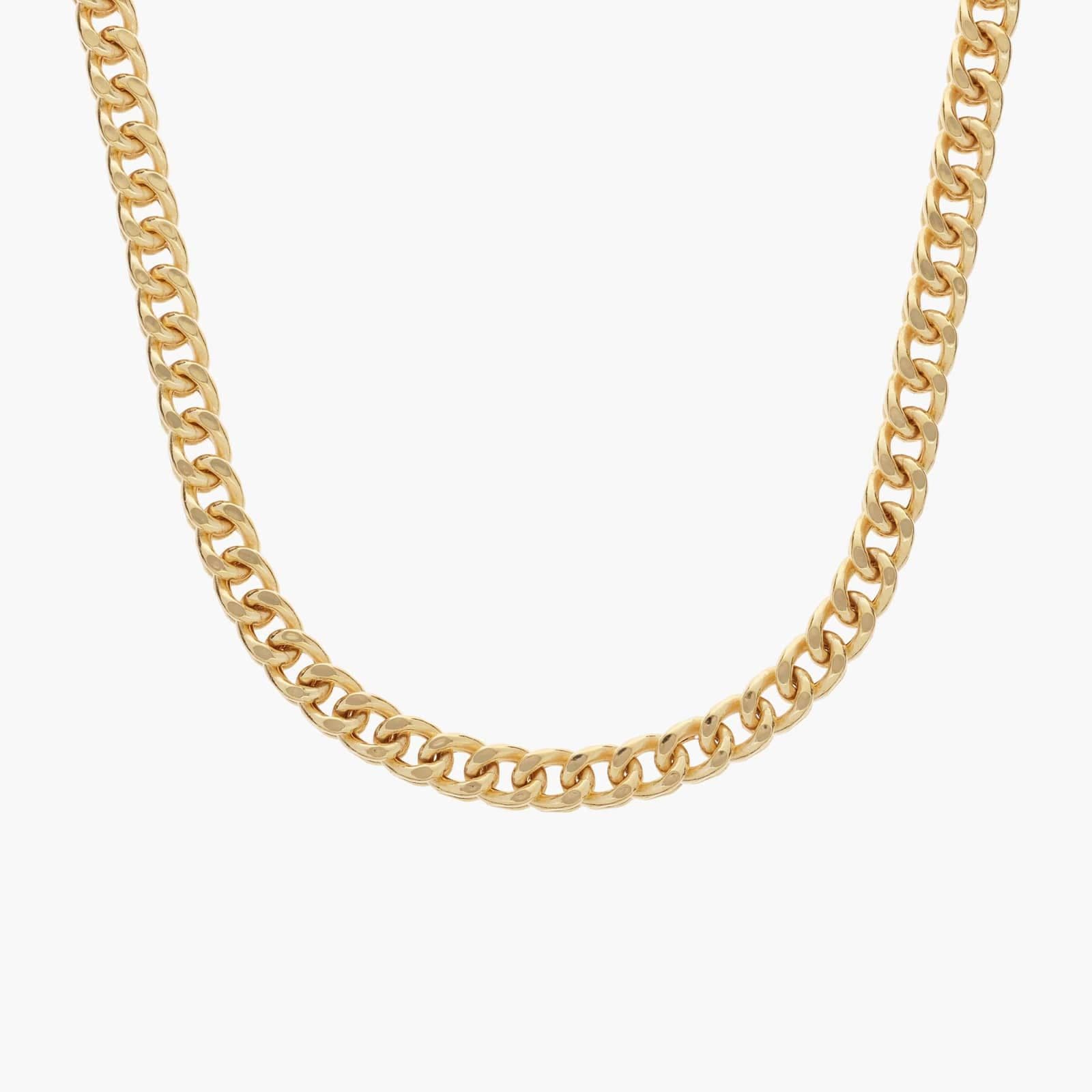
The most convincing minimalist necklace is not always the thinnest one. It is the chain that knows exactly what role it is playing, whether that is disappearing under a shirt collar, framing a small pendant, or laying flat enough to read as a single polished line.
Why chain construction matters
Blue Nile’s guide, “25 Types of Chains: A Guide to Necklace Styles,” gives the category its grammar: cable, curb, paperclip, snake, and omega are not just names, but different visual behaviors. Greenwich St. Jewelers takes the same idea further by framing chain choice around style, strength, and pendant pairings, which is the real minimalist test. If a necklace looks spare but cannot support the pendant you want, or feels too busy against bare skin, it has missed the point.
That tension between ornament and utility is older than the trend cycle. Elegant Insights Jewelry notes that chain jewelry has existed for millennia, and that the earliest chains were made for attaching, securing, and pulling loads. Minimalist necklaces still carry that engineering logic in their bones: the most refined versions usually succeed because the construction is disciplined, not because it is invisible.
The range shoppers are expected to navigate is wide. A 2024 YouTube guide, “Ultimate Visual Guide to Chains - Jewelry Chains Identification,” used Market Square Jewelers as a resource and said it covered about 40 popular chains. Blue Nile’s own taxonomy sits inside that broader landscape, while newer primers from Brilliant Earth, Sterling Forever, Day’s Jewelers, UNOde50, and Galloway and Moseley, Inc. show how much buyers now need a chain vocabulary just to shop well.
The cleanest chains for a minimalist look
Cable chain is the classic baseline. Its small, evenly spaced links keep the surface calm, which is why it works so well for a solo everyday necklace or a small pendant that should remain the focus. In a minimalist wardrobe, cable is often the least argumentative choice: it looks finished without calling attention to itself.
Box chain offers a different kind of quiet. Its tightly joined square links give it a more geometric, clean-lined feel, which makes it appealing if you want precision rather than softness. The effect is architectural rather than decorative, and that is exactly why it suits a pared-back jewelry collection.
Snake chain reads as the sleekest of the group. Because the surface is so fluid and uninterrupted, it creates the illusion of a single line rather than individual links, which makes it especially good when you want polish without texture. For someone drawn to minimalism as restraint, snake chain is often the most literal expression of that instinct.
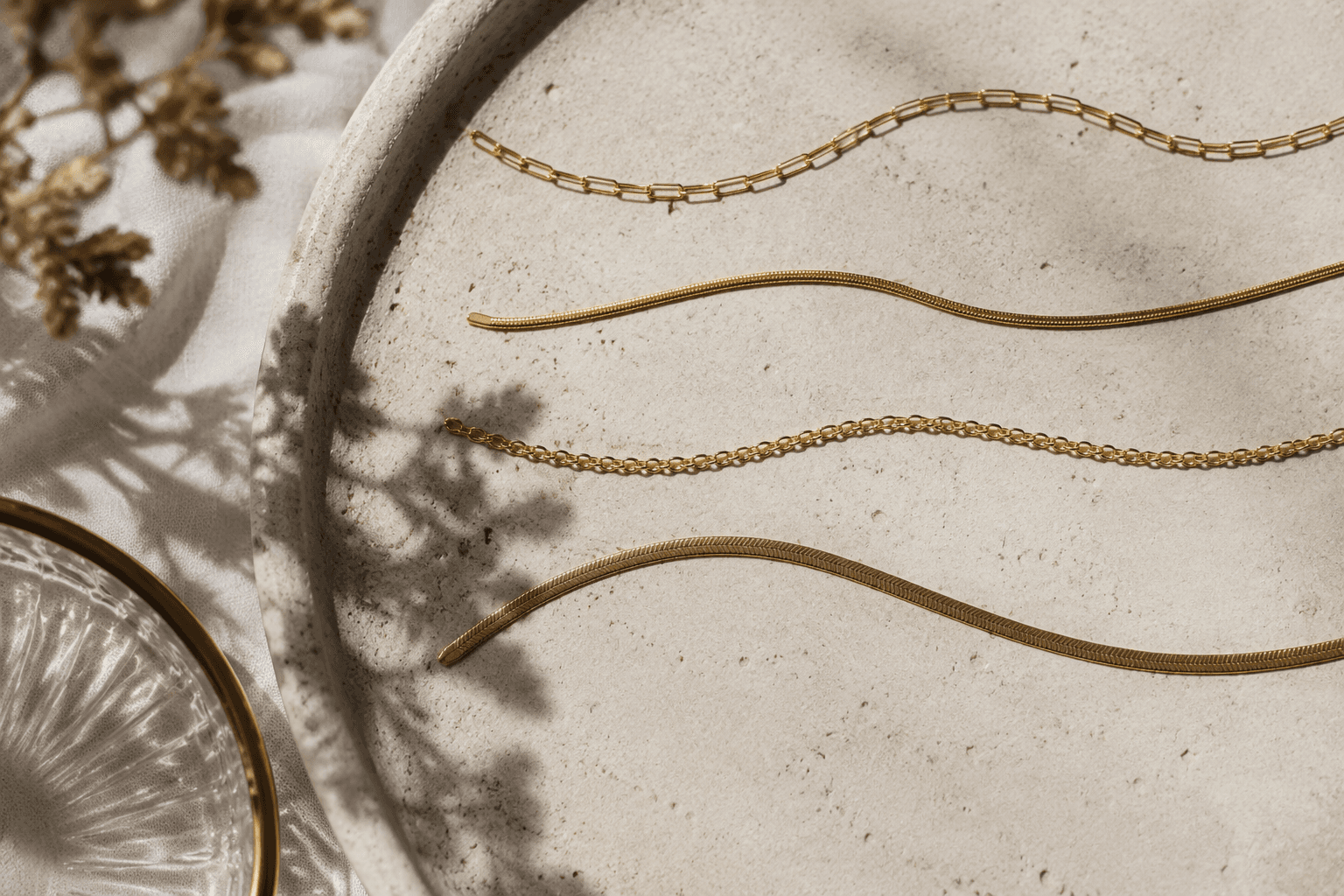
Curb chain is a little more visible, even when it is kept fine. The interlocking links give it more presence and a slightly stronger directional feel, so it can still live in a minimalist wardrobe if the scale stays slim. It is a good choice when “minimal” should not mean faint.
Rolo chain has a rounder, more decorative rhythm. It is still simple, but the circular links introduce a softer edge than box or snake, so it can feel a touch more polished than cable without becoming busy. That makes it a useful middle ground if you want a chain with character but not clutter.
When the chain has to work with a pendant
Pendant pairings are where minimalist necklace shopping becomes exacting. Greenwich St. Jewelers places clear emphasis on strength and compatibility, and that matters because the wrong chain can make even a beautiful pendant look awkward. A small pendant usually looks cleanest on cable or box, where the chain supports the piece without competing with it.
That is also where proportion becomes the real luxury cue. A delicate charm on an oversized chain can look unbalanced, while a chain that is too thin for the pendant can feel fragile rather than refined. Minimalism works best when the chain and pendant feel designed for each other, not assembled as afterthoughts.
Omega chain solves a different problem. Its flattened shape creates a polished, almost collar-like effect that can be worn alone or used to support a pendant, which makes it especially useful when you want structure in a minimalist look. It is less about softness than architecture, and that difference matters when the rest of the outfit is already quiet.
Why paperclip keeps showing up
Paperclip chain has become the modern shorthand for minimalism with edge. Blue Nile includes it in its taxonomy, and Kerns Fine Jewelry captured its reach plainly when it described the paperclip link necklace as something seen “from the runway to the club scene, and even daytime TV.” That kind of visibility explains why Fink’s Jewelers put out a post titled “Why Everyone Needs a Paperclip Chain Necklace in Their Jewelry Box.”
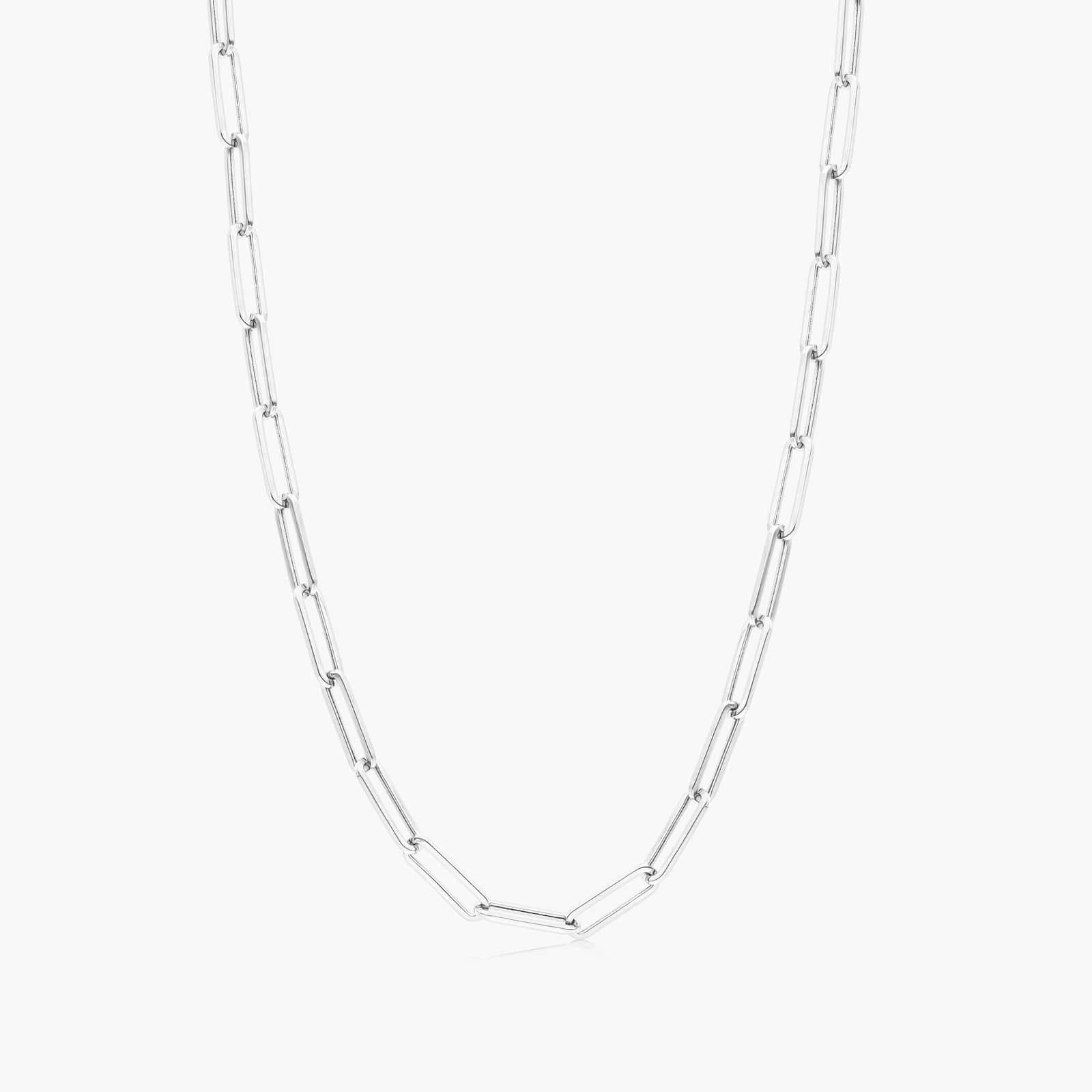
What paperclip does well is introduce rhythm without ornament overload. The elongated links create a graphic line that feels current, but the chain still reads as simple enough for everyday wear. It is the right choice when you want minimalism to look more directional than dainty.
How to choose for daily wear
The easiest way to buy well is to match the chain to the job it has to do.
- For a solo everyday necklace, cable gives the cleanest baseline, while snake offers the smoothest surface.
- For subtle layering, paperclip adds shape without fussy detail, and omega brings a more polished, structured layer.
- For a small pendant, cable and box usually keep the proportions most balanced.
- For a slightly stronger minimalist statement, a fine curb chain reads clearer without tipping into excess.
That logic is why chain guides keep multiplying. Blue Nile’s 25-type taxonomy, Brilliant Earth’s “Types of Chains | 20 Most Popular Types of Necklace Chains,” and newer editorial primers from Galloway and Moseley, Inc. and UNOde50 all point to the same shopper behavior: minimalism is no longer about owning less, but about choosing more precisely. The right chain does not just finish a necklace. It defines the whole silhouette.
This article was produced by Prism’s automated news system from verified source data, official records, and press releases, then run through automated quality and moderation checks before publishing. The system is built and supervised by the people who set the standards it runs under. Read our full AI policy.
Did this article answer your question?