Couture buyers split between investment jewels and entry pieces
Couture's middle market is thinning: buyers want either investment jewels with real heft or cleaner, lower-entry pieces, not the old comfortable in-between.
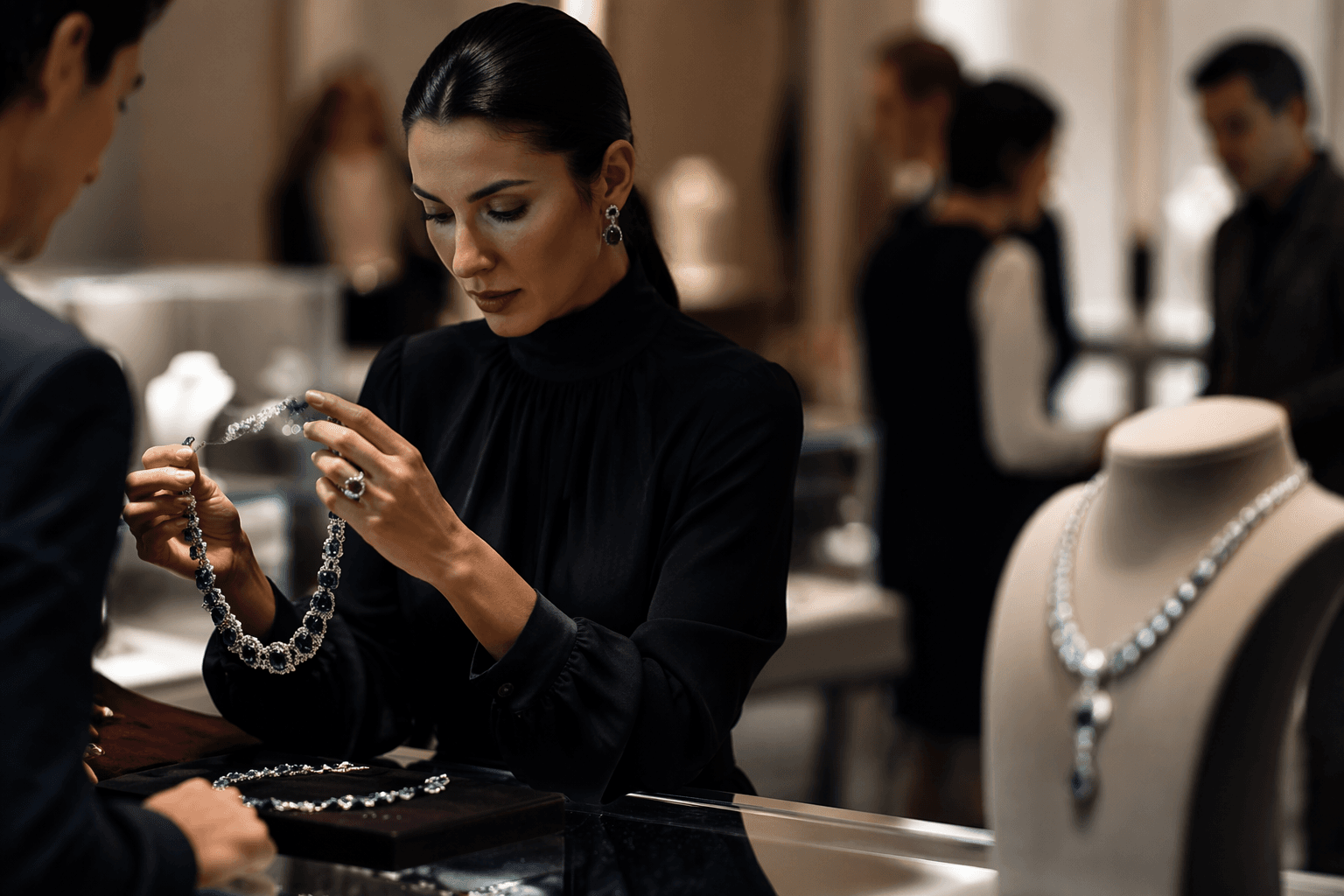
At Couture, the quietest place on the floor was the comfortable middle. Retailers said buyers were splitting into two clear camps, one reaching for exceptional diamonds and substantial gold, the other for cleaner entry pieces built from cords, charms and mixed materials, with far less appetite for the once-reliable in-between.
The setting sharpened the signal. COUTURE staged the 2026 show at Wynn Las Vegas, with opening night on May 27 and the main run stretching from June 2 to June 6, and the brand positions the event as an exclusive, intimate curation of designer fine jewelry and luxury timepieces where new collections and marketing programs are unveiled for the buying season ahead. Its new partnership with Geneva-based Time to Watches also underscored how closely jewelry and watch curation are now being presented to luxury retailers.

The new K-shape at the jewelry counter
The K-shape was visible in both price and psychology. Ylang 23 said the $5,000 to $10,000 retail sweet spot felt less prominent across the show floor, while other retailers described clients who were shopping more thoughtfully, taking longer to decide, and putting greater weight on longevity, craftsmanship and personal significance. That restraint came against a difficult pricing backdrop: the World Gold Council said jewelry demand volumes remained under pressure in Q1 2026 amid record high gold prices, even as total gold demand value reached a record US$193 billion.
Rapaport’s broader read on the market reinforces the same split. Minimalism has been giving way to a return of maximalist styles, while personalization remains one of the strongest drivers of jewelry purchases, which means the middle is being squeezed from both sides: the top end by collectability and craftsmanship, the bottom end by accessibility and self-expression. In other words, consumers are still spending, but they want either a jewel that feels like an heirloom or one that feels like an easy, personal buy, not something blandly average.
How the investment end should look
At the top, minimalist jewelry is not disappearing, it is getting heavier in meaning and cleaner in line. The strongest investment pieces at Vegas leaned into important diamonds, substantial gold jewelry and exceptional colored gemstones, often in silhouettes like rigid collars, torques and substantial bands that let form, polish and setting do the talking. JCK’s show-floor reporting captured that mood in a 14k yellow gold fringe necklace with 1.46 carats total weight of diamonds priced at $15,500, a useful marker for how pared-back design can still live firmly in luxury territory.
That is the new luxury minimalist formula: fewer gestures, better materials. A piece earns its price when the proportions feel exact, the gold surface is intentional, and the stones are set with enough discipline that the whole jewel reads as designed rather than assembled. Even when the silhouette is restrained, the value proposition has to be visible in the metal, the construction and the final finish, especially when gold prices are making weak design harder to hide.
What the entry-price lane is selling
The lower end is not a watered-down version of the top. It is a different promise altogether: quick readability, easy wear and less financial friction. On the Couture floor and in adjacent Vegas coverage, designers leaned into alternative materials, mixed-media construction, cords, beads and found objects, plus mini versions of signature collections, often in charm form. Leather, velvet, rubber and cord keep the silhouette clean while lowering the barrier to entry, which is exactly why the category feels more approachable without losing personality.
That entry lane matters because it gives minimalist brands a way to merchandise without overcomplicating the case. The best low-ticket pieces still have a point of view, whether that comes through a single charm, a corded necklace, a compact token or a repeat motif translated into a smaller scale. The old instinct to stock a broad middle of slightly different delicate pieces is weaker now than a tighter assortment that clearly separates everyday essentials from true investment jewels.
How minimalist brands should design for the split market
The winning assortment is no longer one long continuum. It is two deliberate stories, each with a clear job in the case:
- The investment story should center on high-polish gold, precise settings, substantial weight in the hand and silhouettes that feel architectural, such as torques, collars, clean bands and solitaire-led necklaces.
- The entry story should stay edited and easy, with cords, mini charms, compact motifs and mixed materials that keep the design fresh while protecting price accessibility.
- The middle, especially around the $5,000 to $10,000 range, needs more conviction than before. If a piece sits there, it has to justify itself with provenance, craftsmanship or a silhouette strong enough to feel collectible rather than merely polite.
Couture’s clearest lesson is that minimalist jewelry is not becoming less relevant, it is becoming more specific. The market now rewards pieces that either deserve to be kept forever or make an easy, low-risk yes, and that leaves very little room for jewelry that simply fills space.
This article was produced by Prism’s automated news system from verified source data, official records, and press releases, then run through automated quality and moderation checks before publishing. The system is built and supervised by the people who set the standards it runs under. Read our full AI policy.
Did this article answer your question?


