Desert diamonds turn earthy tones into a minimalist statement
Earth-toned diamonds are being sold as quiet individuality: champagne-to-cognac stones, warm gold, and pared-back settings that soften sparkle without losing polish.
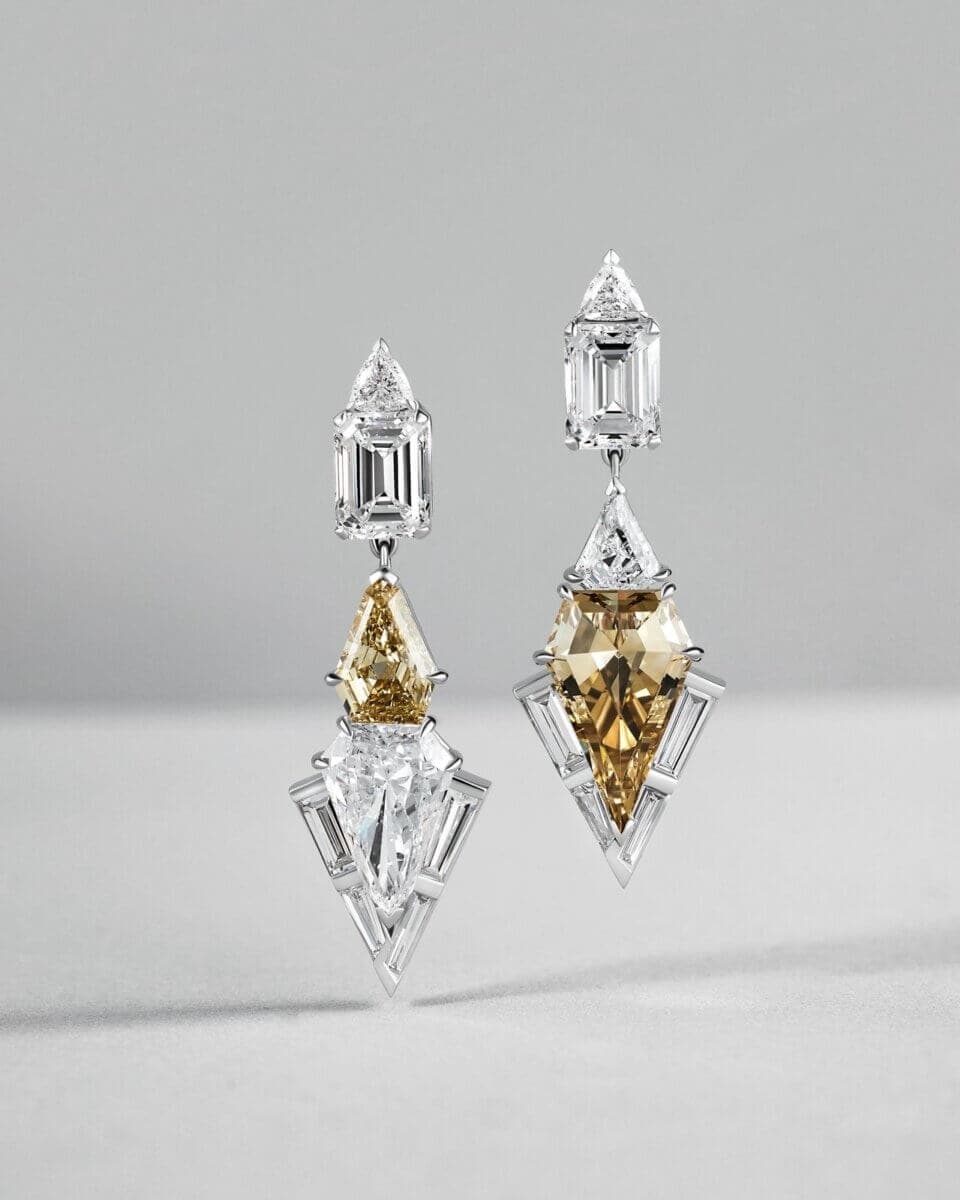
**The new appeal of desert diamonds is not loudness, but control.** WWD, working with Fairchild Studio, framed the category through subtle gradient designs, solitaire silhouettes, and warm gold settings, the kind of jewelry that lets tone do the work once reserved for brilliance alone. At Couture in Las Vegas, A Diamond Is Forever returned to the conversation after launching desert diamonds there last year, and the stones on display stretched from sunlit whites and champagnes to deep brown cognac and whisky hues.
That range is the whole point. Desert diamonds are being presented as a natural spectrum, not a dyed effect or a gimmick, and De Beers argues that spectrum is a marker of authenticity. The brand links the idea to a larger consumer shift toward individuality, authenticity, and personal meaning, which is exactly why the look resonates with minimalist buyers: it feels personal without becoming ornate, distinctive without chasing volume.
What makes the look read as minimalist
The most convincing desert-diamond pieces share a few visual cues. They rely on solitaire shapes, low-flash settings, and muted tones that keep the eye on the stone’s color rather than on excess metal or heavy detail. Bezel settings, ombré rows, brushed or matte gold, and pared-back silhouettes all work in the same direction, giving the diamonds a softer edge and a more deliberate profile.
That restraint is what separates this story from a generic colored-diamond trend. A desert diamond does not need to shout to be noticeable. In a simple ring or pendant, the brown-gold shift in tone can feel more individual than a larger, whiter stone, because the appeal comes from nuance rather than spectacle.
Why the palette has commercial force
De Beers has been explicit about the emotional pitch. It says consumers are showing interest in earthy tones because they create a distinct look and a more direct connection to nature. That language matters because it positions the category as more than a style experiment. It turns color, usually treated as a deviation from the classic diamond ideal, into the feature that signals authenticity.
The company pushed that idea further on June 6, 2025, when it unveiled Ombré Desert Diamonds as a new jewelry beacon and described it as the first beacon product in more than a decade. It placed the initiative inside its ORIGIN strategy, which is designed to differentiate De Beers-sourced polished diamonds and keep natural diamonds front and center at a time when colorless stones and lab-grown options dominate much of the conversation.
How retailers translated the idea
Retail follow-through came quickly. On October 10, 2025, KAY Jewelers and Neil Lane announced the Neil Lane Desert Diamonds collection, a natural-diamond bridal and fashion line set to launch on October 20. The timing showed how fast the idea moved from trade-show language to consumer-facing product, especially in bridal, where a subtle champagne or cognac tone can make a ring feel less expected than a standard bright-white center stone.
KAY also introduced the Le Vian Desert Ombré collection with 14 layering-friendly styles priced from $1,299.99 to $7,999.99, including 9 online-only pieces. That price spread is telling. It places the look in a broad reachable luxury band, not just at the high end, and the layering emphasis suggests the category is being built for everyday wear, not only special-occasion sparkle.
A fresh direction, or a polished rebrand?
The honest answer is that desert diamonds are both. They are not inventing minimalism from scratch. The solitaire, the bezel, the warm gold band, and the pared-back silhouette all come from the long vocabulary of understated fine jewelry. What feels new is the way the industry is treating hue as the central design code rather than an afterthought.
That shift gives familiar forms a different mood. A classic ring in a champagne or cognac tone can feel softer, moodier, and more individual than the same setting in a bright white stone, even when the architecture is nearly identical. In that sense, desert diamonds are less a revolution than a recalibration, a warmer branch of minimalism that replaces flash with character.
The numbers suggest it is landing
De Beers says the campaign has already begun shaping demand. Natural diamond sales at US independents were up 4% in the fourth quarter of 2025 and 9% in the first quarter of 2026, and stones in the K to Z color range saw even stronger growth. Those figures do not prove permanence, but they do show that the idea is moving beyond mood boards and into the cases where customers actually buy.
That is where desert diamonds become interesting for anyone drawn to restrained jewelry. They offer a way to wear a diamond that feels less standardized, more personal, and still fully minimal. The appeal is not in making jewelry louder. It is in making understatement feel newly specific, with earthy color doing what extra decoration no longer needs to do.
This article was produced by Prism’s automated news system from verified source data, official records, and press releases, then run through automated quality and moderation checks before publishing. The system is built and supervised by the people who set the standards it runs under. Read our full AI policy.
Did this article answer your question?


