Didi Rose Jewelry blends Nigerian heritage with modern heirloom minimalism
Benedicta Awere-Malik turns Nigerian craft memories into modern heirlooms, from knife-edge hoops to gemstone pieces designed for daily wear.
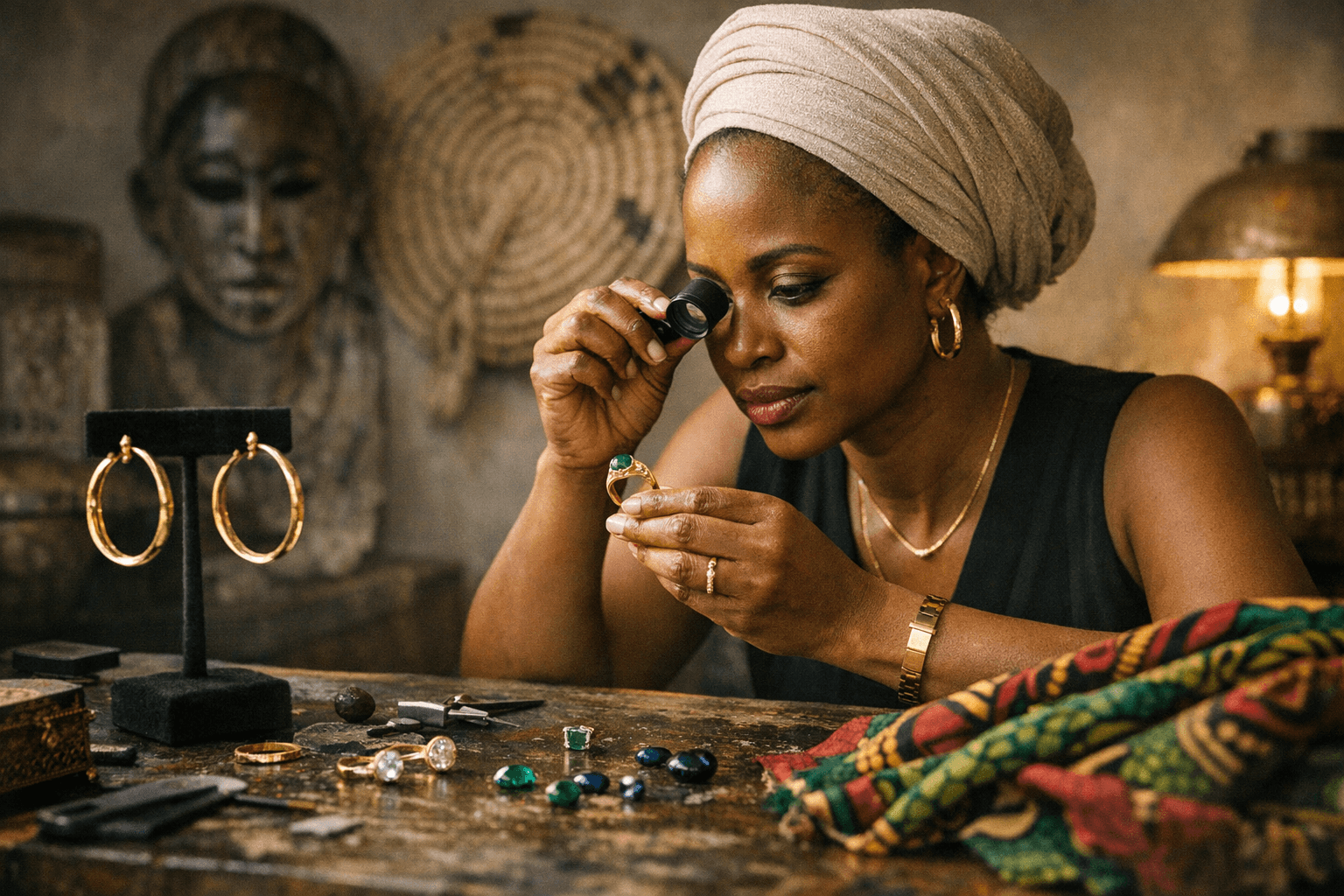
A personal history made to be worn
Didi Rose Jewelry begins with memory, but it lands in the present. Benedicta Awere-Malik built the label around handmade pieces with modern heirloom appeal, jewelry that feels intimate enough to matter and restrained enough to live on the body every day. That balance is the point: these are not trophy jewels kept for rare occasions, but quiet, personal objects meant to move easily from a white shirt to an evening dress.
The founder’s story gives the brand its emotional weight. Awere-Malik grew up in Nigeria, where making things by hand came early and often, from braiding hair at 7 to sewing at 11. She also baked with her mother’s recipes, and remembers frosting and decorating her first birthday cake at 9. Those details matter because they explain the brand’s discipline: the same hands that learned patience through braid work, stitching, and baking now shape jewelry with a similar sense of care.
Why the name feels as intimate as the work
The name Didi Rose Jewelry is not a marketing invention so much as a personal signature. Didi comes from Awere-Malik’s childhood nickname, while Rose reflects her love of roses. Together, the name suggests something softer than branding jargon: a maker’s identity translated into a label that still feels human.
That softness is part of what makes the brand persuasive to minimalist buyers. Minimalist jewelry can sometimes skew severe, all line and no feeling. Didi Rose Jewelry avoids that trap by letting sentiment sit inside the form. The result is pieces that read as clean and contemporary, but never generic, because they carry a trace of the person who made them.
Materials that justify constant wear
The brand describes its jewelry as pieces “for now, meant to stay forever,” and that idea depends on material credibility. Didi Rose Jewelry uses natural gemstones and precious metals, which immediately places the work in the category of jewelry meant to endure rather than imitate. For a minimalist collection, that distinction matters: a pared-back silhouette only feels complete when the materials can support years of wear.
A natural gemstone introduces variation, even in a restrained design. Precious metals do the heavier lifting, giving the pieces structure, polish, and longevity. For anyone shopping with a daily-wear lens, that combination is the practical heart of the brand. It suggests jewelry that can be worn often without losing its relevance, because the value lives in the substance as much as in the look.
The knife-edge hoop as the clearest expression of the brand
The hero piece is the Gold Knife Edge Hoop Earrings, priced at $475, and it tells you nearly everything you need to know about the line’s design language. A knife-edge profile gives a hoop a sharper, more architectural line than a fully rounded tube hoop. It catches light differently, reads sleeker against the ear, and feels less decorative than a statement hoop while still having enough presence to stand alone.
At $475, the pair sits in the territory where construction matters. It is not a casual impulse buy, but it is also not a museum-piece price. For a handmade gold earring, the value proposition rests in the finish, the silhouette, and the fact that the design can work hard in a wardrobe built around repeat wear. That is the sweet spot for minimalist jewelry: recognizable enough to become part of a personal uniform, refined enough to keep its relevance.
Heritage without costume
Awere-Malik’s Nigerian family history gives the jewelry its cultural clarity. Gold and coral worn by her grandmothers in Southern Nigeria continue to inspire the work, and that influence deepens the brand’s sense of modern heirloom minimalism. The reference is not literal or costume-like; it is atmospheric, carried through color, material memory, and the quiet authority of adornment that has been part of a family for generations.
That matters because many minimalist brands chase blankness, stripping pieces down until they lose narrative force. Didi Rose Jewelry takes a different route. It pares back the form but keeps the meaning, allowing heritage to show up in proportion, sheen, and restraint. The pieces feel personal not because they are ornate, but because they are grounded in lived memory.
A brand built for the way jewelry is actually worn
Based in Buford, Georgia, the label sells direct online and spans a wide price range, from $100 to $6,000+. That spread signals a brand that can serve both entry-level shoppers and collectors, as long as the buyer understands the through line: handmade jewelry with a tactile, considered finish. The range also suggests flexibility in scale, from simpler pieces suited to everyday layering to more substantial work that lives higher up the collection.
For minimalist jewelry, versatility is the real test. Pieces have to layer cleanly, sit comfortably, and survive repeated use without looking overdesigned. Didi Rose Jewelry appears to be built around exactly that logic. The founder’s background in braid work, sewing, and baking translates into a maker’s instinct for detail, while the use of precious materials keeps the line from feeling overly delicate or disposable.
Why this brand resonates now
What makes Didi Rose Jewelry compelling is not only the story, but the clarity of the translation from story to object. Benedicta Awere-Malik has turned childhood skills, Nigerian family memory, and a deep love of making into jewelry that feels lived-in from the start. The pieces are minimal, but they are not empty. They carry the kind of quiet specificity that gives a necklace, hoop, or ring the chance to become part of someone’s daily identity.
That is what modern heirloom minimalism looks like when it is done well: jewelry with enough restraint to wear every day and enough soul to feel worth keeping.
This article was produced by Prism’s automated news system from verified source data, official records, and press releases, then run through automated quality and moderation checks before publishing. The system is built and supervised by the people who set the standards it runs under. Read our full AI policy.
Did this article answer your question?


