How to Clean Minimalist Jewelry Safely, by Material and Finish
The safest jewelry-cleaning trick is also the simplest: match the method to the material, and you can revive everyday pieces without wrecking pearls, silver, or stones.
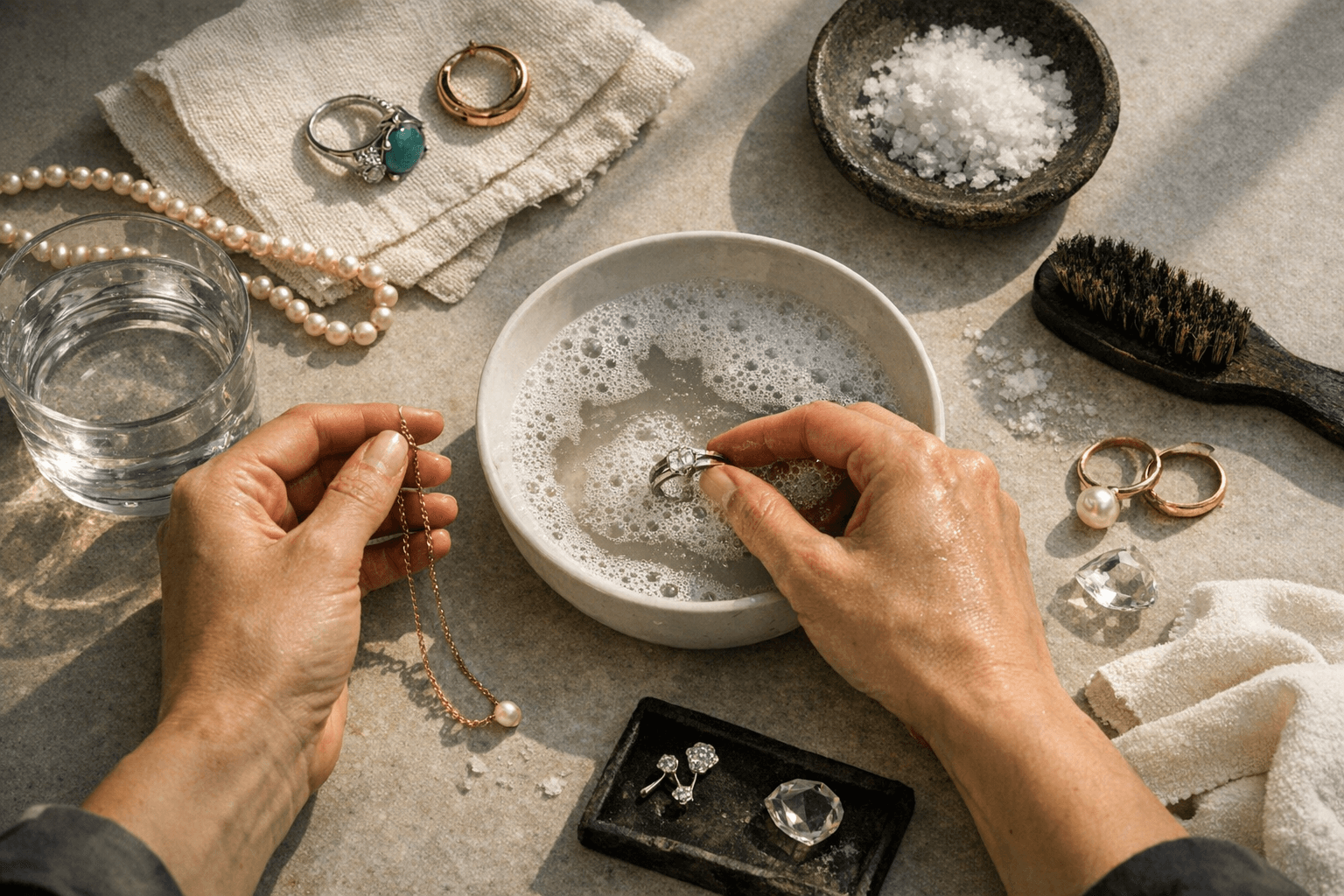
The safest rule is also the easiest one
The thin chain at your collarbone, the small hoop you wear on repeat, the ring that picks up lotion and hand soap by noon: minimalist jewelry looks best when it is clean enough to read as deliberate, not dull. The mistake most people make is treating every piece the same, when a pearl strand, a sterling silver necklace, and a gemstone ring can each need a different touch. A professional ultrasonic cleaner can cost $150 or less, but that convenience is exactly why caution matters: the wrong cleaning method can do more damage than a week of wear.
Start with the gentlest default
For many pieces, warm water, mild dish soap, and a soft-bristle toothbrush are the safest home routine. The American Gem Society recommends specially formulated jewelry cleaning solutions or mild dish soap diluted in warm water, then a careful rinse and gentle drying. If you are cleaning anything small, rinse it in a glass of water rather than directly over a sink drain, because one slip can turn a routine polish into a lost stone or a lost earring.
The point is not to scrub harder. It is to loosen surface grime without forcing water, chemicals, or abrasion into places they do not belong. Everyday jewelry usually needs far less effort than people think, and that is why the least aggressive method often makes pieces look expensive again.
Gold and stainless steel can handle a simple wash
Plain gold and stainless steel are usually the least fussy materials in a minimalist jewelry box. A soft toothbrush, warm water, and a drop of mild soap can lift away the film left by sunscreen, skin oils, and city dust. Rinse carefully, dry completely, and avoid anything labeled harsh, stripping, or heavy-duty.
Finish still matters. A brushed or matte surface can show scratches more quickly than a polished one, so even a safe cleaner should be used with a light hand. If the piece includes stones, treat the stone as the fragile part of the equation, because the metal may tolerate more than the setting or gem does.
Sterling silver needs care, not chemistry
Sterling silver is often the first material people clean too aggressively, usually because tarnish makes it look worse before it looks better. AGS specifically flags tarnished sterling silver jewelry without any set stones as a category that can be handled at home, but the safest approach is still a gentle one: warm water, mild soap, and a soft cloth or brush. That is usually enough to remove surface grime and restore some shine without abrading the piece.
What should not happen is a fast dunk in a mystery cleaner or a hard scrub with a rough pad. Silver can be scratched, and any set stones complicate the cleaning immediately. If a silver piece is intricate, pavé-set, or especially precious, a jeweler’s cleaning is safer than improvising at the sink.
Pearls are beautiful because they are delicate
Pearls are organic gemstones, which means they need especially gentle care. The Gemological Institute of America warns that pearls should not go into ultrasonic cleaners, and the American Gem Society adds that ammonia-based cleaners should be avoided as well. Chlorine and bleach are off-limits too, especially for organic gems like pearls.
For pearls, the safest at-home habit is simple maintenance, not deep cleaning. Wipe them after wear with a soft cloth, keep them away from harsh chemicals, and treat them as the most vulnerable item in the drawer. AGS also recommends professional restringing annually, which matters because a strand can look perfect long after the silk thread inside has begun to weaken.
Not every gemstone belongs in an ultrasonic cleaner
This is where the biggest cleaning mistakes happen. GIA says ultrasonic cleaners should not be used on gemstones with surface-reaching breaks filled with substances such as oil, resin, or glass-like material. They should also not be used on organic materials such as pearls, coral, ivory, or amber. That means a machine that seems efficient can be the wrong tool for exactly the pieces people worry about most.
Harsh chemicals are another trap. AGS recommends avoiding chlorine or bleach for all gemstones, and avoiding ammonia-based cleaners for organic gems like pearls. If a stone has been treated, filled, fractured, or otherwise modified, default to caution. The safest assumption is not that a stone is durable, but that it deserves a cleaning method matched to its construction.
The mistakes that do the most damage
- Cleaning over an open sink drain, where loose stones and tiny backs can disappear in seconds.
- Using chlorine, bleach, or ammonia when a mild soap bath would do the job.
- Putting pearls, coral, ivory, amber, or filled stones into an ultrasonic cleaner.
- Scrubbing delicate finishes as if every surface were solid and scratch-proof.
- Skipping annual inspection, which can let a loose setting or worn thread go unnoticed.
GIA’s advice to rinse jewelry in a glass of water is a small but useful reminder: safety often comes down to how you hold the piece, not just what product you use. The quiet habits matter here.
Make annual professional cleaning part of the routine
AGS recommends taking jewelry to a jeweler at least once a year for professional cleaning and inspection. That is especially useful for everyday pieces, which wear more often than formal jewelry and pick up stress faster. A jeweler can spot loosened prongs, thinning metal, worn clasps, and other problems that do not show up when a necklace is only admired in the mirror.
For pearls, that annual visit should include restringing. For stones with special treatments or fragile surfaces, it is the moment to ask what can be cleaned safely at home and what should stay in professional hands. That kind of maintenance is what keeps minimalist jewelry looking crisp instead of tired.
The cleanest jewelry routine is the least dramatic one
Minimalist pieces reward restraint. Warm water, mild soap, a soft brush, careful rinsing, and a yearly jeweler visit will preserve more beauty than any harsh shortcut ever will. The goal is not to make jewelry spotless at any cost; it is to keep the gold bright, the silver wearable, the pearls intact, and the stones where they belong.
This article was produced by Prism’s automated news system from verified source data, official records, and press releases, then run through automated quality and moderation checks before publishing. The system is built and supervised by the people who set the standards it runs under. Read our full AI policy.
Did this article answer your question?


