How to Keep Fine Rings Sparkling, Secure, and Wearable for Years
A slim ring can look effortless and still wear down fast. The fix is simple: gentler cleaning, regular inspections, and a jeweler’s eye before tiny problems become costly ones.
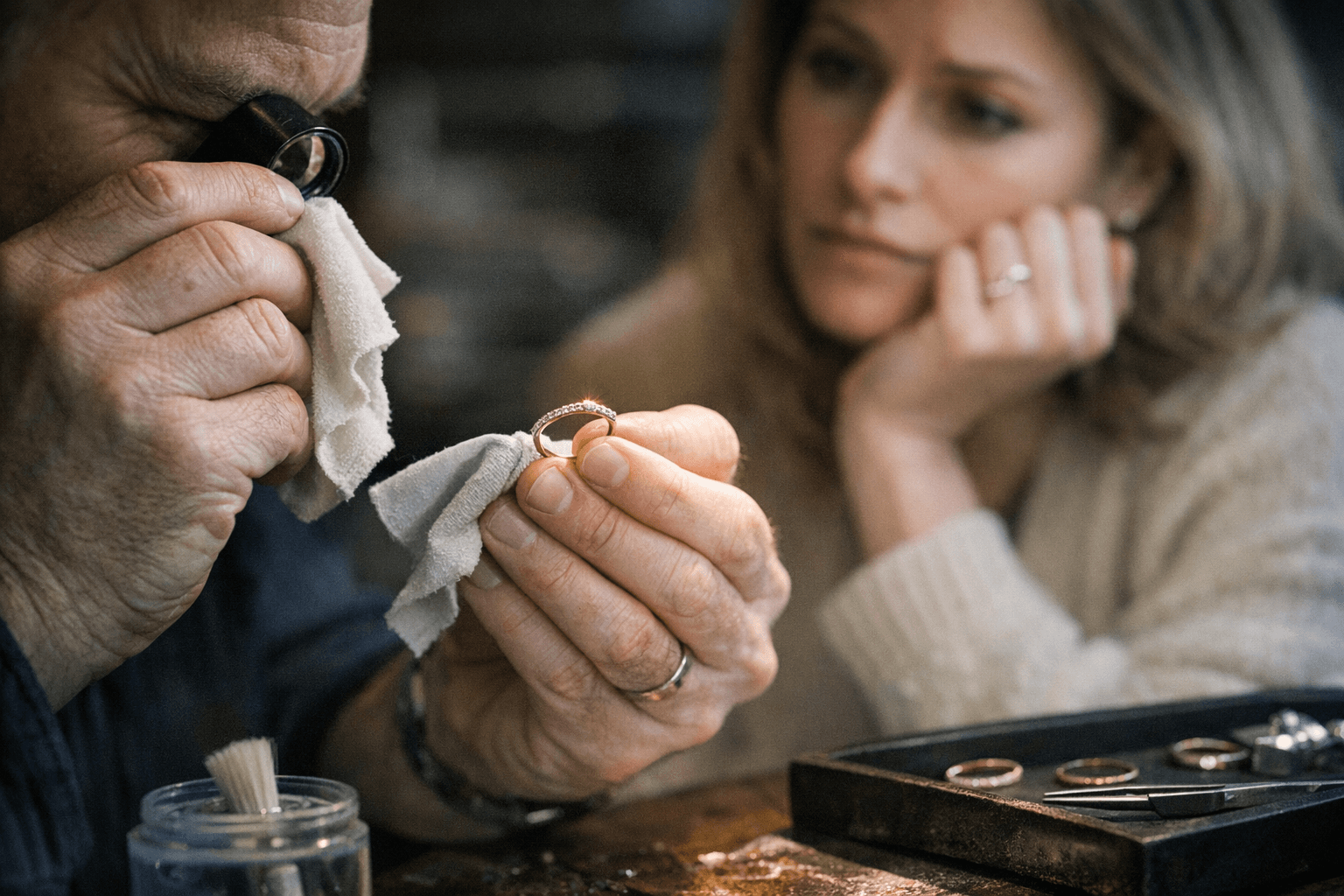
The daily habits that quietly damage a fine ring
The ring that disappears into your life is often the one that needs the most attention. A thin gold band or diamond engagement ring can pick up oil, dirt, and tiny abrasions from everyday wear long before the damage is visible, and that buildup can dull the stone while slowly wearing at the setting. VRAI notes that a bacteria-covered ring may even discolor the metal if it is left uncleaned, which is a reminder that sparkle and hygiene are linked more closely than most people think.
The best protection starts with the simplest habit: take rings off when you are doing anything that can scratch, bend, or stress them. That means exercise, heavy cleaning, gardening, lifting weights, and any task that puts direct pressure on prongs or shanks. A ring is most vulnerable at the exact moments it feels most natural to keep on, and avoiding those moments preserves the clean, understated look minimalist jewelry is meant to have.
Stop doing this
Fine rings do not need aggressive maintenance; they need restraint. Harsh chemicals, abrasive pastes, and sharp tools can scratch metal, cloud stones, and weaken delicate settings. Tacori specifically advises gentle home cleaning and warns against harsh chemicals or sharp objects, a standard that makes even more sense when a ring is worn every day and exposed to constant contact.
It is also worth resisting the urge to treat every stone the same way. Pearls, opals, amber, and porous gems such as turquoise need different care, and the International Gem Society warns not to clean those stones with ammonia solution. That caution matters because what keeps a diamond crisp can harm a softer or more porous gem, especially in rings designed with small, refined details where residue and residue-removal mistakes are easy to miss.
Start doing this at home
A simple soak in warm water with a small amount of dish soap remains the most practical at-home method for many fine rings. Let the piece sit, then use a soft brush or cloth to lift away surface grime without scraping the metal or stone. The goal is not a gleaming showroom finish; it is preserving the clear lines and quiet brightness that make minimalist rings feel so elegant in the first place.
A gentle cleaning rhythm
1. Mix a mild dish-soap-and-water solution.
2. Soak the ring briefly to loosen oil and dirt.
3. Wipe with a soft cloth or brush, using light pressure only.
4. Rinse thoroughly and dry completely before wearing it again.
That routine is enough for many rings between professional visits, and it is especially useful for pieces worn daily. The point is consistency rather than intensity: frequent gentle cleaning keeps grime from settling into the setting, where it can make a well-cut stone look smaller and a polished band look tired.
Watch the setting as closely as the stone
Sparkle gets the attention, but security is what keeps a ring wearable for years. Jewelers of America says fine jewelry should be checked at least once a year for loose prongs, worn mountings, and general wear and tear. Tacori is even more exacting for engagement rings, recommending monthly checks for the stone and prongs and annual professional servicing for rings that see regular wear.
That difference reflects how often engagement rings live on the hand. Daily use adds up, and even a ring that looks fine at arm’s length can have a slightly lifted prong, a stressed basket, or a mounting that has thinned over time. A jeweler can catch those changes before a stone loosens or a setting opens, which is far less dramatic, and far less expensive, than replacing what was lost.
Why professional care matters
The case for expert maintenance is not just aesthetic, it is structural. Jewelers of America was founded in 1906, and its Bench Professional Certification program dates to 1997, both signs of an industry that has spent decades formalizing repair and maintenance standards. That history matters because good ring care is not guesswork; it depends on trained hands that know how to inspect prongs, assess wear, and restore a setting without compromising its architecture.
For white gold rings, the maintenance schedule can be even more specific. VRAI says rhodium replating may be needed every 12 to 24 months, as needed, and recommends professional cleanings and inspections once or twice a year for some white gold engagement rings. That detail is important because white gold can slowly lose its bright, silvery finish, and replating restores the crisp look that makes the metal read so clean against a diamond.
What to ask a jeweler to check
A careful inspection should cover both beauty and engineering. Look for loose prongs, thinning mountings, worn areas on the band, and any clouding or buildup that at-home care has not removed. If the ring is in white gold, ask whether the rhodium layer is still even and whether the piece is due for replating.
For rings with delicate settings, this step is especially valuable. A bezel may hold a stone differently than prongs do, but both require monitoring for wear, and both can be compromised by constant friction. The cleaner the design, the more obvious tiny flaws become, which is exactly why routine inspection preserves a minimalist ring’s refined look.
The care routine that keeps a ring looking like itself
The best ring care is not elaborate. It is a steady habit of removing the ring when your hands are at risk, cleaning it gently at home, and bringing it in for inspection before small wear becomes visible damage. That balance protects the stone, the metal, and the quiet precision of the design.
In the end, a fine ring stays beautiful the same way a well-made garment does: by being worn, but not abused, and by being maintained before the signs of neglect have a chance to settle in.
This article was produced by Prism’s automated news system from verified source data, official records, and press releases, then run through automated quality and moderation checks before publishing. The system is built and supervised by the people who set the standards it runs under. Read our full AI policy.
Did this article answer your question?


