Jewelry turns personal as fancy stones and cocktail watches rise
Fancy stones and cocktail watches are pushing jewelry toward personality, but the smartest versions keep the look precise, controlled, and easy to wear.
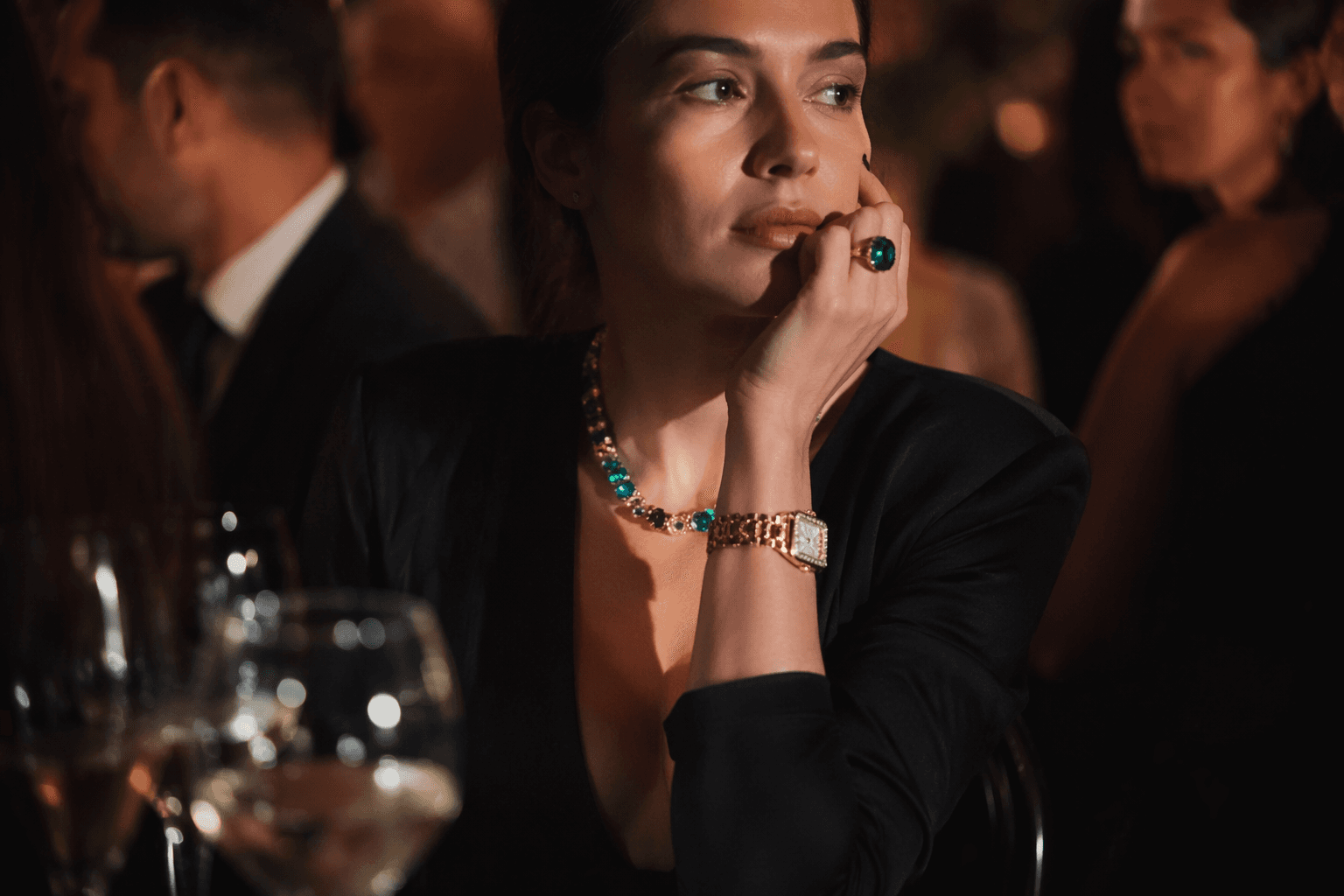
One colored stone, one collectible watch, or one sharp accent can do the work of an entire layered look. Who What Wear’s 2026 trend forecast centers fancy-hued stones, cocktail watches, and expressive statement details, but the most useful way to read it is through restraint.
The new code for minimal jewelry
The market has moved far from bare-bones accessorizing. Fancy-colored stones are no longer being framed only as bold, maximalist statements; in a pared-back wardrobe, they can function as the single visual interruption against a neutral outfit, especially when the silhouette around them stays clean. A thin ring with one saturated stone, a pendant worn alone at the collarbone, or a pair of small earrings with a colored center are all ways to keep the idea intact without turning it into ornament overload.
Cocktail watches follow the same rule. These pieces have always lived at the intersection of jewelry and timekeeping, but the restrained version depends on proportion and finish: a compact case, a polished bracelet, and one memorable detail rather than a dial crowded with decoration. For minimalist dressers, a watch can supply both function and sparkle without asking for a second accent to support it.
Expressive statement details are the hardest trend to translate. In their fullest form, they depend on volume, contrast, and a certain kind of theatrical styling. In a minimal wardrobe, the move is to let one element carry the conversation, whether that is an unusual stone cut, a sculptural clasp, or a watch with enough personality to stand alone.
Why the luxury market is rewarding personal pieces
The United States remains the world’s largest luxury market by sales, China is expected to be among the fastest-growing through 2030, and McKinsey projects the global luxury market will reach $700 billion by the end of the decade. In McKinsey’s analysis, emotional connection is overtaking status as a driver of desire, which is exactly the kind of shift that makes a colored stone or a collectible watch feel more compelling than a logo.
Discovery is moving beyond boutiques and brand-owned channels into AI platforms, resale marketplaces, and peer networks, McKinsey found. For jewelry buyers, that changes how people compare and choose pieces: a buyer may discover a watch through an AI recommendation, then verify price and condition in resale before ever walking into a store.
In Bain’s June 25, 2026 update, global luxury spending reached €1,443 billion in 2025, and personal luxury goods spending is expected to grow 2% to 4% in 2026, to between €365 billion and €373 billion. Bain found roughly 60% of luxury players are performing above last year’s comparable results, a sign that the category has stabilized even as the consumer logic behind it keeps changing.
How to wear the trends without losing restraint
Minimalism does not mean opting out of color or personality. It means editing aggressively so that each piece feels chosen rather than accumulated. A fancy-hued stone works best when the rest of the look is stripped back to clean lines and quiet metal, because the color then reads as intent, not excess. A cocktail watch can do the same job if it replaces, rather than joins, a stack of bracelets or a heavily decorated wrist.
A restrained approach also makes room for resale and pre-owned buying, which is increasingly part of luxury behavior. Bain found half of luxury shoppers now consult the secondhand market before buying new, and half already use AI in their purchase journey. Luxury buyers are comparing, verifying, and editing carefully, which suits jewelry especially well because a strong stone, a durable setting, and a well-kept watch can all carry value across owners.
Deloitte’s 2026 luxury report found 66.9% of surveyed executives expect stable or growing revenues, 70.7% expect to maintain or improve margins, and 28.6% see customer experience and loyalty as the strongest growth opportunity. Deloitte also found 53.8% of companies already operate certified pre-owned or trade-in programs, giving shoppers more structured ways to buy with an eye on longevity and resale.
What to look for when the look is meant to last
In KPMG’s framework, the sector is moving beyond exclusivity toward authenticity, sustainability, personalization, and meaningful experiences, and that is a practical buying framework for minimalist jewelry too.
- Choose one statement at a time, whether that is a colored stone or a cocktail watch.
- Favor clean settings and compact proportions so the piece can sit inside a smaller wardrobe.
- Use certified pre-owned or trade-in programs when available, since they already sit inside a growing share of luxury retail.
- Treat the secondhand market as part of the buying process, not a fallback.
This article was produced by Prism’s automated news system from verified source data, official records, and press releases, then run through automated quality and moderation checks before publishing. The system is built and supervised by the people who set the standards it runs under. Read our full AI policy.
Did this article answer your question?


