Lab-Grown Diamonds Reshape Jewelry Market as Prices Fall 72 Percent
Lab-grown diamond prices have crashed 72% per carat, and BriteCo's appraisal data reveals exactly how that seismic shift is rewriting what buyers expect to spend.

A 72 percent drop in per-carat price doesn't happen quietly. It reroutes supply chains, realigns consumer expectations, and forces an entire industry to reckon with what it has long treated as immutable: the value of a diamond. That is precisely what has unfolded in the lab-grown diamond market through 2025, and proprietary appraisal and insurance data from BriteCo makes the scale of that transformation impossible to dismiss.
What the numbers actually say
BriteCo, which sits at a unique vantage point by processing appraisal and insurance data across thousands of jewelry transactions, tracked the per-carat price trajectory of lab-grown diamonds through 2025. The findings confirm what many in the industry had been whispering: prices didn't drift downward, they collapsed. A roughly 72 percent reduction in per-carat cost puts lab-grown stones at approximately 73 percent less than their mined counterparts on a comparable weight and quality basis. For a buyer considering a two-carat round brilliant, that gap translates from a conversation about budget compromise into a genuinely different category of purchase.
This kind of data matters because it comes from the appraisal and insurance side of the market rather than retail marketing. When a jeweler sets a price, that's commerce. When an appraiser assigns a replacement value and an insurer backs it, that's closer to ground truth. BriteCo's dataset captures what these stones are actually worth in the real-world economy of replacement and risk.
Why prices fell so far, so fast
The economics of lab-grown diamond production follow a pattern familiar from other technology-driven manufacturing: as reactor technology improves and production scales, unit costs fall sharply. Chemical vapor deposition (CVD) and high-pressure high-temperature (HPHT) methods have both matured considerably, allowing producers, particularly in India and China, to grow larger, higher-clarity stones with greater consistency and at lower cost per carat than was possible even five years ago.
What makes the lab-grown market unusual is that this cost reduction hasn't been absorbed as margin by the midstream. It has flowed almost directly to retail pricing, which is why the BriteCo data shows such a steep decline at the consumer-facing level. When multiple producers can grow a D-color, VVS2 stone and bring it to market, the price competition becomes intense quickly. There is no geological scarcity argument to anchor the floor.
How consumer behavior has shifted
The price collapse has done something predictable and something less expected. Predictably, it has democratized access to larger stones. Buyers who previously topped out at a one-carat natural diamond for budgetary reasons are now seriously considering two- and three-carat lab-grown alternatives. The psychological threshold of the "big stone" has moved for a meaningful segment of the market.
Less predictably, the price drop has also accelerated a kind of segmentation in consumer intent. Buyers who specifically want a natural diamond, whether for reasons of investment logic, tradition, or a belief in the romance of geological formation, have become more deliberate about stating that preference. The lab-grown option has clarified the choice rather than muddying it. You are either buying a carbon crystal grown in a reactor over weeks, or you are buying one formed over billions of years under the earth's mantle. The physical and chemical properties are, by every gemological measure, identical. The stories are not.
What this means for jewelry design and minimalism
The price shift has had a quiet but significant effect on minimalist jewelry specifically. Designs that foreground a single stone, a bezel-set solitaire, a flush-set band, a delicate tension setting, have always lived or died by the quality of that central element. When a lab-grown stone at two carats costs what a natural half-carat once did, the design equation changes. Jewelers working in the minimalist idiom can now specify stones that would previously have been financially out of reach for their target customer.
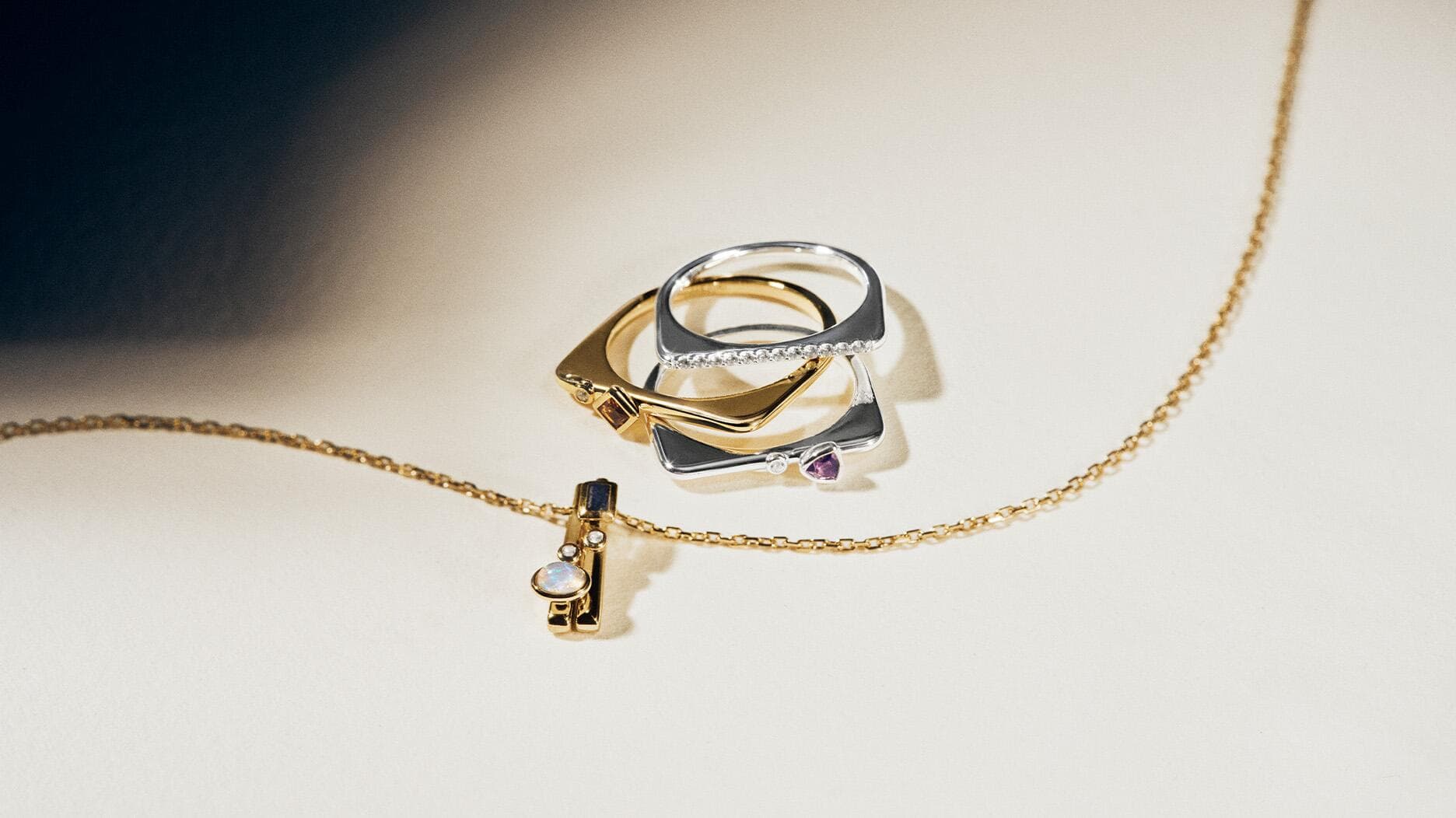
The result is a wave of minimalist pieces that feel genuinely luxurious rather than aspirationally restrained. A slim 14-karat yellow gold band with a 1.5-carat lab-grown oval, bezel-set so the metal cups the stone in a continuous line, is now a realistic rather than extravagant choice at the price points many contemporary jewelry brands occupy. The stone does the work. The setting gets out of the way. That design philosophy and this pricing reality are in unusually close alignment right now.
The ethical and provenance questions that remain
It would be incomplete to discuss lab-grown diamonds without addressing the provenance claims that have become central to their marketing. Lab-grown stones are frequently positioned as the ethical alternative to mined diamonds, free of conflict and environmental harm. The first part of that claim is substantially defensible: a stone grown in a controlled facility has no connection to the artisanal mining communities where conflict diamonds have historically originated.
The environmental picture is more complicated. Growing diamonds in a reactor is an energy-intensive process. The carbon footprint of a lab-grown stone depends almost entirely on the energy source powering the reactor: a facility running on renewable energy produces a very different environmental outcome than one drawing from a coal-heavy grid. Brands and producers that make broad sustainability claims without specifying their energy sourcing deserve scrutiny. Look for specifics, not slogans. "Sustainably grown" without a disclosed energy source and third-party verification is marketing language, not a provenance standard.
The natural diamond industry, for its part, has invested significantly in traceability programs and responsible sourcing frameworks, though coverage and enforcement remain uneven. Neither category offers a clean ethical story universally. What the BriteCo data doesn't capture, and what no price chart can resolve, is which story a buyer ultimately wants to tell about what they're wearing.
Where the market goes from here
The 72 percent price decline documented through 2025 raises a structural question the industry is still working through: do lab-grown diamonds continue to fall in price until they approach commodity status, or does some floor establish itself as production costs stabilize? The trajectory so far suggests the former is more likely than the latter in the near term.
For buyers, that creates an interesting timing consideration. A lab-grown diamond purchased today will likely appraise for less in five years than it does now, a reality that the BriteCo insurance data implicitly reflects in replacement value calculations. This is meaningfully different from the historical behavior of natural diamond prices, which, while not a reliable investment asset, have generally held value more consistently over time.
The honest conclusion is that lab-grown diamonds have earned their place in the market not as a lesser substitute but as a genuinely different product with a different value proposition. The 72 percent price gap doesn't make them better or worse than natural stones. It makes them a distinct choice, one that rewards buyers who understand what they are getting and why, rather than those who assume the two categories are interchangeable in every respect except origin.
Know something we missed? Have a correction or additional information?
Submit a Tip