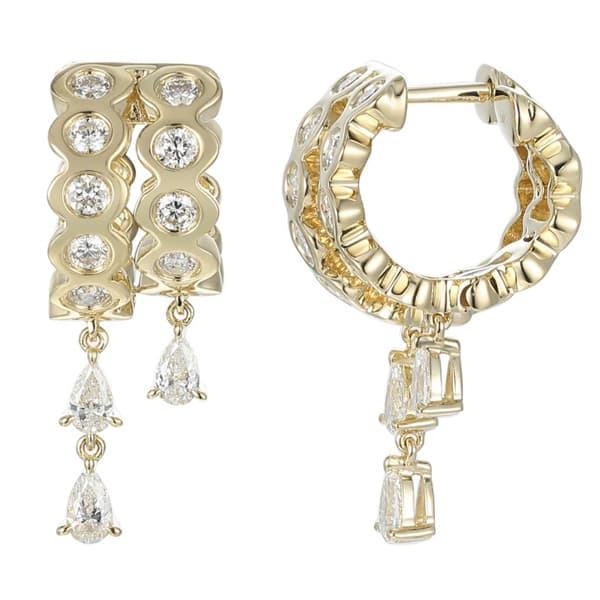
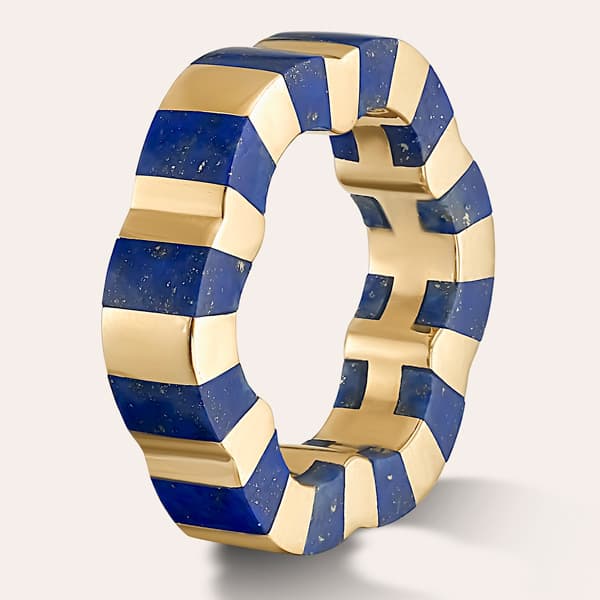
Meta’s AI pendant could make tech jewelry the next wearable trend
Meta’s AI pendant could turn wearable tech into jewelry, but only if it reads as elegant on the body. Apple Watch and Oura show the path: usefulness first, then desire.

Meta is reportedly preparing to test an AI pendant within the next year, and that simple silhouette changes the conversation. A pendant sits in a more intimate part of the wardrobe than a watch or a pair of glasses: it rests near the face, hangs in plain sight, and has to look intentional from every angle if it is going to survive beyond novelty.
That is why JCK’s comparison to the Apple Watch and Oura Ring matters. Both devices moved through a similar adoption curve: first as a utility object, then as something people were willing to wear daily, and only later as a style choice. For jewelry readers, the question is not whether the pendant can do something clever. It is whether it can look refined enough to earn a place on the body.
Why Meta wants jewelry that does work
The pendant fits into a larger hardware push inside Meta. Reporting based on an internal memo attributed to Alex Himel, Meta’s vice president of wearables, says the company wants to start testing the pendant and also expand its AI glasses lineup while introducing a business-focused service called Wearables for Work. That is a broad bet, not a one-off experiment, and it suggests Meta sees wearables as more than a sideshow to its social apps and headset business.
The financial pressure explains the urgency. Reality Labs posted an operating loss of $4.03 billion in the first quarter of 2026 on just $402 million in revenue. Against that backdrop, the reported goal to sell 10 million wearables in the second half of 2026 reads less like a vanity target and more like a volume strategy. If Meta can make wearables useful enough, it can scale them; if it can make them desirable, it can keep them on the body long enough to matter.
The pendant has a real precedent
This idea did not appear out of nowhere. Meta acquired Limitless in December 2025, and the startup had already built an AI-powered pendant designed to record conversations, transcribe them, and generate searchable summaries. That alone makes the pendant format feel less speculative than it first sounds. It is not just a decorative casing for software; it is a known shape for a very specific use case, one that depends on proximity, microphones, and constant wear.

TechCrunch reported that the company would stop selling hardware to new customers while supporting existing users for a year, and Limitless itself says it has been acquired by Meta. That matters because it shows Meta is not merely studying the category from a distance. It has already absorbed a product that tried to make the pendant form useful, conversational, and always near the wearer’s voice.
What Apple Watch and Oura Ring teach the jewelry market
The Apple Watch and Oura Ring both won by making technology feel like personal adornment rather than industrial equipment. The Apple Watch became normal because it sat where a watch already belonged, but its success still depended on designers learning how to make a screen look acceptable on the wrist. Oura took a quieter route, shrinking the device into a ring and letting the form itself do part of the aesthetic work.
That history gives Meta a clear lesson: visibility matters. A pendant is more exposed than a ring and less expected than a watch. It hangs at the center of the chest, which means it has to balance polish and restraint, especially if Meta wants it to appeal to people who already think carefully about chain length, scale, and how much metal is enough.
Counterpoint’s data shows that wearables remain a serious consumer category, not a passing fad. Global smartwatch shipments grew 4% year over year in the first quarter of 2026, led by Apple, which underscores the staying power of wrist-worn tech. The pendant would be entering a market that already understands daily wear, but it would need to persuade people that a device can also behave like jewelry.
What would make an AI pendant feel elegant instead of intrusive
For a tech pendant to belong in a minimalist jewelry wardrobe, it would need to clear a higher bar than utility alone. It cannot look like a microphone with a chain. It has to borrow the discipline of fine jewelry: compact proportions, clean surfaces, and hardware that disappears into the design rather than announcing itself.
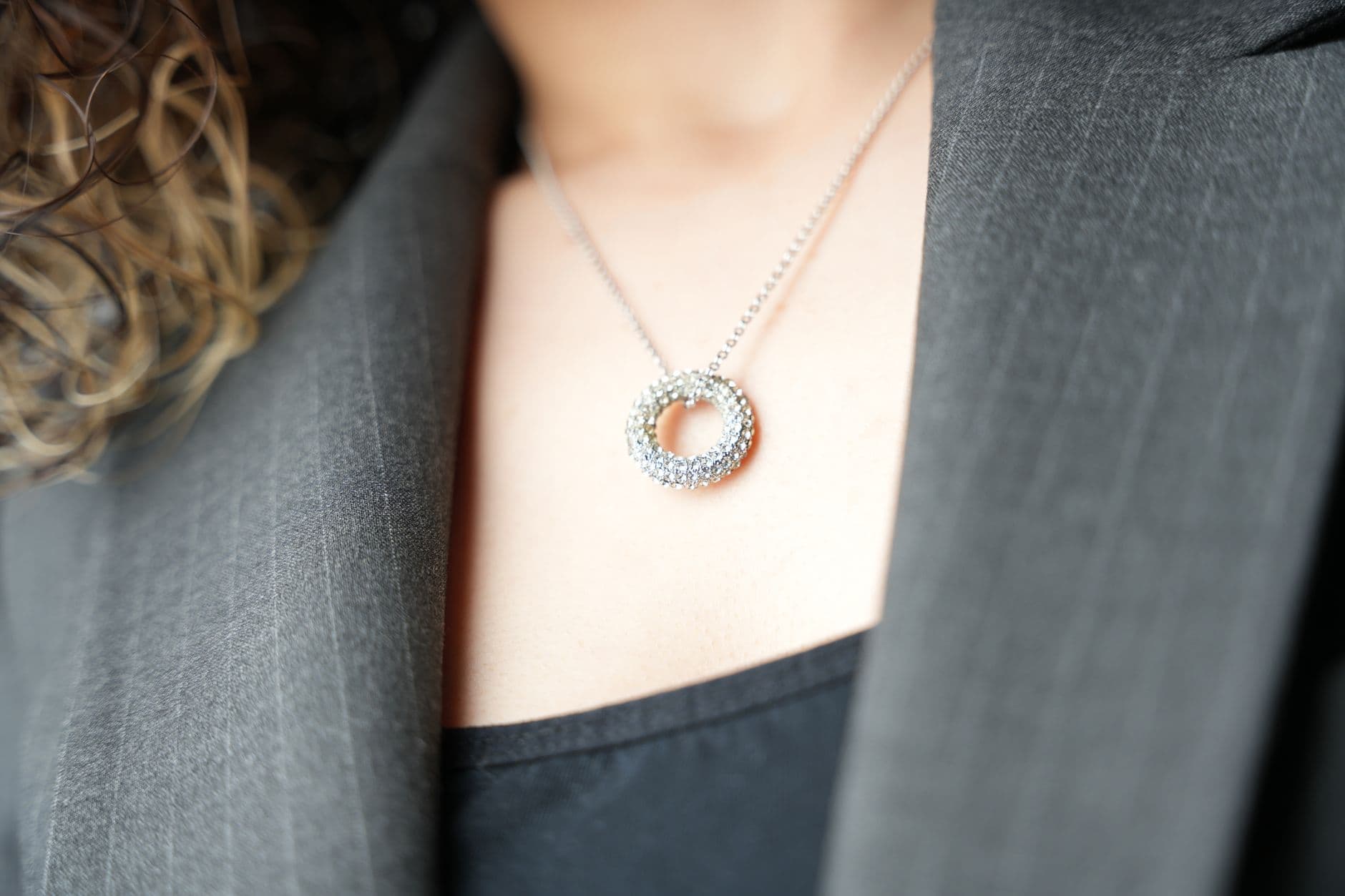
The design test is simple:
- Silhouette first: the pendant should read as a deliberate object, not a gadget in disguise.
- Low visual volume: a slim profile matters if it is meant to sit with thin chains, small hoops, and other quiet pieces.
- Material honesty: metal finishes, edge treatment, and clasp quality need to feel considered, not plastic-clad or promotional.
- Visibility with restraint: it should be present on the body without dominating the neckline.
- Function without clutter: if the technology demands obvious buttons, lights, or bulk, the jewelry reading breaks down fast.
That is where minimalist jewelry and wearable tech overlap most interestingly. Both depend on editing. In fine jewelry, removal is often the craft. In wearables, it is usually the product team’s last step. If Meta wants this pendant to be worn as easily as a gold charm or a silver medallion, the interface has to disappear into the object.
The real question for jewelry readers
A pendant like this could open a new category for tech jewelry, but only if it earns trust in two different ways. First, the technology has to do something people actually want, whether that is transcription, summaries, or a broader assistant function. Second, the object itself has to look good enough to wear with intention, because a pendant lives or dies on its ability to feel personal, not promotional.
That is the tension at the center of this story. Meta’s AI pendant is not just a hardware rumor. It is a test of whether the next wave of wearables can move from gadget to adornment, and whether the body will accept another device only if it arrives dressed like jewelry.
This article was produced by Prism’s automated news system from verified source data, official records, and press releases, then run through automated quality and moderation checks before publishing. The system is built and supervised by the people who set the standards it runs under. Read our full AI policy.
Know something we missed? Have a correction or additional information?
Submit a Tip