Pendant necklaces return as spring’s easiest cool-factor update
Long pendant necklaces are the minimalist update of spring: one clean line, one focal point, and just enough polish to make basics look newly considered.
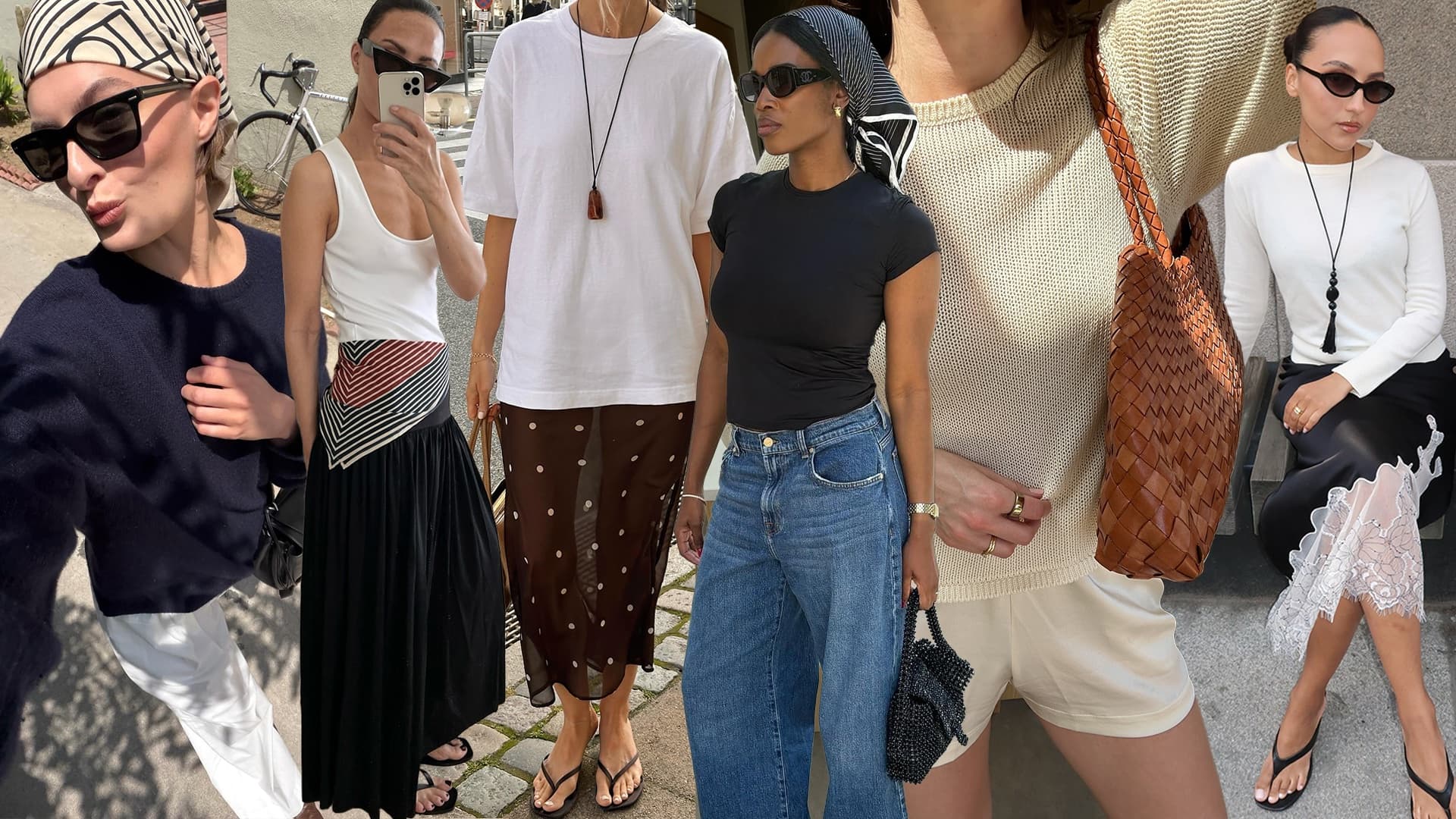
The pendant is the new shorthand for modern minimalism
Thin chains remain the baseline, but the long pendant necklace is the piece giving spring and summer wardrobes their sharpest new outline. What makes it feel current is not excess, but control: one chain, one focal point, and a silhouette that lands with intention over everything from a white T-shirt to a bias-cut dress. In a season when accessories are doing more of the talking, the pendant reads as the fastest way to look considered without looking overstyled.
Who What Wear folded long pendant necklaces into its 2026 accessory conversation, naming them among the six effortless pieces fashion people are reaching for now. The appeal is clear in the way the style has been worn across T-shirts, tanks, dresses, jeans, blouses, and skirts, always with the same effect: it breaks the surface of an outfit just enough to make basics feel updated. It is the rare accessory that can be both low-commitment and high-impact.
Why the shape works now
The long pendant necklace succeeds because it edits rather than adds. Its length draws the eye vertically, which gives even the simplest outfit a clean line, while the pendant itself provides the only necessary pause in the look. That balance is exactly why it feels more modern than a heavy stack or a crowded collar, especially for readers who want minimalism with a little tension.
The most convincing versions are the ones with a clear silhouette and disciplined finish. Polished gold is especially strong right now, not because it is loud, but because it gives the necklace warmth and a sense of value without requiring extra ornament. Charlotte Chesnais captured the mood succinctly when she said she has felt a growing desire for gold and for “fewer, more precious pieces.” That is the new logic of the pendant: one well-placed object can do more than a pile of competing ones.
From the runway to real life
The pendant’s return did not happen in a vacuum. Who What Wear linked the trend to boho-chic references on the spring 2026 runways, particularly at Chloé and Ralph Lauren, where the mood helped reintroduce softer, more expressive jewelry into the fashion conversation. That matters because the pendant is not simply resurfacing as nostalgia. It is being reframed through contemporary styling, which makes it feel less costume and more useful.
New York Fashion Week spring 2026 gave the category an even more pragmatic edge. Michael Kors showed wallet necklaces, Coach turned to abstract-stone versions, Tory Burch presented pouch pendants, and TWP pushed the idea further with glasses-chain and wallet-necklace hybrids. These are not decorative baubles for their own sake. They turn the pendant into a carrier of function, turning the idea of a necklace into something closer to personal equipment with style.
That functional turn is part of why the category feels fresh. A pendant that holds, clips, carries, or references an everyday object gives minimalism a reason to exist beyond appearance. It becomes easier to wear because it feels linked to daily life, not separated from it.

Paris reinforced the shift toward fewer, better objects
Paris Fashion Week spring 2026 confirmed that the broader jewelry story is moving in the same direction. WWD’s coverage traced a field of self-expression, heirloom-like pieces, color, sinuous shapes, geometric interplay, and modern pearl updates. The strongest takeaway was not maximalism for its own sake, but a renewed interest in pieces that carry character and still feel refined enough to wear often.
That is where the long pendant necklace fits most naturally. It offers personality without the noise of a full statement collar, and it allows texture, scale, and material to do the work. The category also slots neatly into the wider 2026 shift away from quiet-luxury restraint and toward jewelry that feels more expressive, more democratic, and more wearable every day. Accessories are no longer just finishing touches. They are the part of the outfit that gives away the mood.
Aurélie Bidermann’s spring collection made that idea especially vivid. Her standout long necklace drew on Palm Beach references, including El Mirasol villa, a reminder that even a minimal silhouette can carry place, memory, and atmosphere. That kind of reference is important: the pendant becomes not just a line on the body, but a small narrative object, one that suggests where you have been, what you collect, and how you want to be read.
How fashion people are wearing it now
The reason long pendant necklaces are resonating is that they solve a familiar dressing problem with unusual grace. When an outfit feels too plain, the pendant gives it focus. When a look already has print, texture, or volume, the necklace restores balance by introducing one clean vertical line. That is why it works over a tank and jeans, but also over a blouse and skirt, where a shorter necklace might feel crowded.
The smartest styling keeps the rest of the jewelry quiet. One pendant is enough to make the point, especially when the chain is sleek and the finish is polished. Layering can dilute the effect unless the rest of the pieces are nearly invisible, because the power of the look lies in restraint. The necklace should feel like a punctuation mark, not a paragraph.
That is also why the trend reads as minimalist rather than decorative. It is not about collecting more things; it is about choosing one thing with enough shape, weight, and clarity to update everything around it. In a spring and summer wardrobe built on easy separates, the long pendant necklace is the detail that makes the familiar feel newly edited, and that is exactly what modern minimalism looks like now.
This article was produced by Prism’s automated news system from verified source data, official records, and press releases, then run through automated quality and moderation checks before publishing. The system is built and supervised by the people who set the standards it runs under. Read our full AI policy.
Did this article answer your question?


