TEFAF New York spotlights sculptural minimalist jewels and vintage treasures
TEFAF New York turns minimalist jewelry into a collector’s field guide, with sculptural Ana Khouri and Hemmerle pieces set against rare vintage finds.
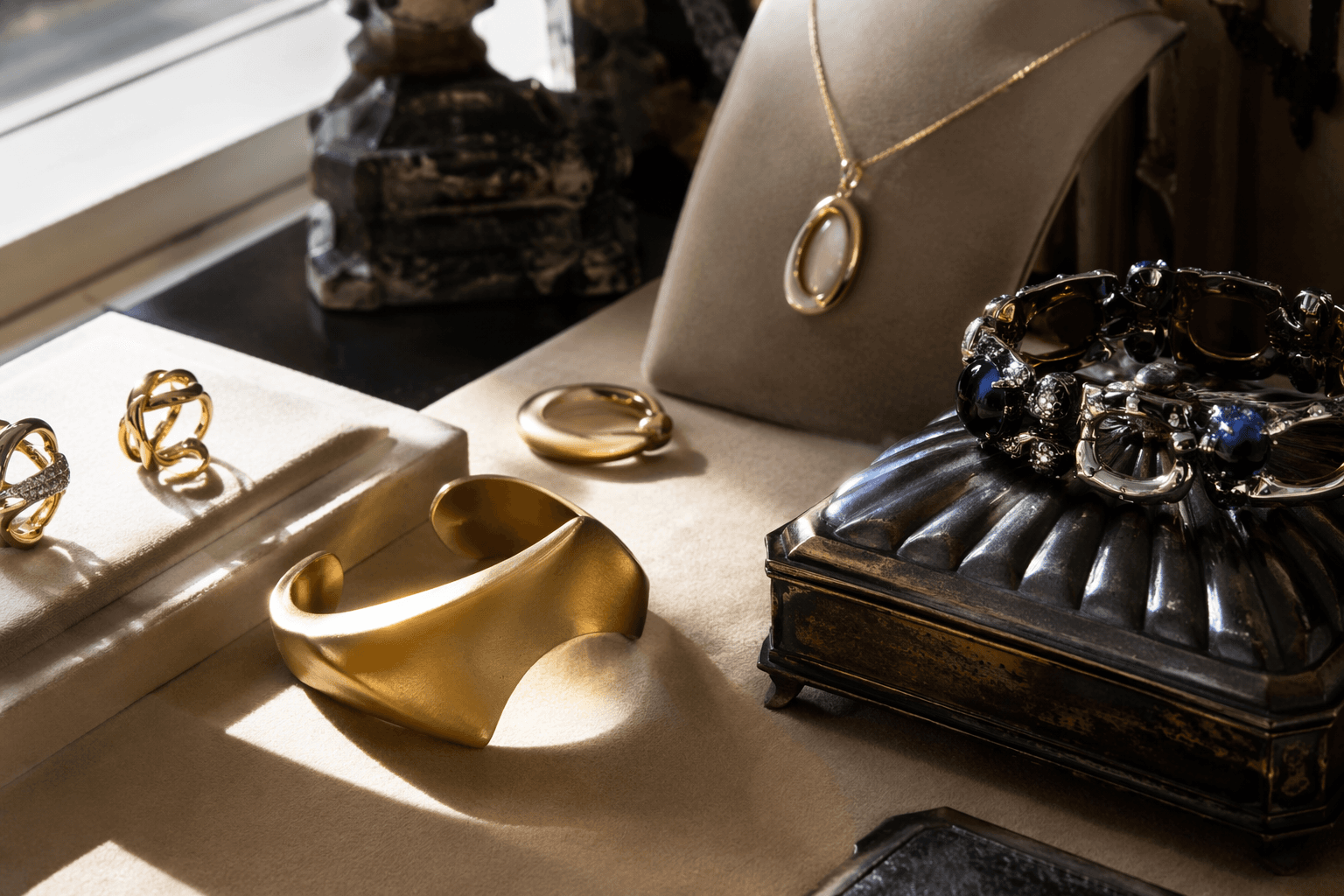
The most compelling jewels at TEFAF New York are not the loudest ones. This fair’s jewelry story is built on restraint, shape, and material intelligence, with five specialist exhibitors inside a larger field of 88 galleries and creators from 15 countries across four continents, all gathered for the collectors’ preview on May 14 before the fair runs May 15 to 19 at the Park Avenue Armory.
Why TEFAF matters for minimalist jewelry
TEFAF New York is one of the rare places where minimalist jewelry is treated less like a trend and more like a collecting category. The fair’s setting matters: TEFAF remains the only art fair at the Park Avenue Armory allowed to activate the building’s 16 historic period rooms, which gives contemporary jewels an unusually grand, almost museum-like stage. That backdrop suits pieces with clean lines, distilled forms, and one strong idea, because it lets the workmanship, not the marketing, do the talking.
For readers who collect with an eye toward wearability, the most interesting names are the ones that balance sculpture and practicality. At TEFAF, that means houses and dealers that can move comfortably between contemporary and vintage pieces, where value is often tied to authorship, rarity, and material discipline rather than size or sparkle alone. The result is a section of the fair that feels more like a curated cabinet of connoisseurship than a conventional jewelry marketplace.
Ana Khouri and the power of one stone
Ana Khouri remains one of the clearest references for sculptural minimalism in high jewelry. Her work is defined by rougher gold surfaces, gem-forward compositions, and a sense that the stone is not an afterthought but the entire reason the jewel exists. The pieces shown in TEFAF’s orbit have included a raw necklace in textured 18-karat yellow gold centered with a 21-carat diamond, plus a delicate 18-karat white gold earring paved with diamonds and finished with a dangling 3.20-carat diamond. Those details tell you exactly why her work lands with collectors: the designs are spare, but the materials are emphatic.
That is what makes Khouri collectible yet wearable. The proportions stay disciplined, the gold feels hand-shaped rather than industrial, and even the largest stone is often allowed to sit in an almost architectural emptiness. For a buyer who wants minimalist jewelry with long-term appeal, that combination matters more than trend relevance because it gives the work an identity that can be recognized across seasons and auction cycles.
Hemmerle’s materials are the quiet shock
Hemmerle is the fair’s reminder that minimalism does not have to mean plainness. The Munich house has built its reputation on pushing precious jewelry into unexpected territory, pairing traditional goldsmithing with materials such as aluminum, organic materials, hardened woods, and antiquities. That unusual material language is not decorative gimmickry. It is the point, because it turns each jewel into a study in contrast, surface, and touch.
A standout example is Hemmerle’s one-of-a-kind bangle using spessartine garnets, knitted almandine, stainless steel, bronze, and white gold. The house also revived a 19th-century Austrian knitting technique, hand-knitting almandine garnet beads with silk threads to create a flexible structure that wraps the wrist. For collectors, that kind of craftsmanship does double duty: it creates visual softness in a material-rich object, and it gives the jewel a provenance of technique that can age better than a purely fashion-led design.
Vintage jewels that still feel modern
The vintage side of TEFAF New York matters because it reminds minimalist collectors that restraint is not a new idea. Didier Ltd., founded by Didier and Martine Haspeslagh, has long specialized in jewelry created by modern masters, sourced on the secondary market, and it remains one of the category’s defining voices. Among the jewels at its booth is an 18-karat yellow gold bracelet by Lucio Fontana, designed as an ovoid form incised with the artist’s signature slash motif and mounted on a curved band. That is a collector’s object first and a bracelet second, which is exactly why it fits this fair so well.
FD Gallery pushes the same idea through a different lens. The gallery focuses on mid-20th-century jewels from major French, Italian, and American houses, while also representing contemporary jewelers such as JAR, Bhagat, and Taffin. At TEFAF New York, it brings both vintage depth and contemporary precision, including a Bulgari long necklace composed of reeded lapis lazuli, gold bead links, carved turquoise, diamonds, onyx plaques, and a detachable starburst pendant centered on an oval cabochon sapphire. That kind of piece is not minimalist in the strictest sense, but its long, linear construction and disciplined use of color make it highly wearable for collectors who want impact without clutter.

Forms and the design-first argument
Forms gives TEFAF a more overtly contemporary voice, but its appeal to minimalist readers lies in how it thinks about construction. The Hong Kong-based house, founded in 2010 by Elad Assor and Tzvika Janover, produces about 100 pieces annually and describes itself as design-first, meaning the idea comes before the material is sourced. That is a crucial distinction in a market where many high-jewelry firms begin with stones and build around them. Here, the design governs the jewel, which makes the work feel more sculptural and more collectible.
Forms also makes the case that contemporary jewelry can feel precise without losing sensuality. Its TEFAF presentation has included a ring pairing a vivid step-cut emerald with a step-cut diamond, each cradled in a shakudo frame, and pieces such as leaf earrings made of green aluminum and emeralds or shell earrings centered on natural pearl and orange-yellow diamond. Those material choices matter because they pull the work away from conventional luxury cues and toward an art-object sensibility, while still remaining legible as jewelry you could actually wear.
What feels worth collecting now
The strongest TEFAF jewelry does not chase novelty for its own sake. It favors artists and houses with a recognizable grammar, whether that means Ana Khouri’s textured gold and one-stone focus, Hemmerle’s radical material pairings, Didier Ltd.’s artist-made historical pieces, FD Gallery’s mid-century depth, or Forms’ design-led experimentation. In each case, the collectible value comes from a clear hand and a disciplined point of view, not from excess.
That is why TEFAF New York feels especially relevant for minimalist jewelry right now. It rewards buyers who look closely at gold alloy, surface finish, stone selection, and whether a piece was conceived as an object of design rather than just a luxury accessory. The fair’s best jewels do what the best minimalist jewelry always does: they hold attention by refusing to waste a single line, material, or gesture.
This article was produced by Prism’s automated news system from verified source data, official records, and press releases, then run through automated quality and moderation checks before publishing. The system is built and supervised by the people who set the standards it runs under. Read our full AI policy.
Did this article answer your question?


