Tim McClelland champions beauty-first natural diamonds in minimalist designs
Tim McClelland argues that a natural diamond shines brightest when the setting recedes. His Wildflower rings turn restraint, proportion, and handwork into a quietly modern bridal language.
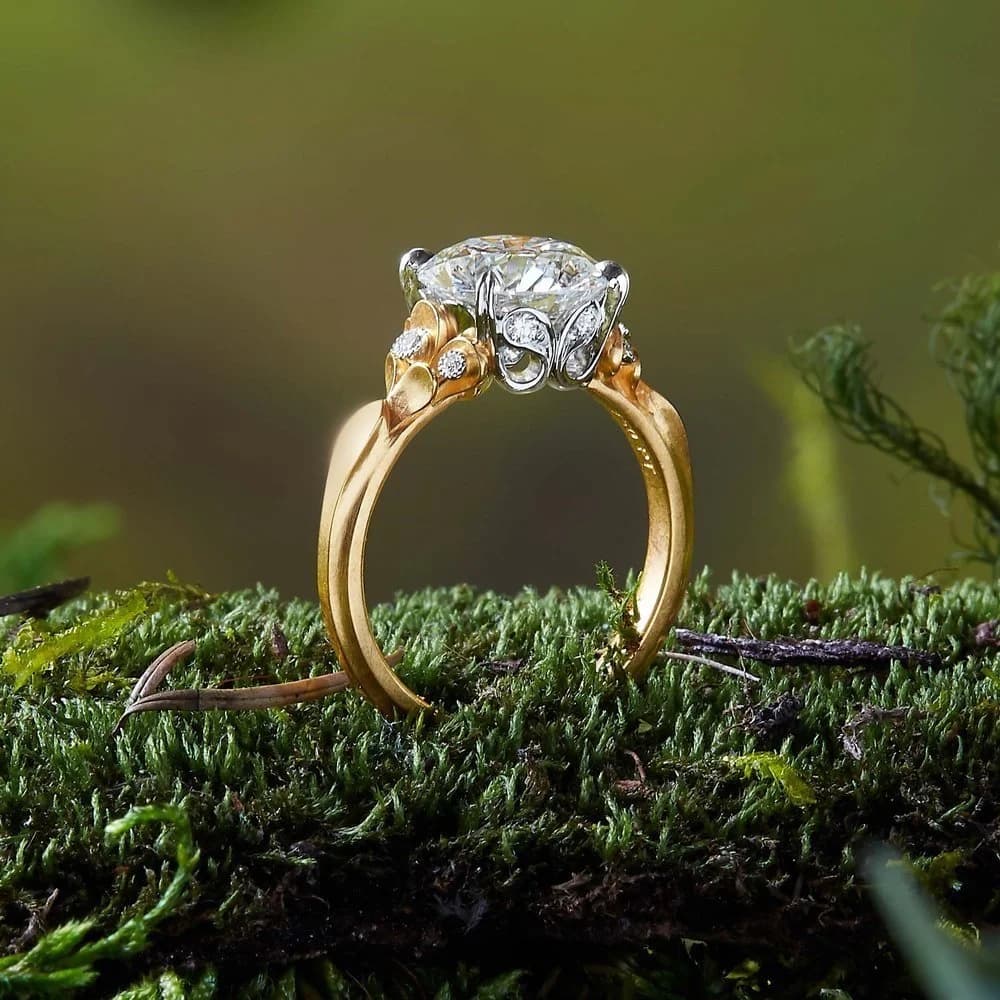
In the right setting, a natural diamond does not need to shout. Tim McClelland has built a case for the opposite: slim mountings, spare lines, and a solitaire-centered profile that lets the stone read as clean, calm, and precise. In a market crowded with louder claims, his beauty-first approach gives natural diamonds a place inside minimalism rather than beside it.
Beauty first, not marketing first
McClelland, a classically trained jeweler based in the Berkshires, starts with the eye. He has said customers buy what they find beautiful and interesting, and that principle shapes both the stones he chooses and the way he finishes them. He is willing to cut diamond material for a more beautiful result, even if that means grinding away some rough, a philosophy that favors visual harmony over preserving every last bit of carat weight.
That mindset matters because it keeps the conversation on design, not just category. Natural diamonds can easily be framed through rarity or tradition alone, but McClelland’s approach suggests something more exacting: the stone has to earn its place in a ring by looking right. In minimalist jewelry, where every line is exposed, there is nowhere for excess to hide.
How minimalism makes a diamond feel modern
McClelland’s clean, enduring solitaire aesthetics are not about reducing a ring to nothing. They are about giving the center stone a clear stage and surrounding it with enough structure to feel finished, not fussy. The result is visually quiet jewelry, the kind that sits comfortably with a white shirt, a blazer, or bare skin because the design is disciplined enough to disappear into daily life.

That restraint is what gives the work its strength. A minimalist diamond ring does not rely on ornament to create presence; it relies on proportion, balance, and the exact placement of the stone. McClelland’s pieces feel wearable because they do not try to dominate the hand. They let the diamond do the work, which is exactly why the rings look timeless rather than trend-driven.
The Wildflower line and the language of quiet detail
The clearest expression of that philosophy is the Wildflower line, which traces back to the late 1990s, when McClelland was design director of McTeigue & McClelland. The collection grew out of a long atelier tradition known for rare gemstones and handmade jewelry, yet its appeal lies in how controlled it feels. McTeigue & McClelland was a 22-year partnership that began in 1998 and ended in 2019, after which the McTeigue side of the business was revived separately as McTeigue & Co.
Wildflower’s mountings start around $4,000 and can reach about $10,000 for more elaborate styles. That pricing places the line squarely in serious handcrafted bridal territory, where the cost reflects design labor, workshop skill, and the kind of customization that distinguishes a made ring from a mass-produced one. The look is floral and refined, but not ornamental in a way that overwhelms the diamond. The details remain restrained enough that the ring feels elegant from across a room and even better in close-up.
The collection’s strength is that it balances character with composure. Flora-inspired design can easily drift toward busy or sentimental, but Wildflower stays closer to architectural poetry. It carries the hint of a flower without turning into a literal blossom, which is one reason the line reads as minimalist rather than decorative.
Made in the Berkshires, not assembled from trends
TW McClelland & Daughters says it has been handcrafting fine jewels in the Berkshire Hills since 1996, and that lineage helps explain the seriousness of the work. The brand says the Wildflower Bridal Collection has drawn a global audience for decades, yet the pieces still feel rooted in a small-studio ethic, where the maker’s hand matters as much as the finished silhouette.
The atelier is based at 597 South Main Street in Great Barrington, Massachusetts, and its retail space is open Thursday through Saturday, 11 a.m. to 5 p.m. That schedule suits the brand’s identity: less polished showroom theater, more working-jeweler rhythm. The location matters because it frames the rings as objects made in a real place with a sustained practice, not as interchangeable product shipped out of a larger fashion machine.
Why this approach matters now
McClelland’s strategy lands against a market that has put enormous emphasis on lab-grown diamonds. That pressure has made natural stones justify themselves again, not through nostalgia but through design and desirability. A natural-diamond industry event in Las Vegas underscored how central that effort remains, with makers and brands still working to keep the category visible to consumers.
McClelland’s answer is not louder branding. It is the belief that beauty does the convincing. When the setting is clean, the proportions are restrained, and the stone is chosen and cut for its visual effect, a natural-diamond ring can feel modern without losing its sense of permanence. That is where McClelland’s work is most persuasive: in the quiet confidence of a ring that knows exactly how much to say.
This article was produced by Prism’s automated news system from verified source data, official records, and press releases, then run through automated quality and moderation checks before publishing. The system is built and supervised by the people who set the standards it runs under. Read our full AI policy.
Did this article answer your question?


