Van Cleef & Arpels turns dance into delicate jewels and cultural support
Van Cleef & Arpels made dance feel intimate, not loud, by turning ballet's line and motion into ballerina clips and lasting cultural patronage.
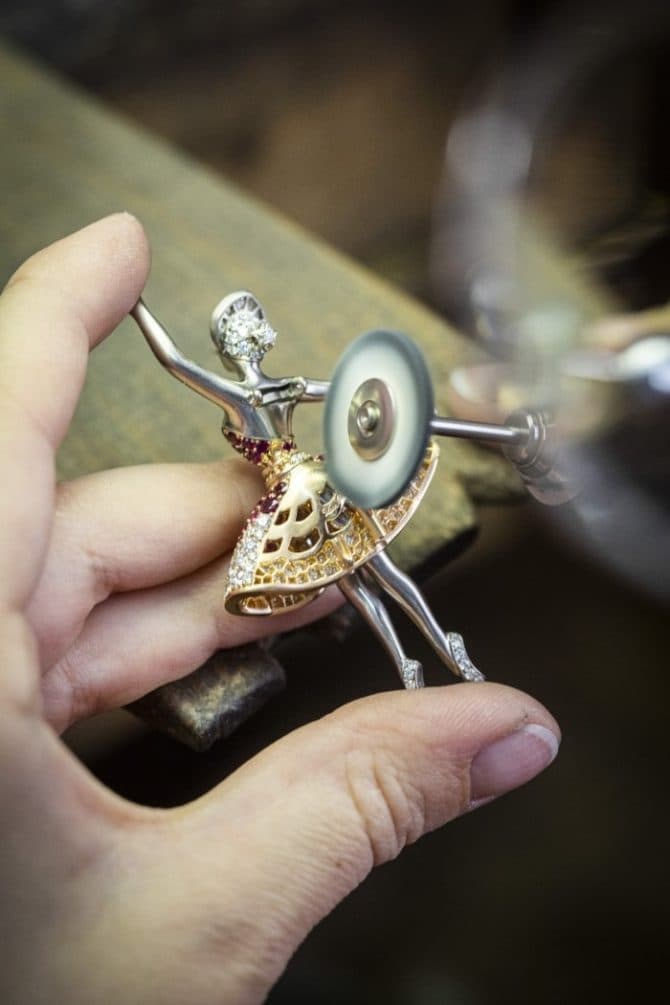
The quiet power of a ballet vocabulary
Van Cleef & Arpels has spent decades proving that a jewel does not need size to carry weight. By translating ballet into pin-on pieces and cultural patronage, the house turned delicacy into authority, making lightness, line, and motion feel every bit as luxurious as carat weight.
That is the core of its appeal for minimalist jewelry: the drama is not in scale, but in posture. The ballerina clip, with its tiny body and precise silhouette, reads like a study in balance. It is jewelry that moves visually even when it is still.
From the Paris Opera to the first ballerina clips
The story begins in the 1920s, when Louis Arpels often took his nephew Claude to the Paris Opera. That habit mattered more than nostalgia. It gave the house a close, repeatable encounter with dance as a language of gesture, discipline, and costume, long before ballet became a jewelry trope.
Van Cleef & Arpels dates its first ballerina clips to 1941, part of a broader wave of emblematic clips that also included the Little Winged Fairy and Spirit of Beauty. By the early 1940s, the ballerina had become one of the maison’s signature forms. The design formula was refined and highly legible: a rose-cut diamond face, a precious headdress, and pointe shoes with a tutu suggested in diamonds or colored stones.
That choice of construction is what keeps the pieces from feeling merely decorative. The rose-cut diamond softens the face of the figure, giving it a low, luminous surface rather than a harsh flash. The colored stones and pavé details do not shout; they sketch movement, as if the jewel were catching a pose between steps.
The result is a kind of wearable choreography. These clips became associated with wartime and postwar optimism, which helped give them emotional depth beyond their scale. They are small, but they are never thin.
Balanchine and the architecture of movement
The house’s relationship with dance grew even stronger in 1961, when Claude Arpels met George Balanchine, the choreographer who co-founded New York City Ballet. That meeting turned an affinity into a true creative alliance, and it eventually led to Jewels, the ballet Balanchine created in 1967.
Jewels premiered in New York in April 1967 and was structured as three acts: Emeralds, Rubies, and Diamonds. Each act was set to music by a different composer, Fauré, Stravinsky, and Tchaikovsky, respectively. The effect is architectural, almost gemological in its clarity. The work does not merely reference jewels; it organizes the stage the way a master setter might organize a suite of stones, each with its own color, tempo, and emotional temperature.
That is why the Van Cleef & Arpels story feels so resonant in minimalist jewelry. The maison understood early that refinement can come from a disciplined vocabulary. A tiny figure, repeated with variation and precision, can carry a whole artistic universe.
Why collectors still respond
Part of the enduring value of the ballerina clips lies in the market’s recognition of that cultural narrative. A 1942 Van Cleef & Arpels ballerina clip in diamonds, rubies, and emeralds sold at Christie’s in New York for $422,500 on October 21, 2009. That result is not just about materials. It reflects appetite for pieces with a clear identity, a recognizable period style, and a story that links ornament to performance.
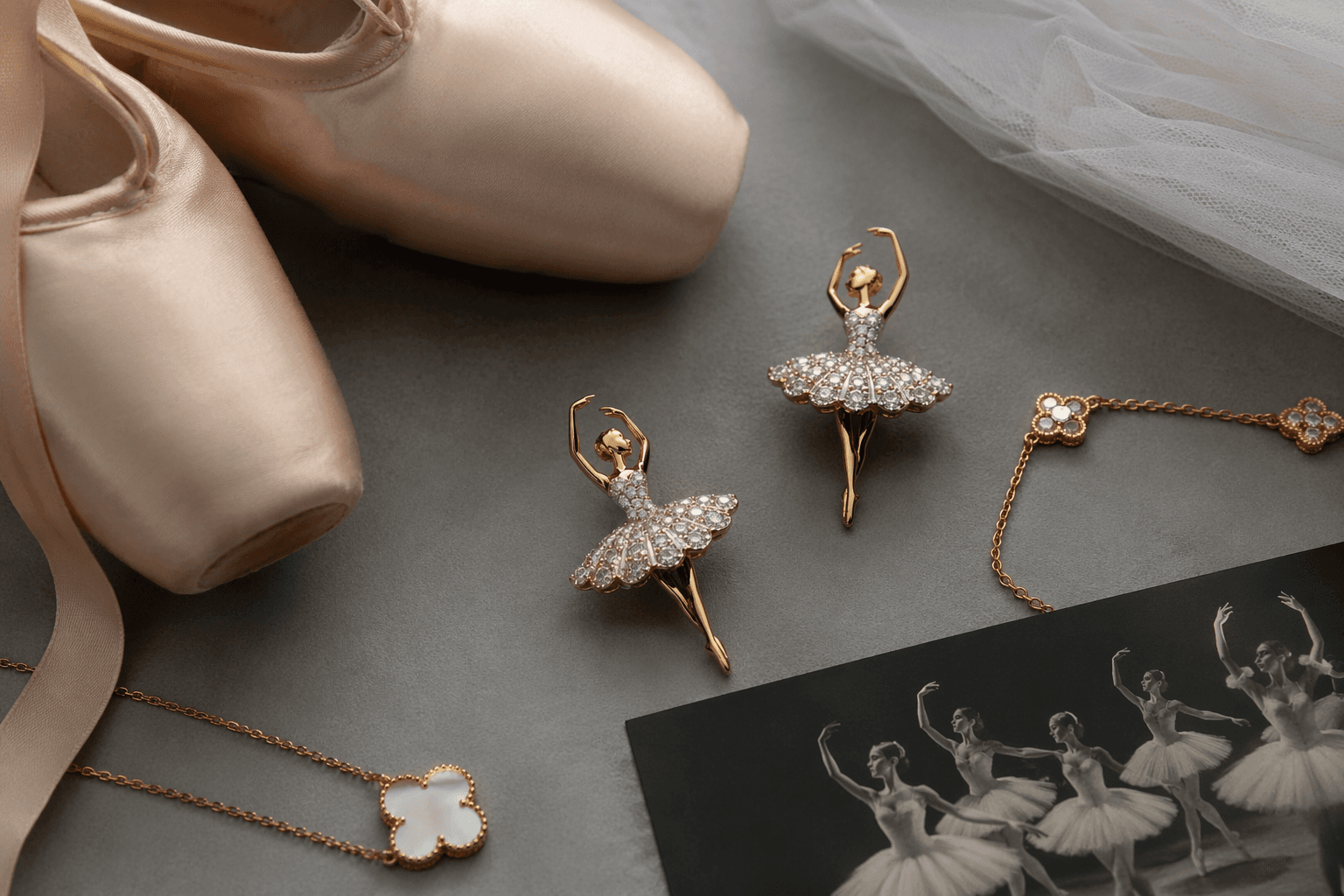
Collectors have long understood that the most desirable small jewels are often the ones with the strongest point of view. Van Cleef & Arpels gave its ballerinas an unmistakable profile, then anchored them in a wider history of dance. The jewels feel collectible because they are specific, not because they are loud.
Dance Reflections and cultural support
The maison has not left the story in the archive. In autumn 2020, it launched Dance Reflections by Van Cleef & Arpels, a program focused on support for dance companies, diversified partnerships with institutions in France and abroad, and initiatives that broaden access to choreographic culture for both professional and amateur audiences.
That matters because it shows the relationship between jewelry and dance has become institutional, not nostalgic. The brand and its partners frame the program as a way to sustain choreographic legacies, nurture contemporary creation, and bring dance to broader audiences. Richemont called the New York festival debut in October 2023 a “decisive turning point,” underscoring how central the United States remains to the maison’s cultural story.
A 2012 collaboration with Benjamin Millepied and L.A. Dance Project extended the same idea into a contemporary register. Rather than treating ballet as a decorative reference, Van Cleef & Arpels kept using dance as an active creative partner. That distinction is important: it is the difference between borrowing a motif and building an identity.
What minimalist jewelry designers can learn from this
Van Cleef & Arpels’ ballet language offers a clear lesson for anyone working in small-scale jewelry. The pieces are restrained, but never mute. Their power comes from the way every surface, cut, and gesture is tied to a larger cultural frame.
- Start with movement, not ornament. A piece can feel alive if its lines suggest lift, balance, or pause.
- Use stone cuts with intention. The rose-cut diamond gives a softer, lower glow that suits delicate forms.
- Build a repeatable silhouette. The ballerina clip works because the figure is instantly readable, even at small scale.
- Let art history do part of the work. Balanchine’s Jewels deepened the house language without making it heavier.
- Treat patronage as part of design. Cultural support gives a small jewel a larger reason to matter.
For minimalist jewelry, that is the most useful takeaway of all. The quietest pieces can feel the richest when they are built on discipline, memory, and a story sturdy enough to outlast fashion.
This article was produced by Prism’s automated news system from verified source data, official records, and press releases, then run through automated quality and moderation checks before publishing. The system is built and supervised by the people who set the standards it runs under. Read our full AI policy.
Did this article answer your question?


