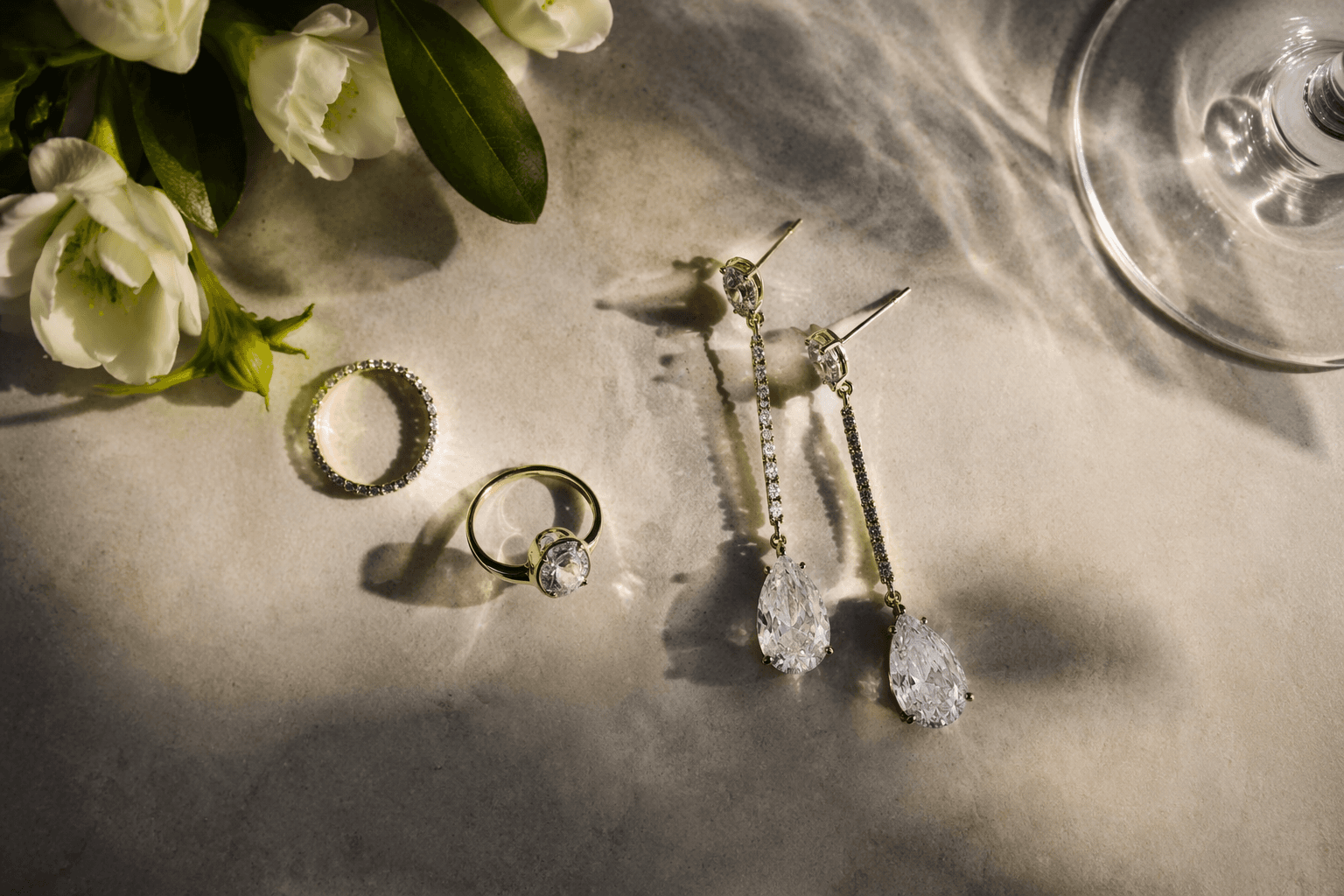
Why bezel settings define minimalist jewelry with durability and style
Bezel settings give minimalist jewelry its cleanest line, while enclosing the stone for daily wear. They trade a little brilliance for more security and less snagging.
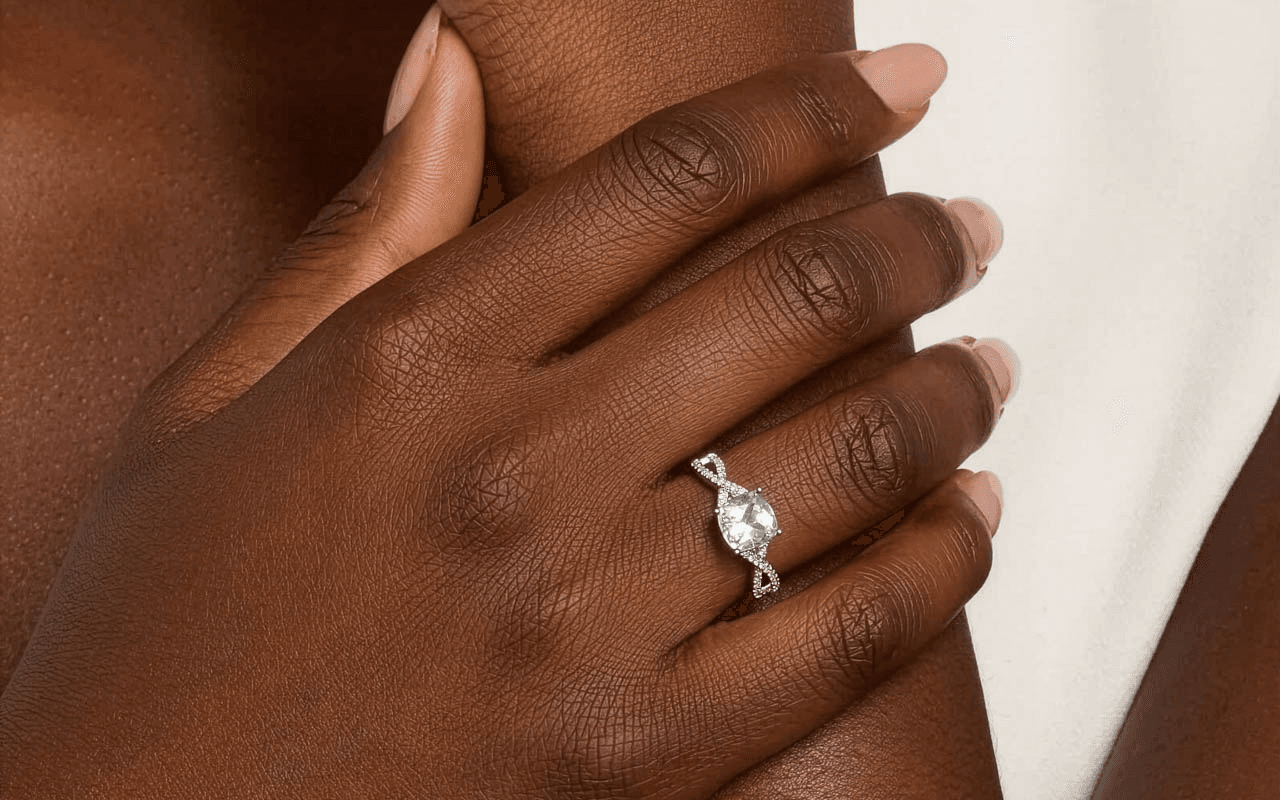
A continuous rim of metal wraps the stone, keeping the gem tucked in, lower to the hand, and less likely to catch on knit cuffs or a handbag strap. The look stays visually quiet, and Blue Nile uses that structure across rings, necklaces, earrings, bracelets, and stacking pieces.
The appeal is in the silhouette. A bezel removes the visual busyness of prongs and leaves one clean outline around the stone, fitting the shift away from intricate, highly wrought settings toward bolder, cleaner design. At Las Vegas Jewelry Week in 2026, minimalist settings, including substantial gold bands with a bezel-set diamond and nothing else, were among the most ubiquitous looks on the floor.
The real case for bezels is durability. Even diamonds, the hardest gemstones, can chip, especially when inclusions sit near the girdle or when the cut has sharp points and corners. That is where a bezel earns its place, because the metal rim gives the stone more coverage than a setting that leaves edges exposed. Four-prong settings do not hold a diamond as securely as six-prong settings and offer less protection for the girdle.
That is why bezels make sense for daily wear. The setting offers increased security, lower snag risk, better protection for softer gemstones, a low profile, and easier upkeep.

Stone choice matters as much as the setting. Soft and porous gemstones such as pearls, opals, and turquoise are vulnerable to scratching, discoloration, cloudiness, and even breakage if they are handled carelessly. A bezel can be a strong fit for those materials because it shields edges that would otherwise be more exposed in prong-heavy designs.
Bezel settings are also a strong match for certain ring shapes and profiles. Low-profile bands and flat-sitting designs suit the setting best because the stone sits close to the finger and keeps the whole piece compact. That makes bezels especially useful in minimalist engagement rings, everyday signets, low pendants, and stackable rings, where the goal is not height or drama but a clean line that disappears under a glove or slips easily beside another band.
There are trade-offs, and they are worth weighing before buying. Bezel settings can reduce brilliance compared with prong settings because more of the stone’s edge is covered by metal. They can also cost more, since the setting uses more metal, and they may limit resizing options later. Rings are generally adjustable only up to two sizes larger or smaller, which means a heavier bezel can leave less room for future changes than a lighter, more open mounting.
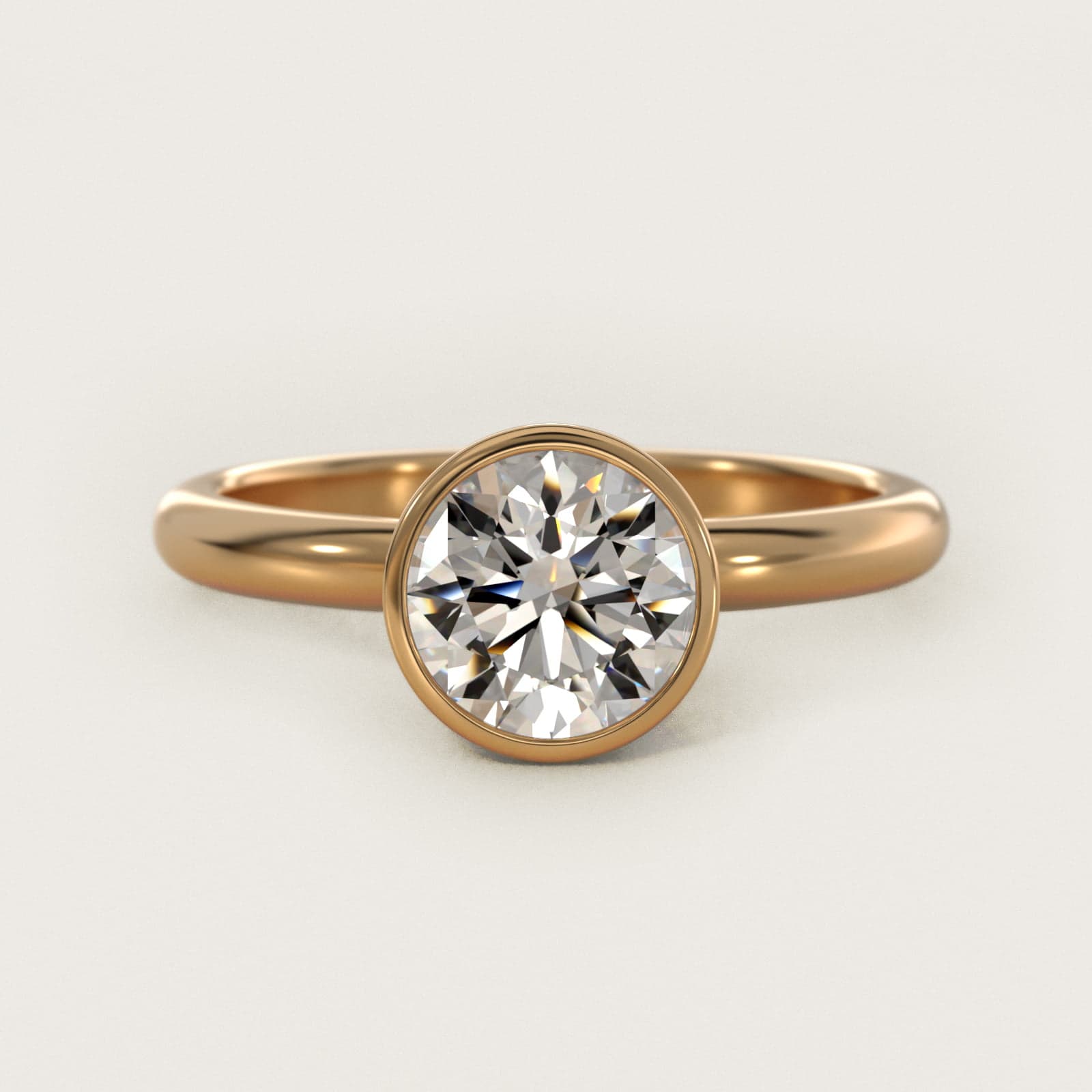
That makes bezel settings a better choice for some buyers than others. They are especially smart for people who value comfort, low maintenance, and a secure feel over maximum sparkle. If the stone is meant to be worn every day, if the wearer is active with hands, or if the gem is softer and more exposed to abrasion, the bezel’s enclosed rim is a practical advantage. If maximum light return is the priority, a prong setting may still win on brilliance.
The setting also carries a long history. Bezel settings date back to Ancient Egypt and Ancient Greece. Egyptian goldsmiths worked at a high level of mastery, and The Metropolitan Museum of Art documents Egyptian jewelry traditions from pre-dynastic beads through Roman-era ornament. One object in its collection, “Bezel of a ring of Nefertari,” dates to about 1295 to 1070 B.C.
For buyers, the questions to ask are simple and specific. Ask how much of the stone is enclosed, whether the metal edge sits flush or leaves a raised lip, and how the setting will behave if the ring needs resizing later. Ask what gemstone is being set, because a hard diamond and a softer opal do not have the same needs, and ask whether the piece is meant for constant wear or occasional use. Look for a clean rim, a low profile, and a design that protects the stone without adding visual noise.
This article was produced by Prism’s automated news system from verified source data, official records, and press releases, then run through automated quality and moderation checks before publishing. The system is built and supervised by the people who set the standards it runs under. Read our full AI policy.
Did this article answer your question?