Baroque pearls bring texture and edge to summer 2026 jewelry
Baroque pearls are making pearls feel sharper, looser, and more playful, especially when they’re paired with saturated beads and mixed metals.
Pearls are shedding their prim reputation. For summer 2026, the most interesting versions look less like matched heirlooms and more like something pulled from a tide pool and edited for the runway, with baroque shapes and saturated beads doing the heavy lifting.
Why baroque pearls feel new again
The shift starts with irregularity. Classic pearl jewelry was built on symmetry, polish, and the quiet authority of uniform strands. Baroque pearls break that code, and that is exactly why they feel modern: their uneven surfaces, off-round silhouettes, and organic contours read as expressive rather than fussy.
That reset has been building for several seasons. Vogue Singapore described baroque pearls as a summer 2025 jewelry trend and framed them as a move away from classic, uniform strands. Who What Wear named “Modern Baroque Pearls” among the top jewelry trends of 2025, and pointed to Bottega Veneta’s spring/summer 2025 runway, where jade-green baroque pearls gave the idea a more vivid, less nostalgic charge. The look first filtered into contemporary fashion through designers including Alexander McQueen, Erdem, Simone Rocha, Prada, and Chanel, with early catwalk appearances in Milan and Paris between 2018 and 2019.
What matters now is that pearls no longer signal one narrow mood. They can be sharp, sculptural, and slightly unruly. That makes them feel less like formal dressing and more like a point of view.
The new pearl silhouette
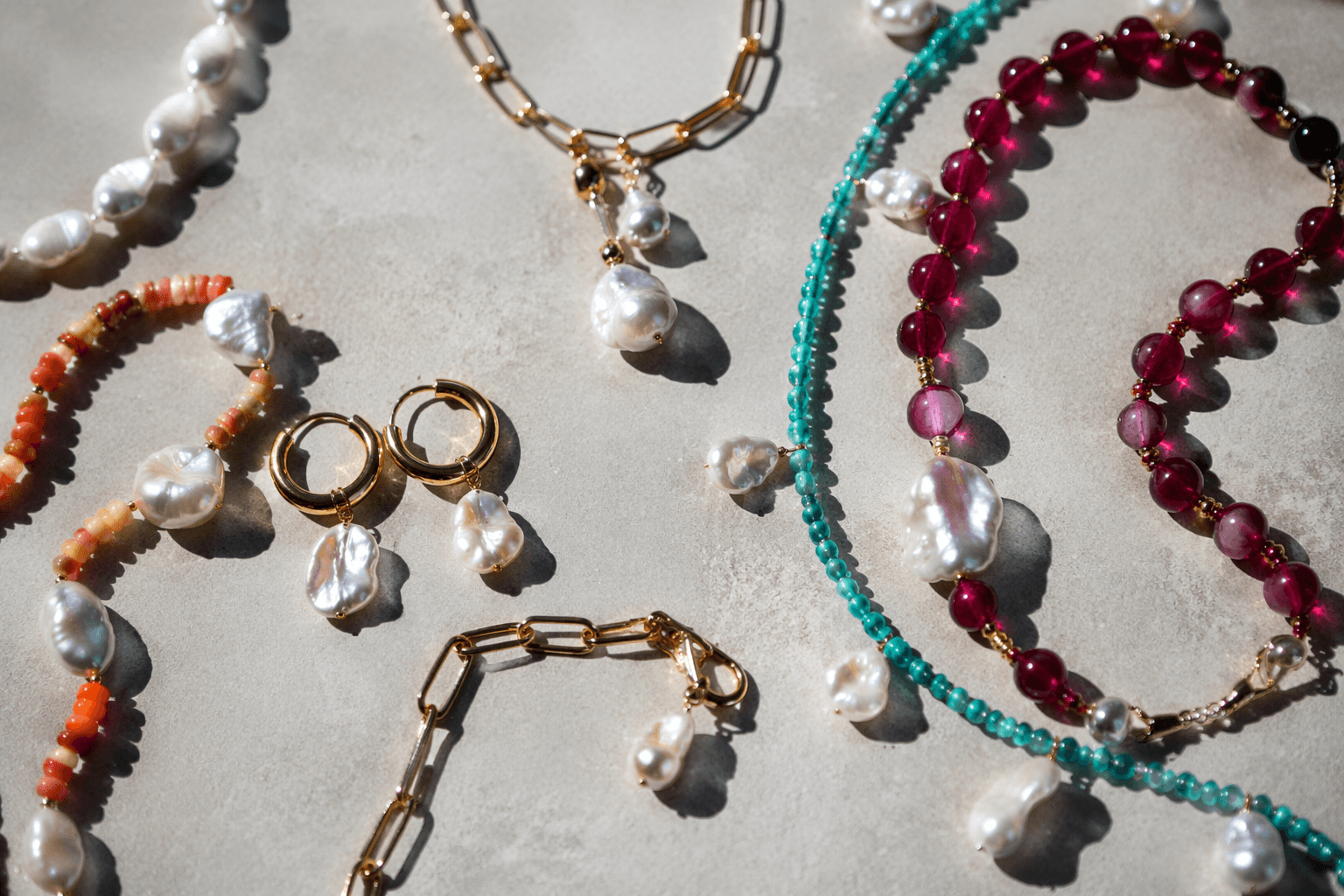
The easiest way to recognize the 2026 pearl direction is by contrast. Instead of one perfect strand, look for irregular pearls set against saturated beads, chain, or mixed metals. The beadwork brings color and energy; the baroque pearl brings texture and asymmetry. Together, they push pearls out of the old ladylike box.
Several styling archetypes define the look:
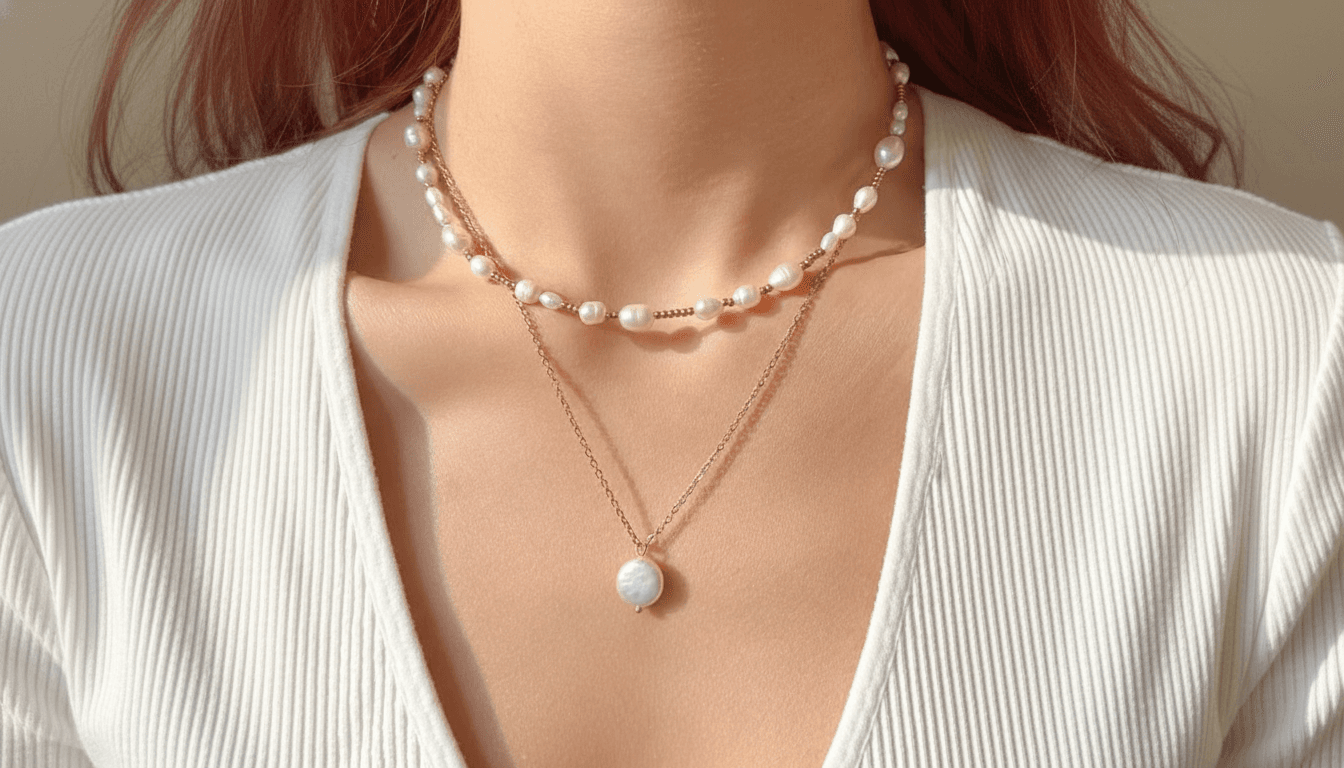
- A single baroque pearl pendant on a slim chain, worn over a tank or open-collar shirt.
- Beaded necklaces that mix pearl shapes with vivid, glossy beads for a deliberately uneven rhythm.
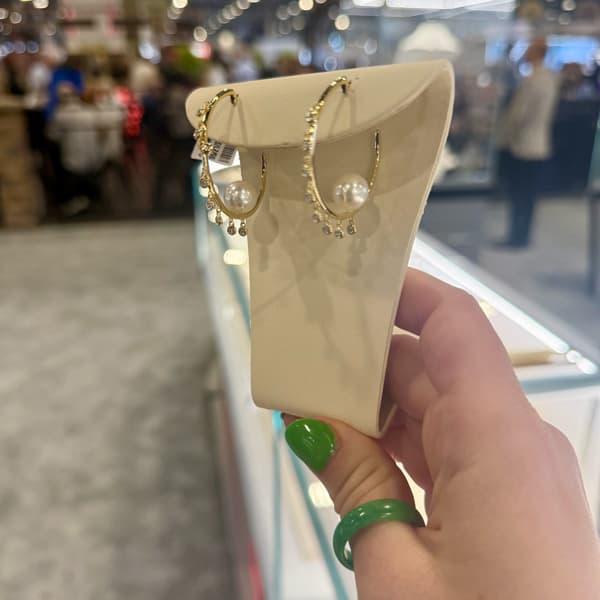
- Drop earrings that pair one substantial pearl with a metal accent, letting the pearl remain the focal point without looking traditional.
- Layered necklaces where pearls sit among chains rather than as a standalone strand, creating a more casual, stacked effect.
- Bracelet and necklace sets that use color and irregularity to make pearls feel closer to fashion jewelry than formal dress jewelry.
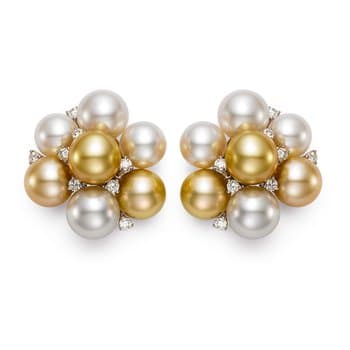
The visual cue to remember is this: perfect is out, character is in. A pearl with visible contours, ripples, and asymmetry looks current because it feels singular. When that pearl is paired with saturated beads, the result is even more directional, less bridal salon and more private collection.
How to wear pearls without making them feel precious
The strongest pearl styling now has movement. Pearls are being worn more casually, layered with metals and chains, and placed into everyday wardrobes instead of waiting for black-tie occasions. That shift is part of why the trend has lasted beyond a single runway cycle.
The off-duty version works best with clothes that have structure: a crisp shirt, a knit polo, a boxy blazer, or a linen dress left slightly undone at the neck. A baroque pearl pendant against a plain white tee can read cleaner and more considered than a full strand ever could. The polished version leans into contrast too, using a baroque earring or a bead-and-pearl necklace to interrupt an otherwise streamlined look.
What should be avoided is overmatching. The old pearl revival depended on order. The current version depends on tension. One sculptural pearl, one bright bead, or one uneven cluster says more than a perfectly symmetrical set.
Why provenance matters more than ever
The pearl story is not only aesthetic. It is also about how pearls are made, where they come from, and how honestly the industry talks about them. CIBJO’s Pearl Special Report 2025 emphasizes sustainability, science, and traceability, which matters because the category has long traded on romance while sometimes staying vague about production.
Mikimoto anchors the modern pearl industry’s origin story. Kokichi Mikimoto created the world’s first cultured pearl in 1893, and the Japan Patent Office says he obtained a patent for cultured pearls in 1896. That breakthrough changed pearls from a rarity reserved for the elite into something more accessible, while still preserving their sense of luxury. Mikimoto also notes that in the wild, fewer than one in a thousand oysters will produce a pearl during its lifetime, a reminder of why natural pearls remain so exceptional.
For a buyer, that history makes clarity essential. Cultured pearls, traceable sourcing, and responsible farming practices are not marketing garnish. They are the difference between a piece that merely looks contemporary and one that has a credible story behind it.
The market signal behind the style
This is not a small or fleeting niche. Research-and-market-style reports published in 2025 and 2026 place the global pearl jewelry market in the low double-digit billions and project continued growth through the 2030s. That growth reflects more than fashion momentum. It also points to the expanding role of pearls as everyday jewelry, not only formal wear or inherited keepsakes.
That wider market shift explains why baroque pearls feel so relevant now. They suit a jewelry customer who wants beauty with texture, provenance, and a little edge. They also suit a category that is being redefined by science, sustainability, and more relaxed styling codes.
The old pearl fantasy was about polish and restraint. The new one is about surface, color, and personality. In summer 2026, the pearl that matters most is the one that refuses to look perfect.
This article was produced by Prism’s automated news system from verified source data, official records, and press releases, then run through automated quality and moderation checks before publishing. The system is built and supervised by the people who set the standards it runs under. Read our full AI policy.
Know something we missed? Have a correction or additional information?
Submit a Tip