Freshwater pearls get a casual update from Missoma, Dior and Olivia Yao
Freshwater pearls are moving into the everyday wardrobe, with Missoma, Dior and Olivia Yao turning them into layered, mixed-material pieces that feel easy, not formal.

Freshwater pearls are having their most persuasive style moment in years because the brands shaping them are stripping away their ceremony. Missoma, Dior and Olivia Yao are presenting pearls as something to wear with a T-shirt, a blazer or a second necklace, not just for evening. The result is a shift in silhouette and attitude: irregular baroque shapes, softer romance, mixed materials and designs that invite layering rather than demand a special occasion.
Why freshwater pearls suddenly feel current
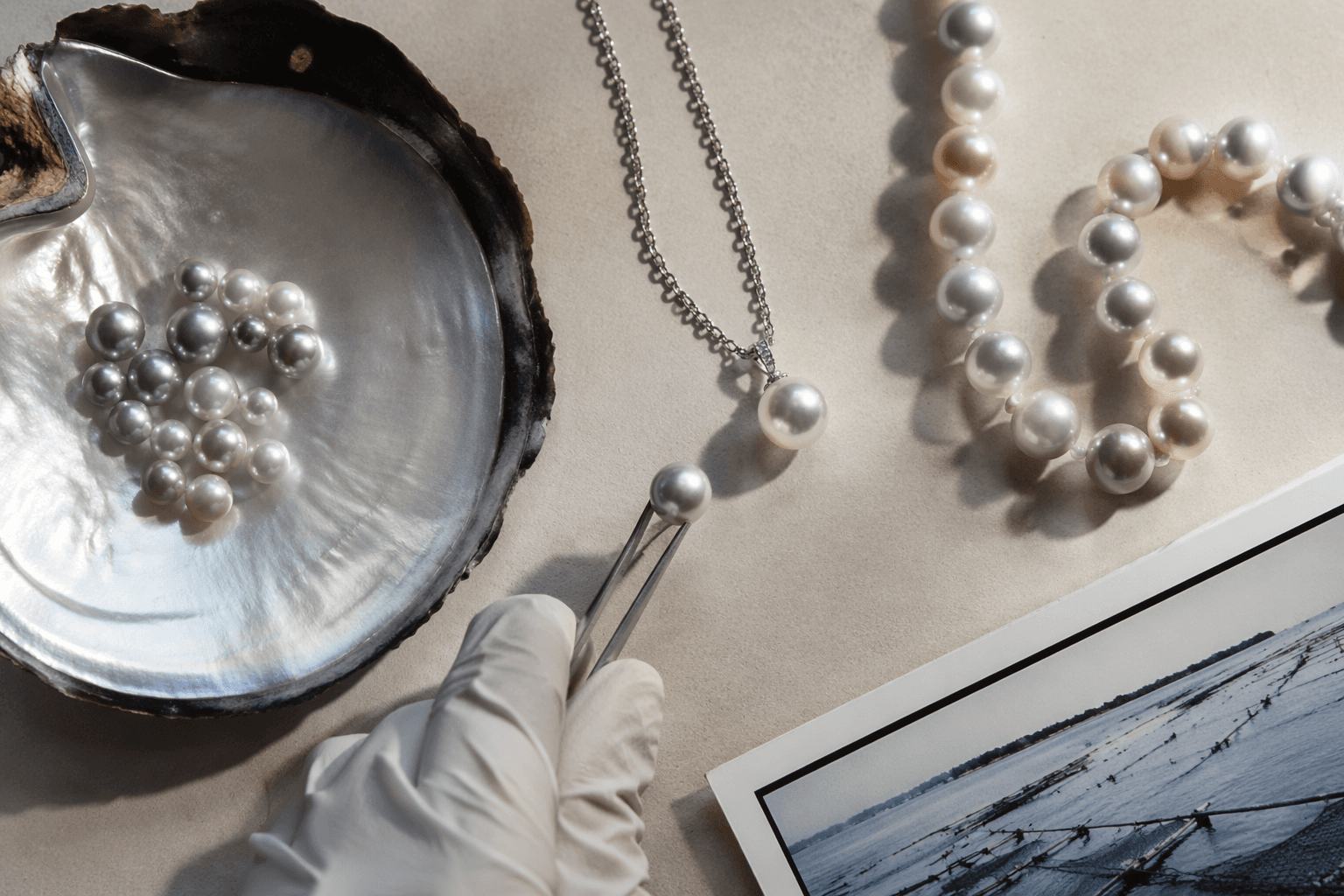
The strongest case for the pearl right now is not perfection but texture. Freshwater pearls are the most common pearl variety in the trade, yet designers value them precisely because they offer such a broad range of sizes, shapes and colors. That flexibility makes them ideal for the modern pearl language, where a little asymmetry, a little movement and a little contrast can make a piece feel more alive.
Fashion-forward consumers have also warmed to freshwater pearls because they carry natural lustre, versatility and accessibility. In a market that increasingly rewards pieces that can move from day to night without changing character, freshwater pearls answer the brief better than the more formal pearl archetypes many readers still associate with heirlooms and dress codes. The current appeal is not about replacing classic pearls, but about making them easier to wear more often.
The new pearl formula: layering, personalisation and mixed materials
The clearest styling shift is that pearls are being built into jewelry that already knows how to live in a stack. A JNA video frames the direction around layering, personalisation and everyday wear, which is exactly why these pieces land now: they are designed to sit beside chains, pendants and other textures rather than stand alone as a complete statement. Baroque shapes and mixed materials are central to that effect, because irregularity reads as relaxed, not precious.
That is also why the modern pearl feels less polished in the old sense and more editorial in the contemporary one. Instead of a single strand with strict symmetry, the new language favors contrast: pearl beside metal, bead detail beside chain, and a neckline built in layers so the eye keeps moving. The pearl becomes part of the outfit’s structure, not a break from it.

Missoma makes pearls feel easy
Missoma is one of the clearest examples of this casual recalibration. Its Andy Pearl Necklace Set combines a freshwater pearl choker with the brand’s Chunky T-Bar chain necklace, and that pairing does the stylistic heavy lifting: the pearl is softened by the metal chain, while the chain is made more refined by the pearl’s glow. It is a lesson in proportion as much as design, because the contrast keeps the look grounded.
The brand’s own pearl jewelry is described as designed for effortless everyday styling, and that idea is visible in the way it uses freshwater pearls across its collection. Another choker in the line uses baroque freshwater pearls spaced along a delicate chain with bead details, a small but telling adjustment that makes the piece feel lighter and less ceremonial. This is the kind of pearl jewelry that disappears into a daily uniform until you notice how much character it adds.
Dior keeps the pearl romantic, but loosens the rules
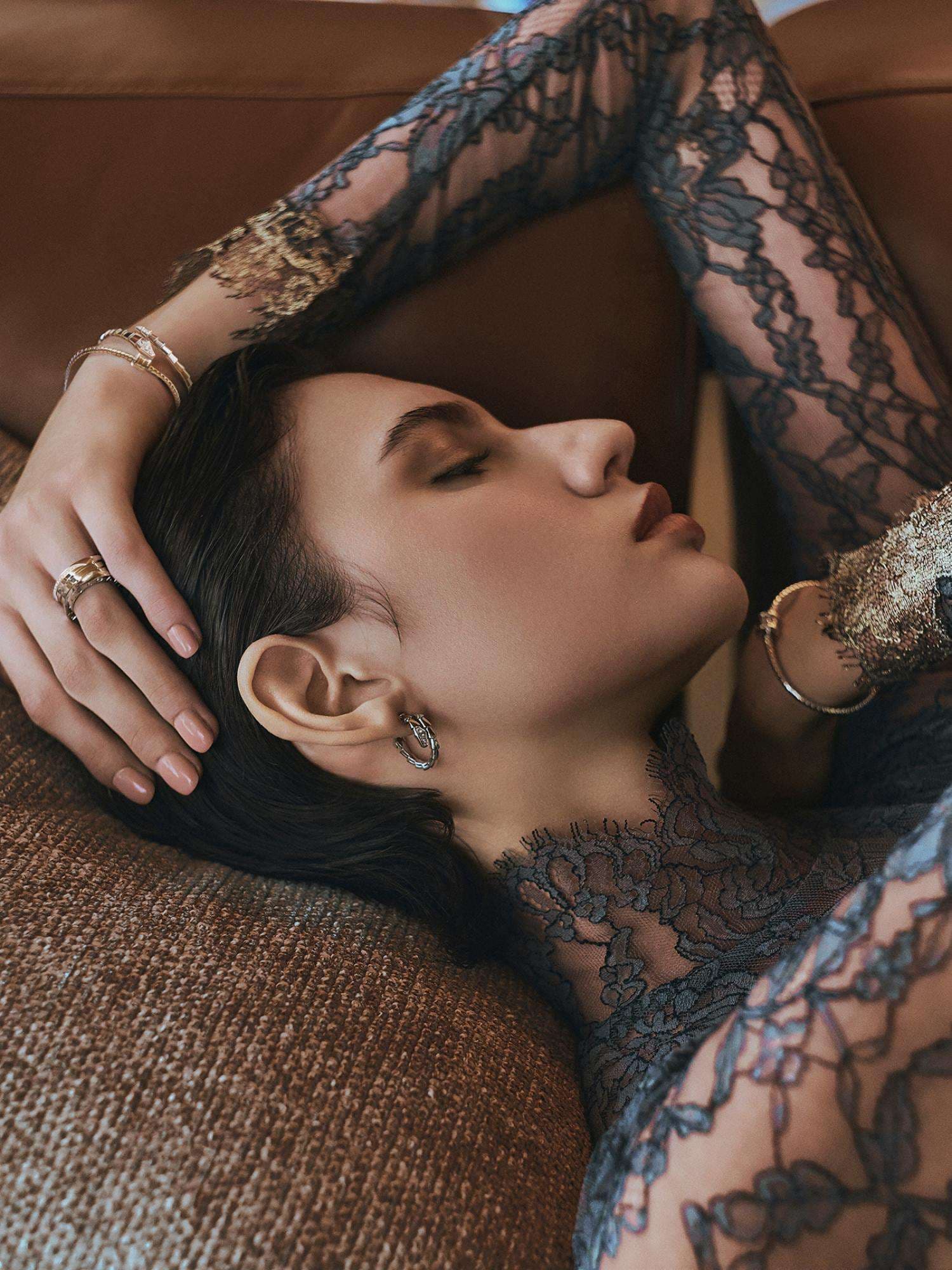
Dior’s Tribales earrings show another route into the trend: romance with flexibility. Dior describes the earrings as customizable, asymmetrical pieces that can be worn alone or as a duo, which gives them a built-in versatility that feels very current. Even when they lean more decorative, they still operate like styling tools, allowing different combinations and a less rigid relationship to symmetry.
The brand’s current versions extend that idea with pearlized finishes, set stones and other variations, but the pearl remains central to the silhouette. A Dioriviera Tribales design pushes the idea further: hallmark resin pearls form a flower in gold-finish metal, with petals formed by freshwater pearls. That floral construction keeps the pearl from looking traditional in the stiff sense; it becomes part of a seasonal, fashion-forward gesture.
The history matters here too. Dior Tribales date back at least to 2016, when they were already being described as asymmetrical earrings that revisit the pearl and reference Christian Dior’s muse Mitzah Bricard, along with the lily-of-the-valley motif. In other words, Dior has been refining the pearl for years, not suddenly discovering it. The current wave feels less like a reset than the latest chapter in a long design argument about how a pearl can be modern without losing its softness.

Olivia Yao and the appeal of mixed material restraint
Olivia Yao Jewellery, based in Taiwan, fits neatly into the same movement by using mixed materials to keep pearls from feeling too formal. That approach matters because pearls can become overly polished when surrounded only by other precious elements; introducing contrast gives them an easier pace and a more contemporary line. Mixed materials also sharpen the pearl’s natural surface, making its lustre read as a design feature rather than a symbol of convention.
This is where the broader 2025-26 pearl conversation has found its strongest footing: baroque shapes, asymmetry, mixed metals and layering all point toward a pearl that has been reintroduced into daily wardrobes. Olivia Yao’s work belongs to that shift because it understands that the modern pearl does not need to be demure. It needs to feel intentional, slightly unexpected and simple enough to wear without explanation.
How to spot and wear the modern pearl
- Baroque or irregular freshwater pearls rather than perfectly matched rounds
- Chains, T-bars or other hard metal elements that break up the softness
- Asymmetry, especially in earrings or clustered necklace compositions
- Pieces designed for layering, not just standalone wear
- Pearlized finishes, set stones or resin pearls used in creative, seasonal forms
If you are looking for the contemporary version of pearl jewelry, look for a few clear signals:
The key is balance. A modern pearl piece should feel like it has been styled, not staged. When the silhouette is relaxed, the materials are mixed and the pearl is allowed to keep its natural irregularity, the result is exactly why this trend has taken hold: it makes one of jewelry’s most familiar materials feel newly personal again.
This article was produced by Prism’s automated news system from verified source data, official records, and press releases, then run through automated quality and moderation checks before publishing. The system is built and supervised by the people who set the standards it runs under. Read our full AI policy.
Did this article answer your question?