GIA explains why pearl matching elevates strand value
The best pearl jewelry often wins on match, not size alone. GIA treats uniformity across strands and pairs as a formal value factor.
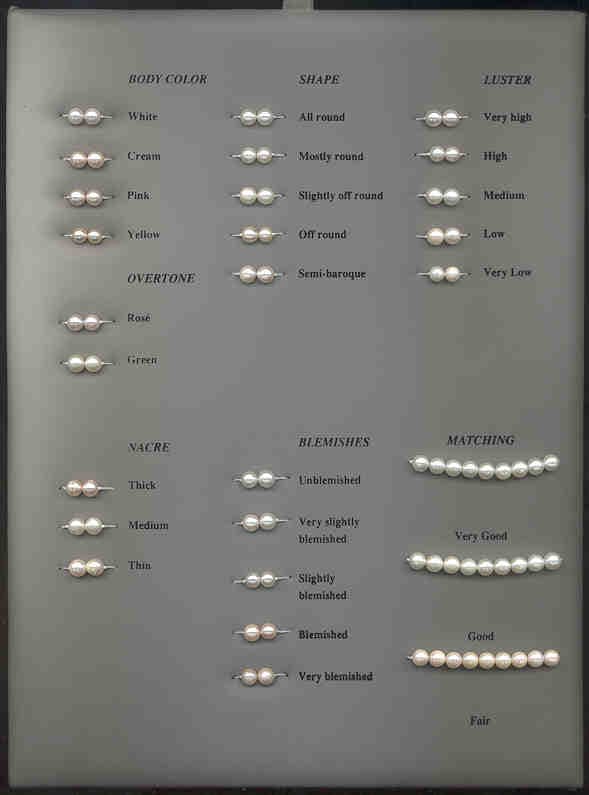
Matching is one of GIA’s seven pearl value factors, and it only applies when a piece contains two or more pearls. In a strand or pair, it measures the relationship between pearls, not just the quality of each one.
Why matching changes how pearl jewelry reads
Matching is easy to mistake for simple color sameness, but the grading logic is broader than that. A strand can still be considered well matched even when the pearls vary in hue if the size, luster, shape, and surface quality line up closely enough to create a coherent whole. A pearl necklace or pair of earrings is judged as a composition, not as a tray of individual gems.
In a polished strand, the eye looks for visual continuity. If one pearl is duller, bumpier, smaller, or more irregular than the others, the piece can feel less refined even when each pearl looks attractive on its own.
How GIA measures matching, not just describes it
GIA does not leave pearl assessment to a loose aesthetic impression. When pearls arrive at the lab, they are photographed and measured, then examined under controlled conditions. The institute uses type-specific master sets of strands to judge luster, surface, and matching, anchoring the comparison to known reference material rather than guesswork.
The broader identification workflow can be even more technical. GIA’s pearl analysis may include real-time X-radiography, UV-Vis reflectance spectroscopy, XRF, digital calipers, and microradiography when nacre thickness needs closer study. Pearl submissions are bar-coded, tracked with unique internal IDs, and can be issued reports for loose, mounted, or strung pearls.
What strong matching looks like in real life
For buyers, the easiest way to think about matching is to ask whether the pearls feel like they were chosen for the same job. In a strand, earrings, or a suite, the best pieces share a similar visual rhythm: comparable size, shape, luster, and surface quality, with color that feels intentional rather than accidental.
A few practical cues make the difference clear:
- Similar size keeps the eye moving evenly across the strand or pair.
- Similar shape helps the design look balanced rather than patchwork.
- Similar luster is crucial, because one weaker pearl can flatten the whole piece.
- Similar surface quality keeps blemishes from interrupting the visual flow.
- Coordinated color matters, but it is not the only test of a well matched piece.
A multicolored strand can still be well matched if the overall design is cohesive. That is especially useful for modern pearl jewelry, where white classics sit beside mixed-color strands, graduated necklaces, and pearl earrings that mix polished symmetry with a more relaxed palette.
Why cultured pearls changed the meaning of value
Pearls were once prized as rare natural finds, but the market changed after cultured pearls made the category far more available. Commercial cultured pearl production is tied to Kokichi Mikimoto’s work, and Mikimoto’s brand history dates the first cultured pearl to 1893. Once pearls became easier to compare, matching became more important too, because buyers could judge one strand against another rather than simply marvel at rarity.
The institute has classified pearls since 1949, and its pearl standards were developed over a 60-year period of research. It has also contributed to revisions of the FTC’s pearl guidance, which pushed the market toward clearer descriptions and more careful disclosure.
Disclosure, grading language, and the modern pearl market
The FTC Jewelry Guides are designed to help consumers get accurate information when shopping for natural and cultured pearls and their imitations, a necessary distinction because pearl jewelry can look similar across very different materials and treatments. The language used to describe a piece should match what is actually being sold. A strand that is described as premium should be able to stand up to scrutiny in the details that matter most: matching, nacre, luster, and surface.
In 2024, GIA updated nacre grading so reports reflect eye-visible nacre variation and post-harvest condition, using grades such as excellent, very good, good, fair, and poor. In 2023, it added a Hanadama quality-range comment to reports when the parameters are met.
This article was produced by Prism’s automated news system from verified source data, official records, and press releases, then run through automated quality and moderation checks before publishing. The system is built and supervised by the people who set the standards it runs under. Read our full AI policy.
Did this article answer your question?