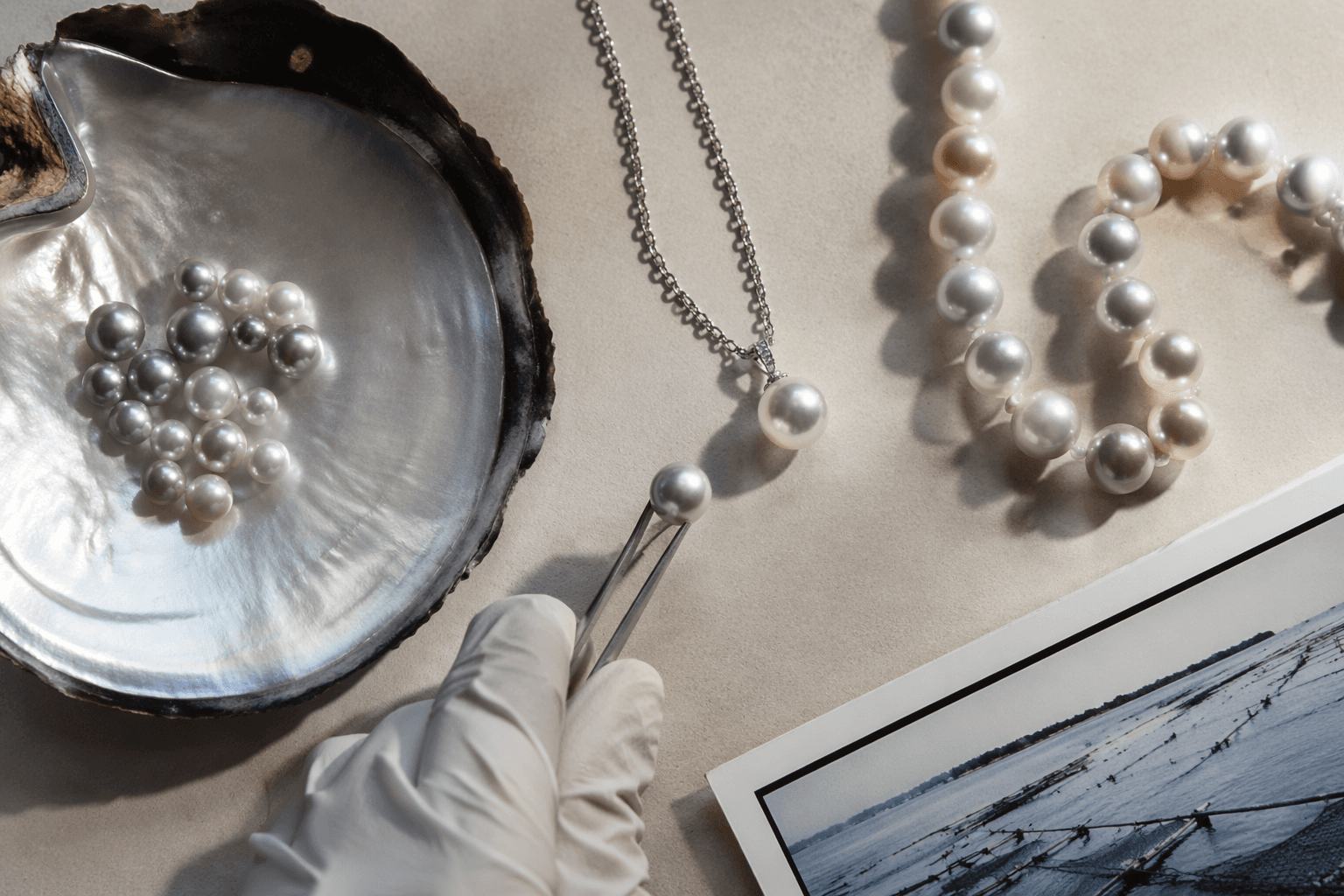
GIA warns on pearl care, cleaning and restringing strands
Knots are the pearl strand’s hidden insurance policy. If you see slack, fraying, or darkened silk, cleaning is no longer enough and restringing becomes the safer move.
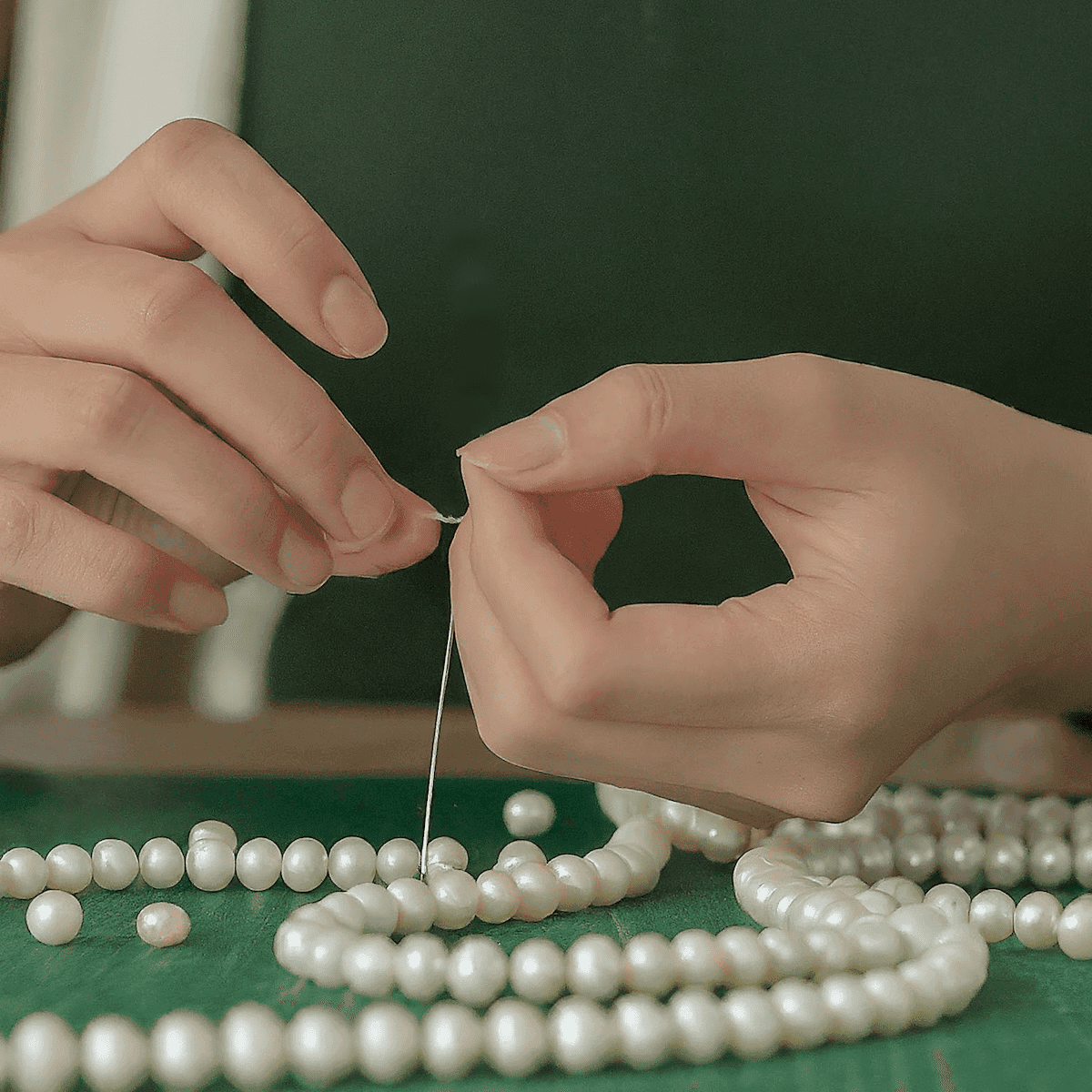
Pearls are built for wear, but a strand is only as sound as the silk that holds it. The knots between the beads are not decoration; they are the safety system that keeps a break from turning into a total loss. GIA’s guidance makes the distinction plain: cleaning keeps pearls looking luminous, while restringing keeps the necklace structurally secure.
Why pearl maintenance is different
Pearls live in a narrow lane between durability and vulnerability. GIA warns that high heat can burn cultured pearls or cause discoloration, splitting, or cracking, while intense light can dehydrate nacre and chemicals such as perfume, hair spray, cosmetics, perspiration, and cleaning agents can damage the surface. That means pearl care is not just about keeping a necklace bright, but about protecting the organic layers that give it luster in the first place.
The care conversation gets broader when the pearls have been dyed, impregnated, or coated, because those treatments can change over time. A strand can therefore age in more than one way: the pearls themselves may shift, and the silk that holds them can weaken at the same time. That is why maintenance is not a cosmetic afterthought in pearl jewelry, but part of the piece’s lifespan.
What to inspect at home
The easiest warning signs are the ones you can see. Look for visible gaps between pearls, uneven spacing, a strand that no longer drapes smoothly, or thread that appears stretched rather than taut. Fraying near the clasp is another red flag, especially on a necklace that is worn often or fastened and unfastened repeatedly.
Darkened silk matters too. GIA notes that the thread can darken, stretch, or wear thin over time, and those changes are practical signals that the strand is aging out of safe wear. If the necklace feels less secure when you handle the clasp or if the beads begin to sit irregularly on the line, the problem is no longer abstract.
A simple decision tree for restringing
If you want the shortest possible answer to “Is my strand still safe to wear?”, start here:
1. If the silk is darkened, stretched, or visibly thin, restring it.
That is GIA’s clearest warning sign and the most straightforward reason to retire the old thread.
2. If the spacing is uneven or gaps have opened up, have the strand checked.
Uneven bead placement usually means the silk has lengthened or begun to fail.
3. If fraying appears near the clasp, treat the necklace as due for service.
That area takes the most stress and is often the first place wear shows.
4. If the necklace is worn frequently, or exposed to heat, humidity, and daily movement, plan preventative restringing.
Heavy rotation shortens the useful life of silk, even when the pearls themselves still look pristine.
5. If none of those signs are present, clean and store it properly, then inspect again after wear.
Good maintenance can extend the life of a strand, but it does not replace periodic inspection.

The reason this matters is the architecture of the necklace itself. Most pearl necklaces are knotted so that if the strand breaks, only one pearl comes loose. That is a clever piece of design logic, and it is one of the reasons pearls stand apart from many other gemstone necklaces, where a failure can scatter the entire piece at once.
How to clean without damaging the strand
GIA’s cleaning advice is measured because pearls do not respond well to aggressive treatment. Warm soapy water is safe for occasional thorough cleaning, but ultrasonic and steam cleaners are off limits. After each wearing, a very soft, clean cloth should be used to wipe cultured pearls down, which removes oils and residue before they settle into the surface.
Dry heat is another enemy, both in storage and in daily life. Pearls should not be left in hot, dry environments, and they should be kept away from sharp or rough objects that can abrade the surface or nick the silk. A soft pouch or case is the right home for a strand, and the string should be completely dry before the necklace is worn again.
When restringing becomes part of regular ownership
For frequently worn pearl necklaces, some jewelers recommend annual restringing. Less-frequently worn strands are often serviced every 12 to 36 months, depending on wear. That time frame turns restringing from a rescue operation into a planned maintenance cycle, which is exactly how fine jewelry stays wearable across years, not seasons.
Professional restringing also changes the life of the piece in useful ways. Quick Jewelry Repairs says the process typically takes 7 to 10 business days, with rush service sometimes available in 3 to 5 business days. That matters if the necklace has a calendar date attached to it, but it also matters because restringing can be an opportunity to replace a clasp or refresh the finish of the strand rather than simply mend it.
Why pearl construction still carries cultural weight
Pearls have long been more than decoration. Britannica notes that they are commonly drilled and strung into necklaces, which underlines the craft involved in turning an organic gem into wearable jewelry. GIA traces its pearl research history to the 1930s, when Japanese akoya cultured pearls were commercialized and laboratories needed reliable ways to separate natural pearls from cultured ones, a shift that changed the modern pearl market.
That heritage helps explain why pearls continue to carry status as well as sentiment. The Metropolitan Museum of Art notes that seed pearl jewelry was especially popular in the early to mid-nineteenth century, often given as a wedding gift, and by the mid-nineteenth century it was considered de rigueur in the ballroom. The Met also places pearls in a lineage associated with Cleopatra, Queen Elizabeth I, Coco Chanel, and Elizabeth Taylor, proof that the strand has always lived at the intersection of adornment and identity.
Why the details matter to collectors and buyers
GIA’s classification and reporting for loose, mounted, or strung pearls uses the 7 Pearl Value Factors, which include size, shape, color, luster, surface quality, nacre quality, and matching for multi-pearl jewelry. That framework helps explain why maintenance is not separate from value. A strand with strong luster, good matching, and intact silk remains not just prettier, but safer and more defensible as an heirloom.
The most useful habit is also the simplest: inspect the thread, mind the clasp, and clean with restraint. Pearls reward care, but they also reveal neglect quickly, and in a well-made strand the knots are the quiet line between beauty preserved and beauty lost.
This article was produced by Prism’s automated news system from verified source data, official records, and press releases, then run through automated quality and moderation checks before publishing. The system is built and supervised by the people who set the standards it runs under. Read our full AI policy.
Did this article answer your question?