Japanese akoya pearl farmers open up to win younger collectors
Japanese akoya farmers are trading secrecy for transparency, using tours, data, and sustainability talk to court younger collectors and defend premium pricing.
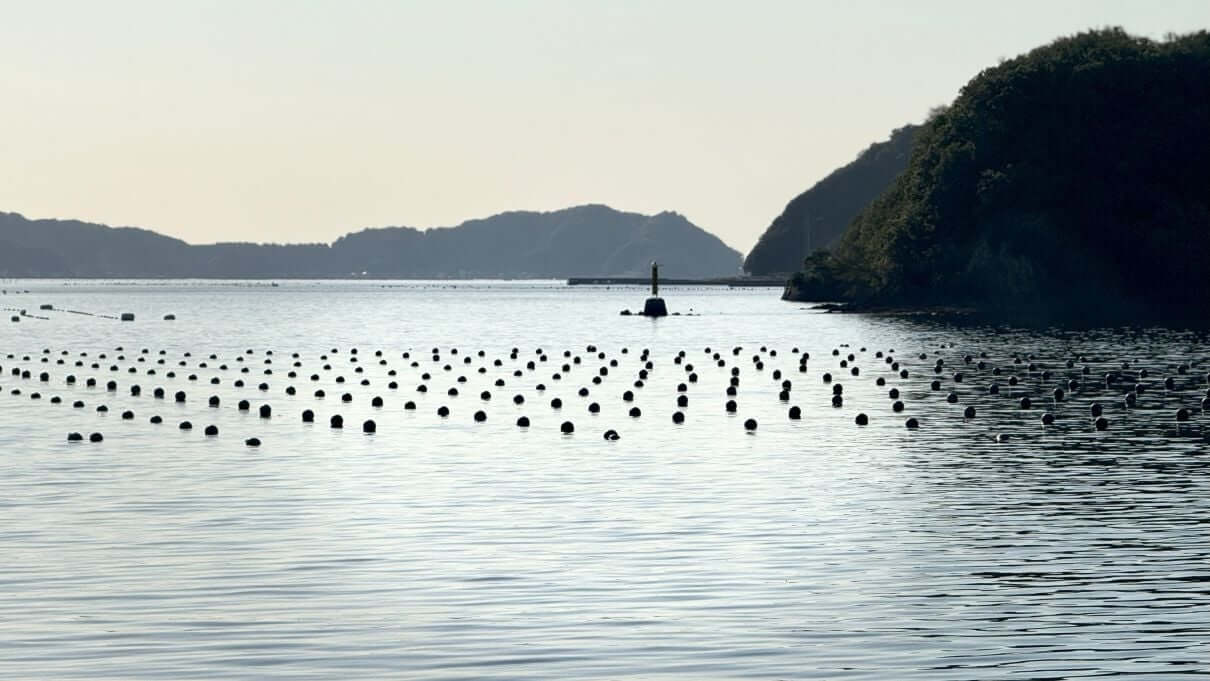
Transparency becomes the new luxury signal
Japanese akoya pearls have long traded on mystery, but mystery is losing its power. In a market shaped by social media, faster comparison shopping, and global competition, producers are opening their doors and making their methods legible to buyers who want proof, not just poetry.

That shift is more than a branding exercise. For younger collectors in particular, transparency can strengthen provenance trust, give retailers a more credible story to tell, and help justify the premium that top Japanese akoya still command when supply is tight.
What producers are choosing to reveal
The Japan Pearl Exporters’ Association is organizing farm tours so visitors can see pearl-growing expertise firsthand, a telling move for a category that once kept cultivation close to the chest. Instead of asking clients to simply admire the glow, the industry is now inviting them to observe the labor, timing, and precision behind that luster.
The push goes beyond hospitality. Industry leaders argue that modernizing both farming techniques and marketing is essential to long-term growth, and that message has become sharper as Japanese producers look for ways to speak directly to a younger audience. In practical terms, that means showing more of how premium Japanese pearls are produced, rather than leaving buyers to fill in the blanks themselves.
Scarcity is being recast as value
George Kakuda, president of the Japan Pearl Exporters’ Association, has said Japanese akoya production is likely to remain low for the next two to three years. In another category, that kind of supply pressure might read as distress; here, it is being framed as a quality signal, a reminder that the rarest strands are often the most carefully made.
Pricing tells the same story. Japanese pearl prices rose 30 percent over the previous three years, a move that suggests both tighter supply and stronger positioning at the top end of the market. At international jewelry shows in Hong Kong and Japan in 2023 and the first half of 2024, 40 percent to 50 percent of sales came from Asia, led by China, underscoring how central the region has become to demand.
That is why openness matters. When a retailer can explain not only where a pearl came from, but also why production is constrained and what is being done to improve quality, price starts to read as earned rather than merely elevated.
The new science behind an old craft
One of the most significant changes is technical rather than theatrical. From 2024, Japan began applying findings from a 10-year genomic research project on akoya pearl oysters, with the aim of healthier oysters, finer-quality pearls, and more sustainable farming. For an industry often described through tradition, that is a meaningful modernization of the actual engine of production.
Genomics will not replace skill, but it can sharpen it. Healthier oysters can mean better survival, more consistent results, and less waste, all of which matter in a business where every increment of color, nacre quality, and shape affects commercial value. The quiet logic of the pearl trade is changing: science is becoming part of the luxury proposition.
Heritage still carries the story, but it no longer carries it alone
Japan’s pearl identity remains deeply tied to Kokichi Mikimoto, whose 1896 cultured-pearl patent is credited by official Japanese sources with helping establish the modern cultured pearl industry. That legacy still matters because akoya pearls are widely regarded as the world’s first commercially viable cultured saltwater pearls, and the category’s authority has always rested on both invention and refinement.
Tasaki, founded in 1954, has helped define that prestige from another angle. Described as the number one producer of akoya pearls in the world, the company operates its own pearl farms, a reminder that scale and control can sit alongside artisanal reputation in this business. For buyers, that combination of heritage and infrastructure is precisely what makes Japanese pearl jewelry feel materially different from looser, less traceable supply chains.
Sustainability is now part of the price of admission
The environmental conversation around pearl farming is no longer peripheral. A 2023 life-cycle assessment of pearl farming in Ago Bay, Mie Prefecture, found a cradle-to-gate global warming potential equivalent to 4.98 kg of CO2 for every 1 kg of pearls produced there, while also linking pearl farming in the area to deterioration in local environmental conditions.
The industry has begun responding by rethinking waste. Current efforts include extracting calcium carbonate, exporting shell waste, and reducing plastic waste, which may sound unglamorous but are exactly the kinds of details that increasingly shape a luxury buyer’s confidence. In today’s market, the most persuasive provenance story is one that can speak clearly not only about origin, but about stewardship.
Why younger collectors are the point
The pressure to evolve is coming from several directions at once. A 2024 Asahi report said young akoyagai shellfish had been dying en masse in the Uwa Sea since 2019, hurting production, while the industry has also dealt with a limited labor force and disease outbreaks that have reduced young oysters in some regions. Add warming seas, an aging workforce, and the blunt competition of social media, and secrecy starts to look less like romance than risk.
That is why the industry has even turned to capsule-toy campaigns to improve its image and promote pearls to young people. The tactic may be playful, but the objective is serious: make the category visible, approachable, and relevant to a new generation without dulling its prestige.
What emerges is a more modern idea of luxury, one based on disclosed craft rather than hidden process. In akoya, transparency is becoming a competitive strategy, and that may prove as valuable as any single pearl in the case.
This article was produced by Prism’s automated news system from verified source data, official records, and press releases, then run through automated quality and moderation checks before publishing. The system is built and supervised by the people who set the standards it runs under. Read our full AI policy.
Did this article answer your question?