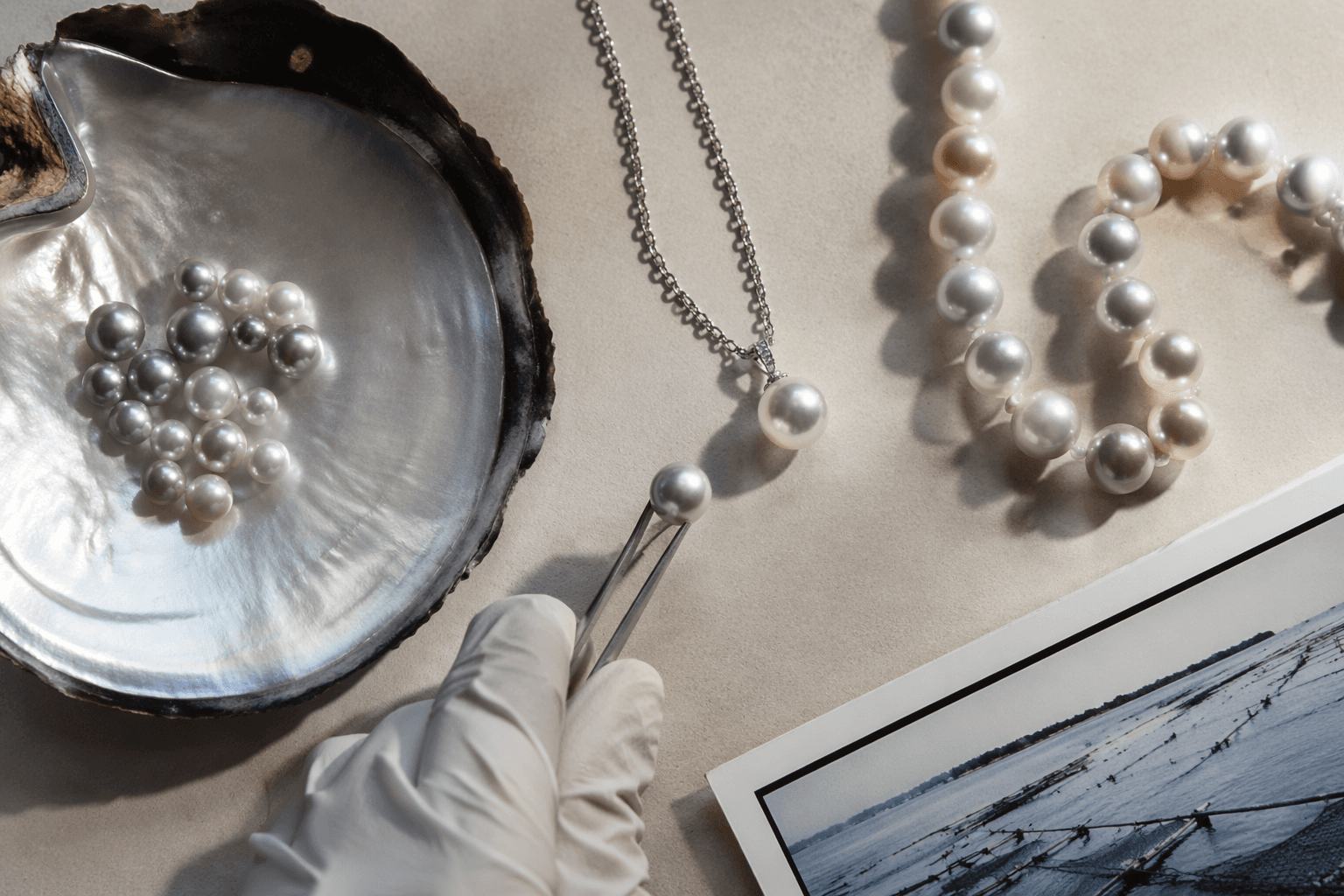
Mother-of-pearl vs pearls, why nacre shines in jewelry and watches
Mother-of-pearl and pearls come from the same nacre, but one is shell and the other a formed gem. That difference changes how each looks, wears, and feels in a collection.
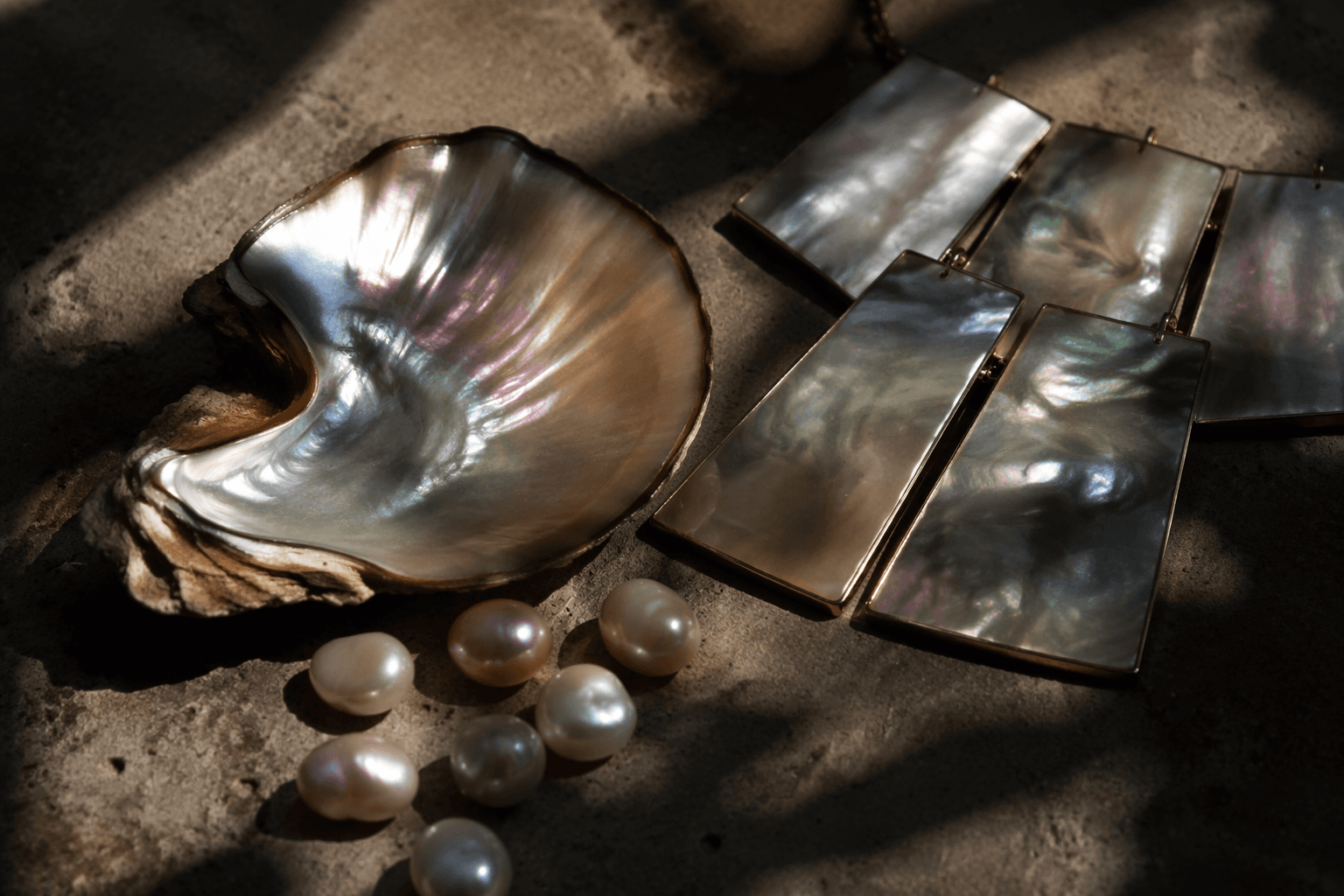
Many shoppers confuse mother-of-pearl with a pearl itself, but they are not the same object. Mother-of-pearl, also called nacre, is the iridescent inner layer of certain mollusk shells; a pearl is a discrete concretion made from the same nacreous material after the mollusk coats an irritant in successive layers. That single difference changes everything: how the material catches light, how it is cut, how it wears, and why it is priced and perceived so differently in jewelry and watches.
What nacre actually is
Nacre is built mostly from aragonite, a crystalline form of calcium carbonate that makes up about 95 percent of mother-of-pearl by weight. The remaining roughly 5 percent is an organic matrix that includes conchiolin, peptides, glycoproteins, chitin, and lipids. That layered structure is the reason it looks alive on the surface: light enters, bounces, and interferes within the layers, producing the luminous shimmer that can read white, silver, pink, green, blue, or champagne depending on the shell and the angle.
This is why mother-of-pearl is so common in jewelry and watch dials. It is not just decorative by accident. It has a built-in visual effect that can soften metal, brighten dark settings, and give even a small surface a sense of movement.
How a pearl forms differently
A pearl begins with irritation. A foreign particle enters the mollusk’s tissue, and the mantle responds by secreting nacre around it over time. Layer by layer, that irritant becomes a pearl, a body that is separate from the shell itself. Mother-of-pearl, by contrast, is the shell lining the mollusk already has, then is harvested, cut, and polished for use.
That distinction matters when you are judging a piece. A pearl is a gem-like object with its own form, while mother-of-pearl is usually a surface material. In practice, that means pearls are chosen for their individual presence, while mother-of-pearl is chosen for its broad glow and the way it can cover a larger area without looking heavy.
Why the surface reads so luminous
The shimmer shoppers notice is not paint, dye, or coating. It comes from constructive and destructive interference of light waves in nacre’s layered structure. Because the layers are microscopic and slightly irregular, the color shifts as the piece moves. That is also why two sections of shell never look exactly alike.
For jewelry, that variability is part of the appeal. In a pendant, cuff, brooch, or ring, mother-of-pearl can create a clean, polished field of light that feels more architectural than a single gem. In watches, it turns the dial into a living surface. The face can look creamy and calm in one light, then flash with color in the next.
A material with deep decorative roots
Mother-of-pearl has been used decoratively since at least 2500 BCE. Ancient Egyptians used it in furniture and jewelry inlays, which shows how early makers valued its sheen and the prestige it conferred. In Europe, it later appeared in Georgian-era accessories, extending its life as a material linked to refinement and display.
East Asia gave mother-of-pearl some of its most sophisticated artistic histories. The combination of lacquer and mother-of-pearl can be traced to early Chinese cultures and was also found in Korea, Japan, and Thailand by the 8th century. The Metropolitan Museum of Art notes that a refined inlay technique developed in the 12th century, and one of its box examples uses extraordinarily small, thin fragments of pearl shell to create five geometric patterns. The craft depended on patience as much as beauty.
Harvesting mother-of-pearl is not casual work. The Met describes a process that requires, at minimum, boiling and cutting the shell, then carefully trimming and polishing the pieces into their final shapes. That labor explains why the best inlay feels so crisp: the material only looks effortless after a very controlled transformation.
Why watches love mother-of-pearl
Watchmakers keep returning to mother-of-pearl for one simple reason: no two shell sections are identical. That natural variation makes each dial unique, even when the design is otherwise minimal. It gives a watch a face that feels organic, which can soften the precision of steel, ceramic, or gold.
Some makers go further and use extremely thin slices. A recent Czapek & Cie. example described a polished white mother-of-pearl dial base reduced to 0.2 millimeter thick. That kind of treatment shows how far the material can be pushed: thin enough to function as a dial surface, yet still luminous enough to carry the entire design.
How to choose between mother-of-pearl and a true pearl
If you want surface glow, mother-of-pearl is the better choice. It works especially well in designs that need breadth, pattern, or a quiet flash of color, including dials, inlays, and larger jewelry panels. Its strength is visual range: it can read modern, classical, or highly decorative depending on the setting.
If you want a single gem with a more concentrated identity, a true pearl is the stronger investment in feel and symbolism. Pearls are discrete bodies formed inside the mollusk, which makes them feel more singular than shell material cut into a surface. They also carry the long history of jewelry as status marker and talisman, which still shapes how they are perceived today.
A practical buying guide looks like this:
- Choose mother-of-pearl when the design depends on light, surface area, and pattern.
- Choose a pearl when the piece centers on a gem that stands alone as the focal point.
- Favor mother-of-pearl in watches and inlay work, where the material’s natural variation is the point.
- Favor pearls in earrings, necklaces, and rings when you want a more obvious sense of rarity and a classic gem presence.
The verdict for 2026 buyers
Mother-of-pearl is not a lesser version of pearl, and pearl is not simply a better shell. They are related materials used for different visual and emotional effects. Mother-of-pearl gives you the shine of nacre across a surface, with centuries of craft behind it; a true pearl gives you nacre made into a body of its own. The best choice depends on whether you want the glow of the shell or the authority of the gem.
This article was produced by Prism’s automated news system from verified source data, official records, and press releases, then run through automated quality and moderation checks before publishing. The system is built and supervised by the people who set the standards it runs under. Read our full AI policy.
Did this article answer your question?