Natural pearls fetch record sums as scarcity drives auctions
Natural pearls are commanding premium prices because collectors are paying for rarity they can verify, from royal provenance to exacting matches and exceptional size.
Natural pearls are commanding premium prices because collectors are no longer buying only beauty, they are buying geological rarity, documented history, and the kind of assurance that turns a jewel into an asset. In today’s auction room, the most prized examples are natural pearl necklaces and earrings, especially when they combine natural origin, size, matching, provenance, and a period setting that preserves the jewel’s story.
Why natural pearls sit at the top of the market
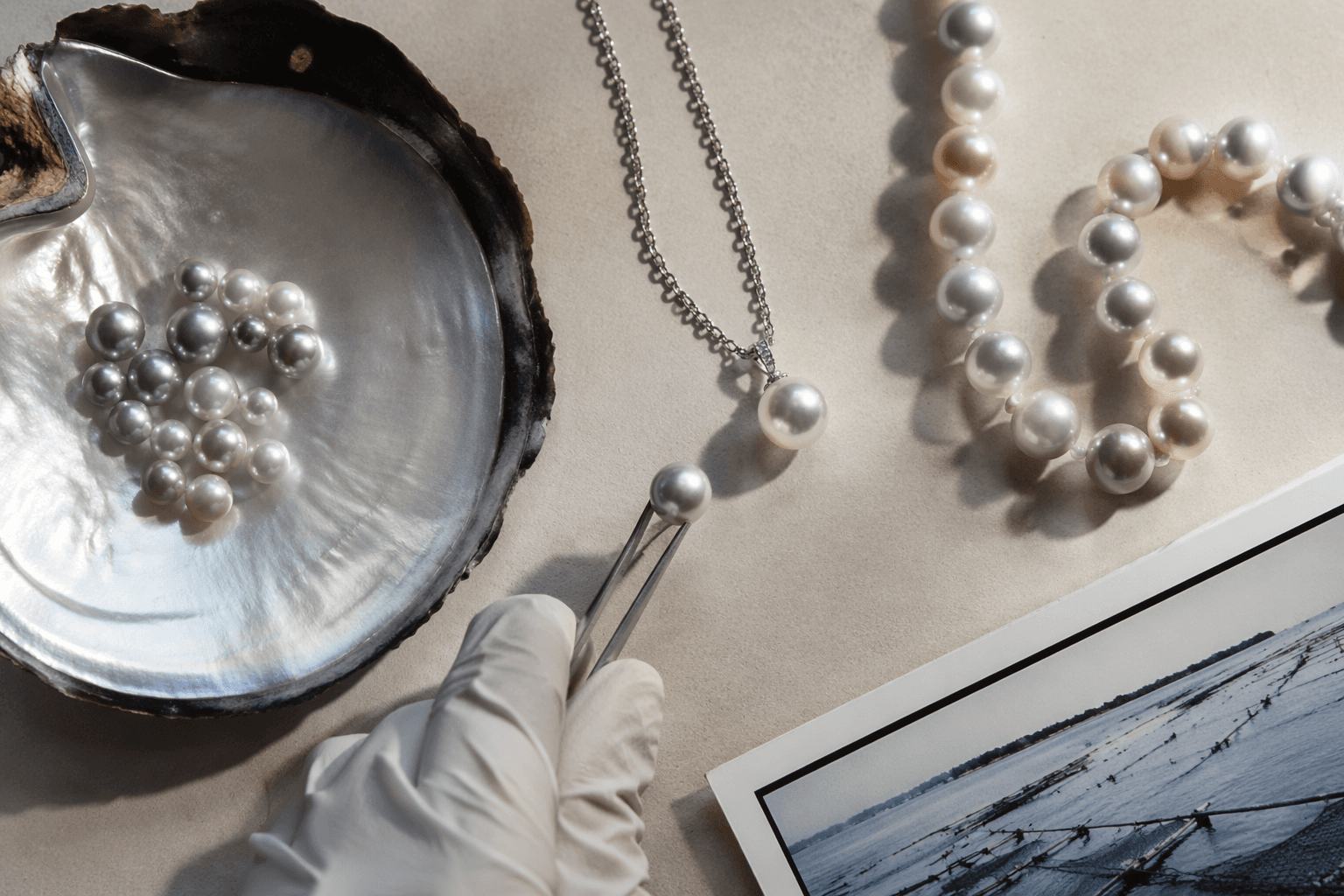
A natural pearl is formed entirely by nature, without human intervention in cultivation, and that distinction has become more valuable as the original source of natural pearls is nearly depleted. That scarcity is the engine behind the current market. When supply is that constrained, the best examples do not merely hold value, they can leap far beyond estimate because serious collectors know they may not see a comparable jewel again for years.
The appeal is not abstract. Sotheby’s has repeatedly framed natural pearls as one of the most extraordinary gems in the world, precisely because they are so difficult to find in meaningful quality today. Christie’s has made a similar case through its pearl lots and collecting guides, where provenance is never treated as decoration. It is a core part of the value.
The record lots that set the price floor
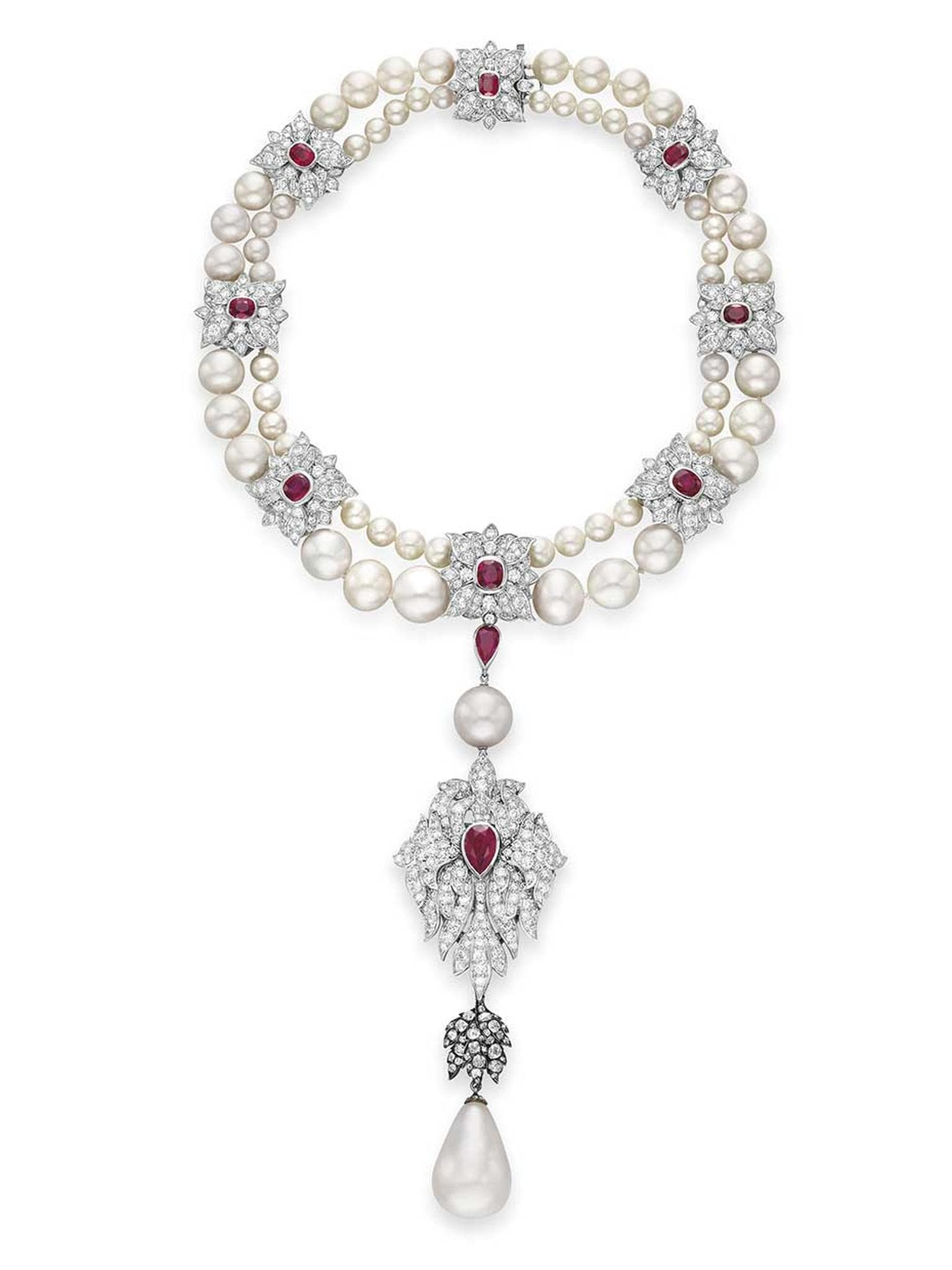
The clearest proof of pearl strength is the way landmark pieces have performed at auction. In New York on December 14, 2011, Christie’s sold La Peregrina, Elizabeth Taylor’s pearl necklace, for $11,842,500 after four and a half minutes of bidding. Guinness World Records identifies it as the most expensive pearl necklace ever sold at auction, and for collectors it remains the benchmark that shows how far a truly famous natural pearl can travel when rarity and celebrity intersect.
That record did not stand alone for long in the broader category of natural pearl jewelry. In 2014, Doyle New York sold a pair of natural pearl earrings attributed to Empress Eugénie for $3.3 million, setting a new world record at the time for a pair of natural pearls. The result mattered because it proved that earrings, when they are matched and historically important, can command a different kind of premium than necklaces. Matching is not a cosmetic detail in this market. It is part of the difficulty, and therefore part of the price.
Sotheby’s has also pointed to Queen Marie Antoinette’s pearl, which it says sold in Geneva for $36.2 million, a world auction record for a natural pearl. That figure is the most dramatic expression of the category’s upper ceiling. It shows that when provenance reaches royal level, the market is willing to pay at a scale more often associated with major diamonds than with pearls.
What today’s results say about collector demand
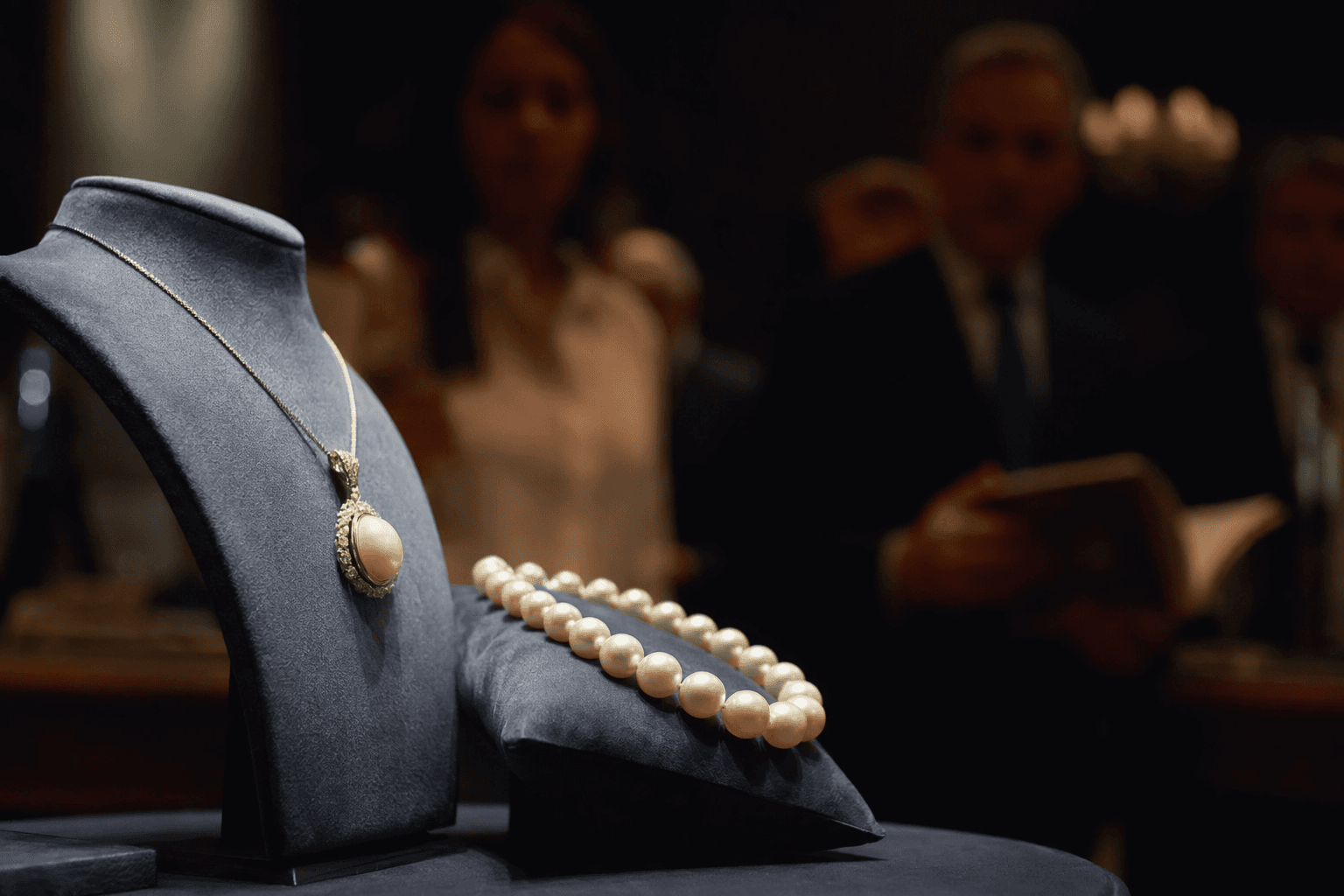
Recent sales suggest this is not a single headline spike. Sotheby’s sold a Tiffany & Co. natural pearl and diamond necklace in 2024 for $672,000, and later described it as the most expensive Tiffany necklace ever sold at the house. In the same period, Christie’s reported a Natural Pearl, Cultured Pearl and Diamond Necklace at $378,000 and a pair of Natural Pearl and Diamond Earrings at $277,200, both above high estimates.
Those figures sit well below the multimillion-dollar royal and celebrity landmarks, but that is exactly what makes them important. They show a live market at multiple levels, from exceptional trophy jewels to strong contemporary or less historic examples that still attract real competition. The jump from $277,200 to $378,000 is significant on its own, but the more telling signal is that both lots cleared estimates comfortably. Demand is not confined to one spectacular object. It is broad enough to support a range of quality.
What buyers are actually paying for
In this market, the premium traits are clear:
- Natural origin, because a pearl formed entirely by nature is the rarest and most collectible category.
- Size, because large natural pearls are vastly scarcer and easier to price at the top end when their weight is documented, as with La Peregrina at approximately 202.24 grains, or 50.56 carats.
- Matching, especially in earrings, where symmetry is difficult to achieve and therefore highly valued.
- Provenance, because a jewel tied to Elizabeth Taylor, Empress Eugénie, or Queen Marie Antoinette carries a narrative that the market can verify and reward.
- Period setting and house signature, because a Cartier mounting, a Tiffany necklace, or a named historic jewel tells collectors how the pearl was worn, preserved, and transformed into a finished work of art.
Even the best natural pearl needs the right frame. Christie’s listing for La Peregrina notes that it was accompanied by a report confirming the authenticity of the saltwater natural pearl, the kind of documentation that reassures collectors they are buying the real thing. In this tier of the market, paperwork is part of the jewel.
Why the category looks investment-grade now
The current market for natural pearls does not look like a temporary craze. It looks like a category where scarcity, history, and named ownership have created a durable price structure. The best necklaces and earrings are not competing only on glamour. They are competing on rarity that can be proven, on matching that is hard to replicate, and on provenance that places them inside jewelry history.
That is why natural pearl auctions continue to produce headlines at every tier, from the $3.3 million Empress Eugénie earrings to La Peregrina’s $11.8 million result and Queen Marie Antoinette’s $36.2 million benchmark. In a market defined by depletion, the finest natural pearls are no longer simply beautiful objects. They are finite records of nature, history, and desire.
This article was produced by Prism’s automated news system from verified source data, official records, and press releases, then run through automated quality and moderation checks before publishing. The system is built and supervised by the people who set the standards it runs under. Read our full AI policy.
Did this article answer your question?