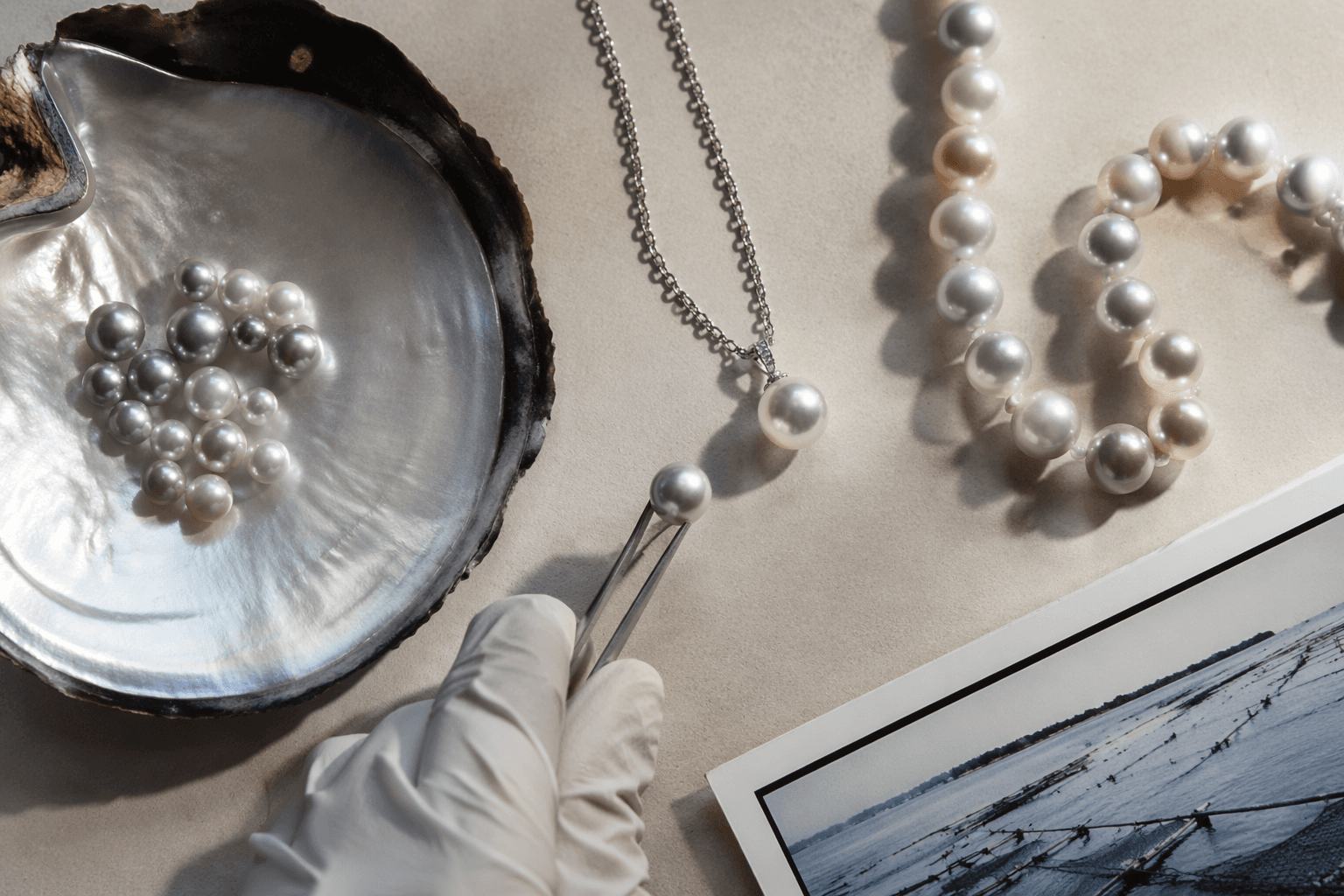
Natural vs cultured pearls, the history behind pearl jewelry value
Natural and cultured pearls can look similar, but their rarity, labeling, and lab verification shape value. Understanding the difference makes pearl shopping far more confident.

The pearl most people wear today is cultured, while a true natural pearl remains a rarity with a story of its own. A strand or pair of earrings can share the same soft glow, yet come from very different histories, levels of scarcity, and price expectations. The pearl case is rarely as simple as natural versus cultured, and that is exactly why the distinction matters when you are buying jewelry now.
Why the distinction drives value
For centuries, natural pearls were so scarce that they belonged to the highest tiers of power and wealth. The earliest steps toward pearl culturing appeared in China hundreds of years ago, then Japanese pioneers produced whole cultured pearls around the beginning of the 20th century. Once cultured pearls became commercially important in the 1920s, natural pearl production began to decline, and the market changed from one built on accident and scarcity to one shaped by human skill and controlled growth.
That shift still defines the way pearl jewelry is priced and described. A natural pearl is formed without human intervention; a cultured pearl is still a real pearl, but one that begins with human assistance. Natural pearls are far rarer, which is why they can command much higher prices when they appear in the trade.
How a pearl becomes a pearl
Pearls are produced by many mollusk species, mainly from the Bivalvia and Gastropoda classes, and they are made of calcium carbonate in the form of aragonite or calcite. A cultured pearl begins when a mollusk is intentionally introduced to a foreign object, after which it layers nacre around that irritant. The result is not an imitation or a laboratory-made substitute, but a pearl grown under human direction.
That is the cleanest way to read the language you see on a label. “Cultured” does not mean fake, and “imitation” does not mean a pearl at all. Cultured pearls are real pearls, while imitation pearls are made from other materials such as plastic, shell, or composites.
What the lab sees that the eye cannot
Pearls are among the few gems where surface beauty can hide a very different interior, which is why testing matters. GIA uses digital X-radiography, traditional visual observation, and advanced testing equipment to determine whether a pearl is natural or cultured, and microradiography is the most reliable non-destructive way to read the internal structure. The same testing can also separate natural-color from treated-color pearls.
That is the practical lesson for shoppers: appearance alone is not enough. Two pearls can share the same creamy luster and near-identical color, yet carry radically different origins and value. The GIA 7 Pearl Value Factors give the trade a common framework for judging pearl quality, but origin remains the first question because it shapes both rarity and the price ceiling.
CIBJO’s 62-page illustrated guide covers the trade side of the same distinction. The guide was developed over several years with multinational input, including contributions from Paspaley Pearling in Australia and the Bahrain Institute for Pearls and Gemstones, known as DANAT. DANAT was established in Bahrain in 2017 to expand the work of the Pearl and Gem Testing Laboratory.
A market shaped by Japan, China, and the Gulf
The modern pearl business is not a single category but a family of them. Many mollusk species can produce pearls. GIA’s research depends on thorough gemological characterization of samples from localities around the world. CIBJO’s guide covers natural and cultured pearls from both seawater and freshwater sources, which is why one pearl necklace can look traditional while drawing from a very different part of the market than another.
Japan changed the economics first. Japanese akoya cultured pearls accounted for more than 70 percent of global pearl production by value in the early 1990s, by GIA’s estimate, before Japanese dominance declined and cultured pearls from French Polynesia, Australia, and China became more important. Advances in culturing have produced bead-nucleated freshwater pearls from China that can resemble akoya pearls in shape, color, and luster, which makes labeling especially important for anyone comparing pieces across retailers.
That similarity is one reason pearl shopping can feel deceptively simple. A strand may look classic, but its identity may rest on whether it is freshwater or saltwater, cultured or natural, treated or untreated. The more polished the pearl, the more important it becomes to ask how it was made and how that answer is documented.
The Gulf’s pearl history still shapes the story
Natural pearls are not only a gemological category; they are also part of a working maritime culture that defined entire communities. UNESCO inscribed Pearling, Testimony of an Island Economy on the World Heritage List in 2012 and dates Bahrain’s pearling economy apex to the end of the 19th century and the beginning of the 20th. The site includes 17 buildings in Muharraq City, three offshore oyster beds, part of the seashore, and Qal’at Bu Mahir fortress.
That heritage extends beyond stone and shell. UNESCO also identifies Fjiri, a musical performance commemorating Bahrain’s pearl-diving history, as a tradition dating to the late 19th century.
How to shop with confidence
The smartest pearl purchases begin with the label and end with your own style, not with the assumption that natural always means best. If a piece is cultured, that is not a compromise by default; it is often the more practical and better-value choice, especially when you want a specific size, shape, or color at a reachable price. If a piece is natural, the question becomes whether its rarity is worth the premium to you, not whether rarity alone makes it superior.
For confidence at the counter, look for three things:
- Clear naming of the pearl type, including natural, cultured, or imitation.
- Clarity on origin and treatment, especially for color.
- A seller who can explain the pearl’s internal verification, not just its surface appearance.
This article was produced by Prism’s automated news system from verified source data, official records, and press releases, then run through automated quality and moderation checks before publishing. The system is built and supervised by the people who set the standards it runs under. Read our full AI policy.
Did this article answer your question?