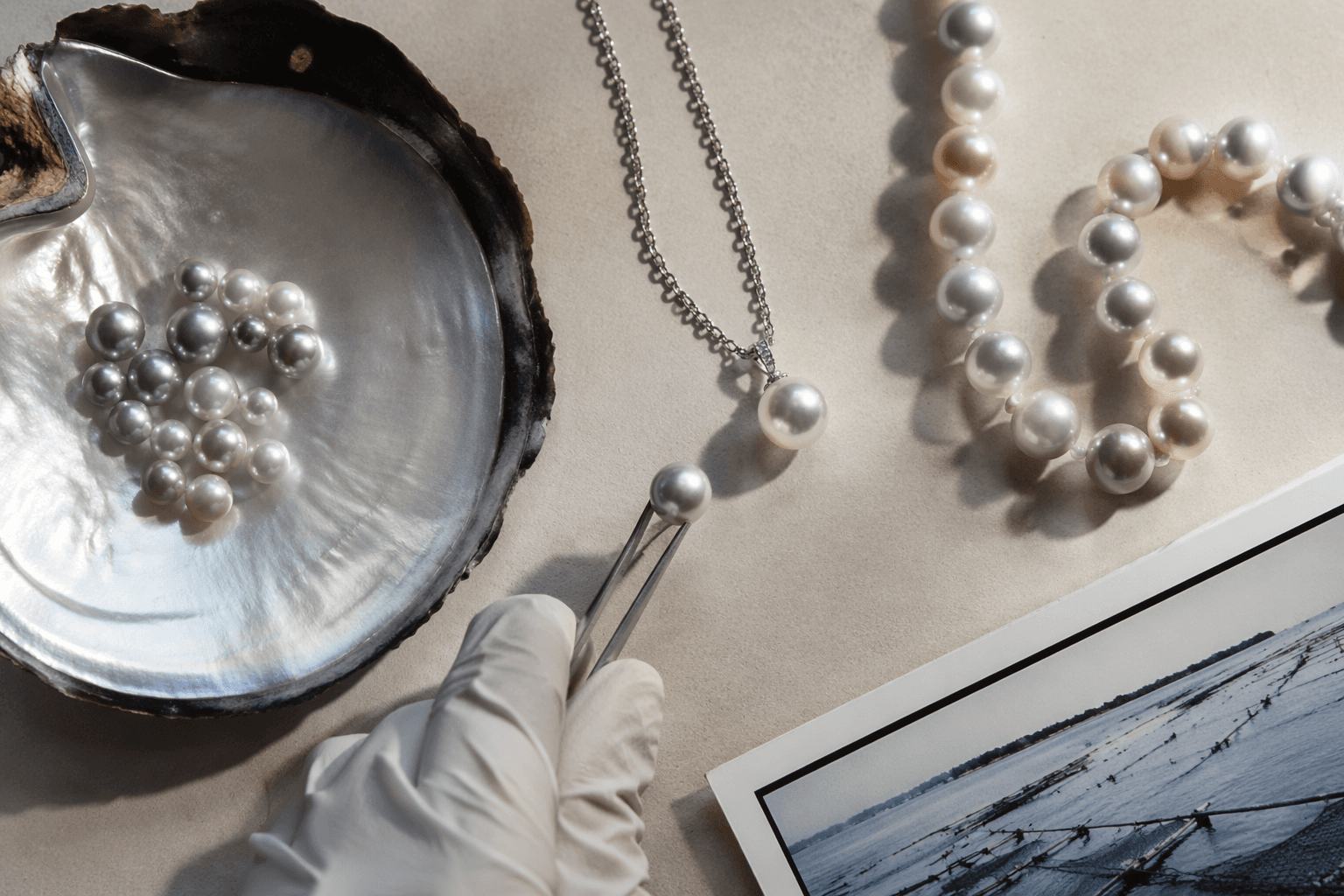
Nautical pearls lead summer 2026 jewelry, from shells to gold accents
Pearls are back in a nautical register, with shells, mismatched drops, and gold accents replacing last summer’s kitsch.
The new pearl mood
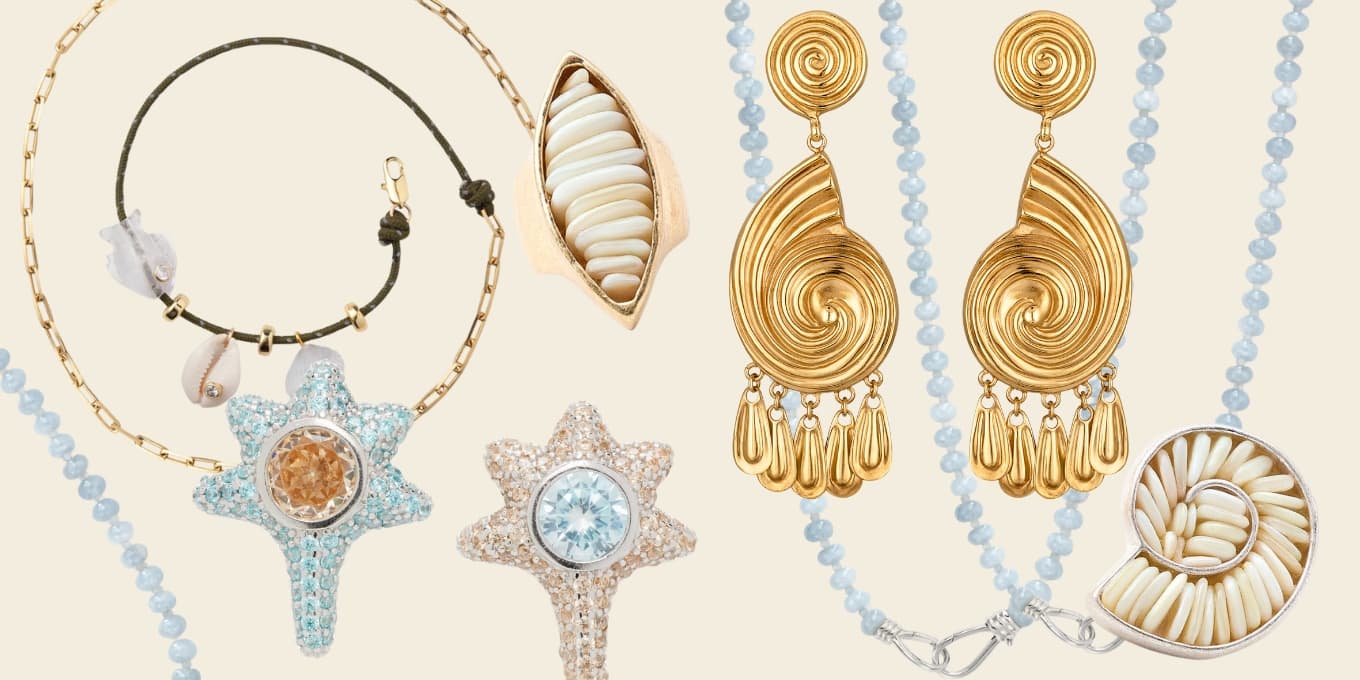
Pearls are reasserting themselves as one of summer 2026’s most commercially useful jewelry stories, but the return is anything but traditional. ELLE Canada frames the season around a nautical, pearly direction, where shell-inspired shapes, mismatched accents, and golden finishes make the category feel sharper than the old matched-strand formula. The look still nods to the broader fisherman aesthetic, yet the strongest pieces read polished and intentional rather than themed.
How the trend changed shape
The real shift is from last summer’s kitschy fish-shaped jewelry to a more elevated language of seashell forms, irregular pearls, and mixed textures. That evolution matters because it changes pearl jewelry from novelty into design-led fashion: the shell becomes sculptural, the pearl becomes less perfect, and the metalwork does the heavy lifting. When the styling is right, the result feels beach-coded without looking costume-y.
The most convincing pieces lean on imbalance. A mismatched pair of earrings, a baroque pearl beside a cleaner golden element, or a shell pendant that feels carved rather than cartoonish all push the trend into modern territory. When the marine references are too literal, the look slips back toward souvenir-shop humor, which is exactly what the better 2026 versions avoid.
Why the runway keeps feeding it
This is not a random retail detour. Earlier in 2026, ELLE Canada’s jewelry forecast said it had analyzed spring and summer runway shows and identified seashell-inspired jewels as one of the key directions, which helps explain why the pearl story has stayed alive and sharpened over time. WWD reinforced that same runway pulse in Paris, describing Spring 2026 jewelry with “not-your-grandma’s pearls” alongside geometric lines, sinuous silhouettes, chunky volumes, and a dash of color.
That language signals a broader redesign of what pearl jewelry can be. Pearls are no longer being treated as a polite classic reserved for matching sets. They are being folded into bolder, more expressive silhouettes that can sit beside tailoring, sculptural metals, and asymmetry without losing their identity.
Buyers in Paris also described the season as likely to resonate with customers despite economic headwinds, and they pointed to design, craftsmanship, and creativity as the reasons. That matters because it places pearls inside a larger appetite for wearable statement pieces rather than decorative filler. A pearl now has to justify itself through proportion, finish, and the quality of the setting.
What feels elevated, and what does not
The difference between elevated and gimmicky comes down to restraint. The best nautical pearl pieces use shells as structure, not gimmick, and let gold accents clean up the composition. They look considered because the materials are doing something specific: creating contrast, balancing weight, or adding warmth to the cooler luster of the pearl.
A few qualities separate the keepers from the throwaways:
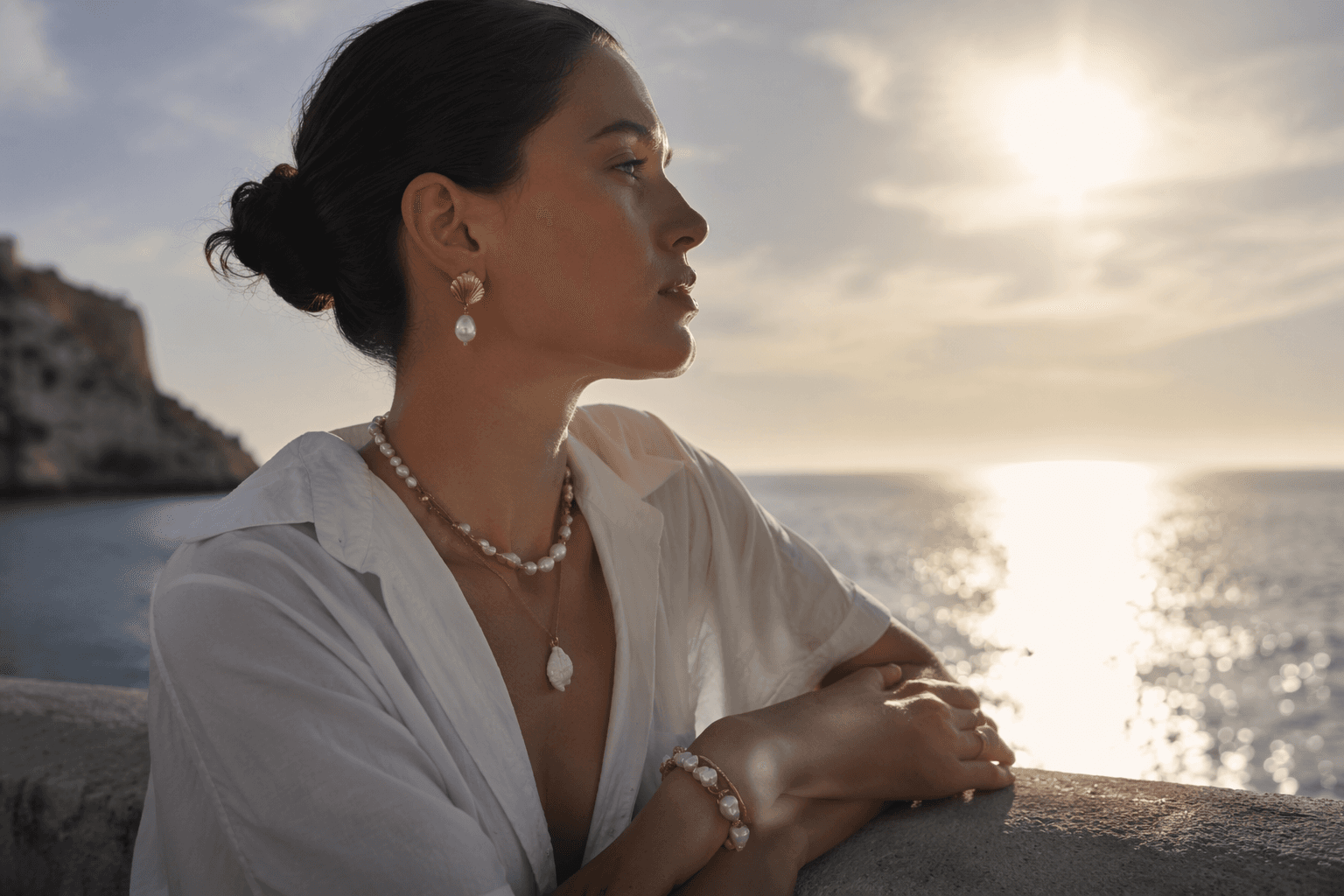
- irregular or baroque pearls that feel organic rather than mass-produced
- shell forms with clean lines and believable metalwork
- mismatched elements that still share a clear visual logic
- gold accents that sharpen the palette instead of cluttering it
By contrast, too many tiny charms, overly literal fish motifs, or excessive beach props make the trend feel borrowed rather than designed. The strongest pieces understand that marine references work best when they are edited, not illustrated.
Why brands from Zara to Tiffany are all in
The commercial appeal is wide because jewelry itself is enjoying a strong market position. The Business of Fashion says jewelry is outperforming the wider luxury market, and challenger brands are using that strength to build authority through art fairs, flagships, and high-jewelry offerings. That creates room for a trend like nautical pearls to live in two worlds at once: accessible retail and prestige jewelry.
That range is exactly why ELLE Canada can place Éliou, Juju Vera, Zara, and Tiffany inside the same style conversation. The trend is flexible enough to be translated at different price points, but it still depends on craft. A shell motif at the lower end can look fresh if the proportions are smart; at the higher end, it has to justify itself through finish, metal quality, and a more disciplined silhouette.
The market data supports the breadth of the opportunity. Grand View Research estimates the global jewelry market at US$408.64 billion in 2026 and projects a 5.10 percent annual growth rate through 2031. It also expects the luxury jewelry market to reach US$99.92 billion by 2033. In a category with that kind of momentum, pearls can move from runway cue to commercial anchor quickly, especially when they are being recut for modern tastes.
Pearls still carry real cultural weight
The trend’s durability also comes from the fact that pearls remain culturally potent. Emily Blunt wore a half-million-dollar Mikimoto pearl necklace at the Met Gala on May 5, a reminder that pearls can still command the center of the room when the occasion demands scale and visibility. On the collector side, Jackie Kennedy Onassis’s simulated pearl jewelry surfacing at a Bonhams auction tied to Chanel and Lagerfeld pieces showed how deeply pearls are lodged in fashion memory.
That lineage gives the current trend more depth than a simple seasonal mood board. Pearls arrive with history, but the 2026 version is less about reverence than reinvention. They are being stripped of some formality, given shell edges, mismatched rhythms, and gold framework, and turned into something that feels both familiar and newly coded for the season.
The bottom line
Nautical pearls are leading summer 2026 because they solve two problems at once: they keep the emotional appeal of pearls intact while giving designers a fresher visual language to work with. The best versions feel edited, modern, and materially aware, which is exactly why the look is traveling from runway houses to accessible labels without losing its fashion edge.
This article was produced by Prism’s automated news system from verified source data, official records, and press releases, then run through automated quality and moderation checks before publishing. The system is built and supervised by the people who set the standards it runs under. Read our full AI policy.
Did this article answer your question?