Pearl Necklaces Become a Stylish Men’s Fashion Statement
Lewis Hamilton, Harry Styles and Ranveer Singh have made pearls feel sharply modern. The smartest buys balance size, length and luster so they read polished, not costume-like.
Why pearl necklaces look new on men
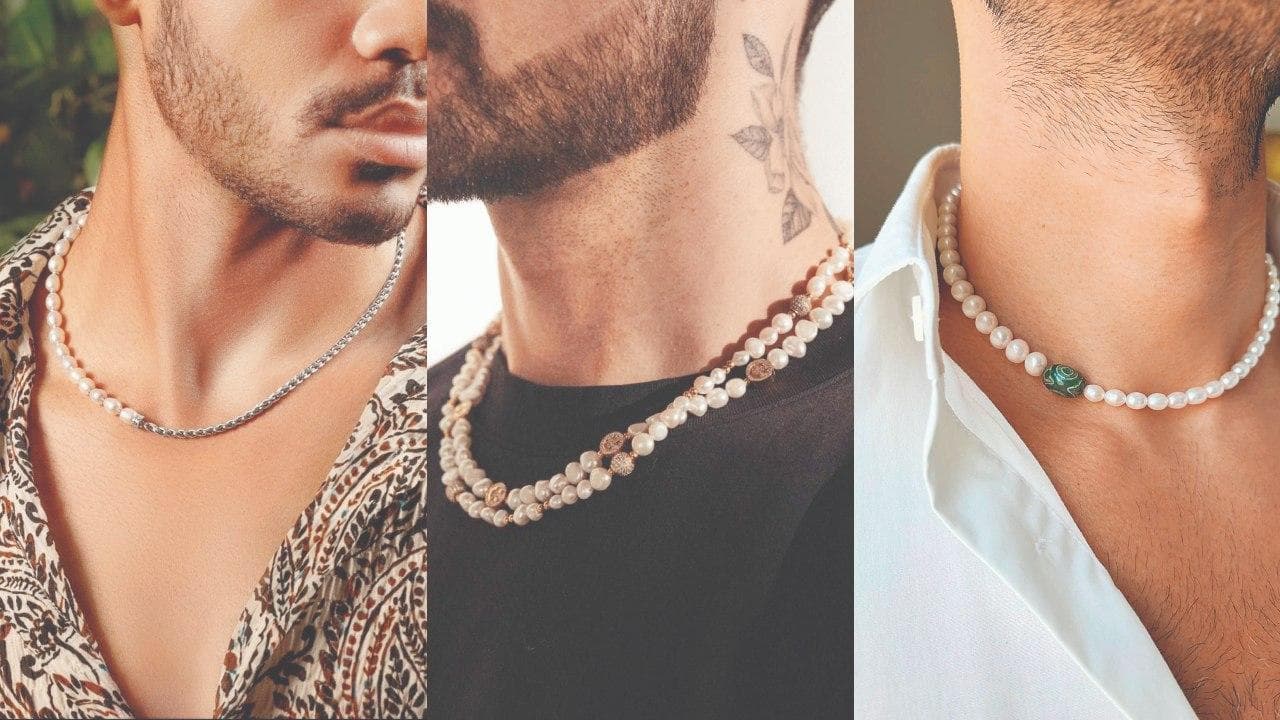
Lewis Hamilton’s Yoko London pearls, worn before his record-breaking ninth British Grand Prix win at Silverstone, did more than decorate a race-weekend look. They made a familiar jewel feel alert, tailored and unmistakably current. Harry Styles has been part of that shift since 2019, and Ranveer Singh has pushed it further, from a double-stranded pearl necklace in a July 2021 Instagram post to a reported Rs 2 crore necklace in 2024.
That range is exactly why pearl necklaces now read as style, not novelty. On one man, pearls can feel restrained and summery; on another, they become a statement about ease, confidence and a more modern take on masculinity. The appeal is partly visual, but it is also psychological: pearls soften the line of a shirt collar, cool down sharp tailoring and bring a touch of formality to otherwise casual clothes.
Pearls have always signaled status
The idea that pearls belong on a man’s neck is far older than the current celebrity cycle. The Victoria and Albert Museum notes that pearls were used as a sign of power and an indicator of rank in antiquity, and that early Roman and Byzantine jewelry shows how status was worn rather than hidden. Sotheby’s adds that men’s jewelry has long been rooted in function and worn according to an unwritten rule book, with pearls appearing historically as shirt studs, cufflinks and tie-pins.
The oldest known pearl jewelry goes back even further. The American Gem Society says it was found in the sarcophagus of a Persian princess who died in 520 BC. That kind of lineage matters because it keeps pearl necklaces from feeling like a passing internet flourish. They are not an invention of the moment; they are a revival of a symbol that has always carried weight.
How to choose a pearl necklace that feels deliberate
The easiest way to avoid a pearl necklace that looks costume-like is to start with proportion. Smaller pearls, around 4 to 6 millimeters, read the most understated and are the easiest entry point if this is your first pearl piece. Mid-size pearls, around 7 to 8 millimeters, hit the sweet spot for most wardrobes because they are visible without dominating the outfit. Once pearls move into the 9-millimeter range and beyond, the mood becomes more fashion-forward and the necklace begins to take over the look.
Length matters just as much as size. A shorter strand that sits at the base of the neck or along the collarbone feels clean and controlled, especially with an open shirt or a fine knit. A longer necklace lands with more ease over a T-shirt or under a jacket, while a double strand, like Ranveer Singh’s, immediately pushes the look toward statement territory. If you want subtlety, keep the line simple; if you want impact, let the length or layering do the work instead of overloading the design with extras.
Color changes the message too. White and cream pearls feel classic and easy to wear, while silver-gray pearls look cooler and more contemporary. Black pearls or darker tones carry more drama and pair well with monochrome clothing. Highly dyed or overly iridescent strands can look fashion-forward, but they need restraint everywhere else or the whole look tilts theatrical.
What to look for before you buy
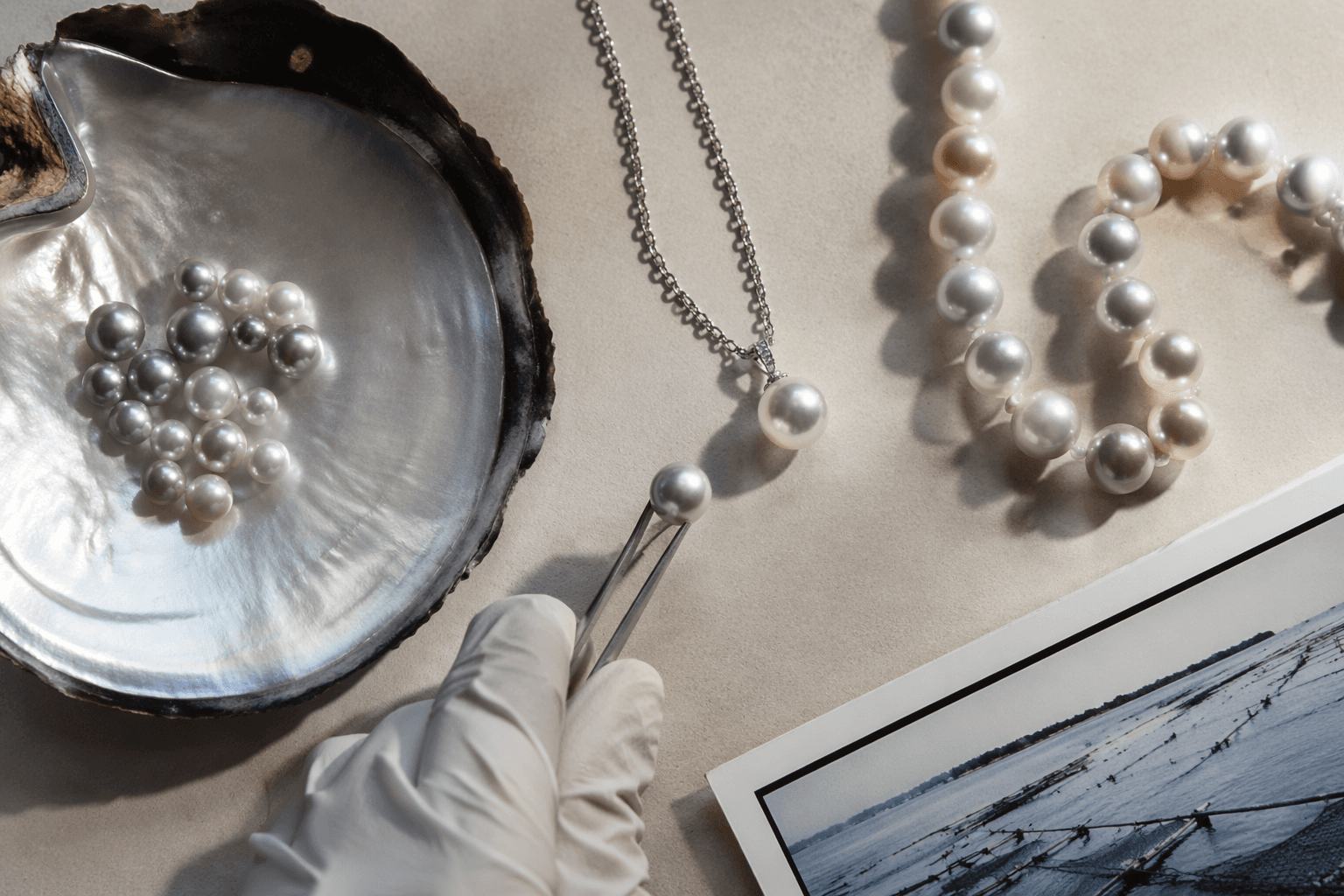
A pearl necklace should feel substantial, not flimsy. Real pearls usually have depth in the luster, not the hard, glassy shine of plastic, and the surfaces should show slight variation rather than machine-perfect uniformity. Matching matters, but perfect sameness can be a warning sign, especially when the strand looks too light for its size or the drill holes appear sloppy.
- Choose strong luster over oversized beads with no inner glow.
- Check that the clasp is secure and refined, since a weak closure cheapens the entire piece.
- Look for thoughtful stringing or knotting, which helps protect the pearls and keeps them from rubbing against one another.
- If the necklace includes a pendant, a bezel setting generally protects the pearl better than exposed prongs, which can feel more fragile.
- Mixed-material designs, whether pearls paired with a fine chain, dark cord, silver beads or a single metal accent, usually read less precious and more wearable than a strand that tries too hard.
The goal is not to make the pearls disappear. It is to make them look like they belong in the outfit, not on top of it.
How to wear pearls without losing the edge
Pearls are at their best when the rest of the look is edited. Hamilton’s race-day moment worked because the pearls sat against a setting already charged with precision and performance. That same logic applies off the track: a crisp shirt left partly open, a black T-shirt under a blazer, a lightweight knit, or even a denim jacket can all make pearls feel controlled and contemporary.
This is where mixed-material designs become especially useful. A pearl strand interrupted by metal beads, a darker cord or a slim chain keeps the piece from feeling too formal, while a fully traditional strand with uniform white pearls reads more elegant and more dressed-up. For first-time buyers, that distinction is crucial. A clean, shorter strand in a muted color will usually wear better, and more often, than an oversized necklace that announces itself before the clothes do.
Why the category is bigger than a passing moment
The business case explains why pearl necklaces for men have moved from fringe to visible category. Grand View Research estimates the global jewelry market at USD 381.54 billion in 2025, puts the U.S. jewelry market at USD 73.32 billion in 2023, and projects the men’s jewelry segment to grow at a 4.8 percent compound annual rate from 2026 to 2033. That is not the profile of a fad; it is the profile of a category with room to expand.
Pearls work in that context because they offer something few men’s accessories can manage at once: history, polish and ease. They can reference the authority of ancient rank, the practicality of historic men’s jewelry and the clean visual snap of modern styling in a single strand. When the size is right, the length is right and the construction is sound, a pearl necklace stops looking surprising and starts looking inevitable.
This article was produced by Prism’s automated news system from verified source data, official records, and press releases, then run through automated quality and moderation checks before publishing. The system is built and supervised by the people who set the standards it runs under. Read our full AI policy.
Did this article answer your question?