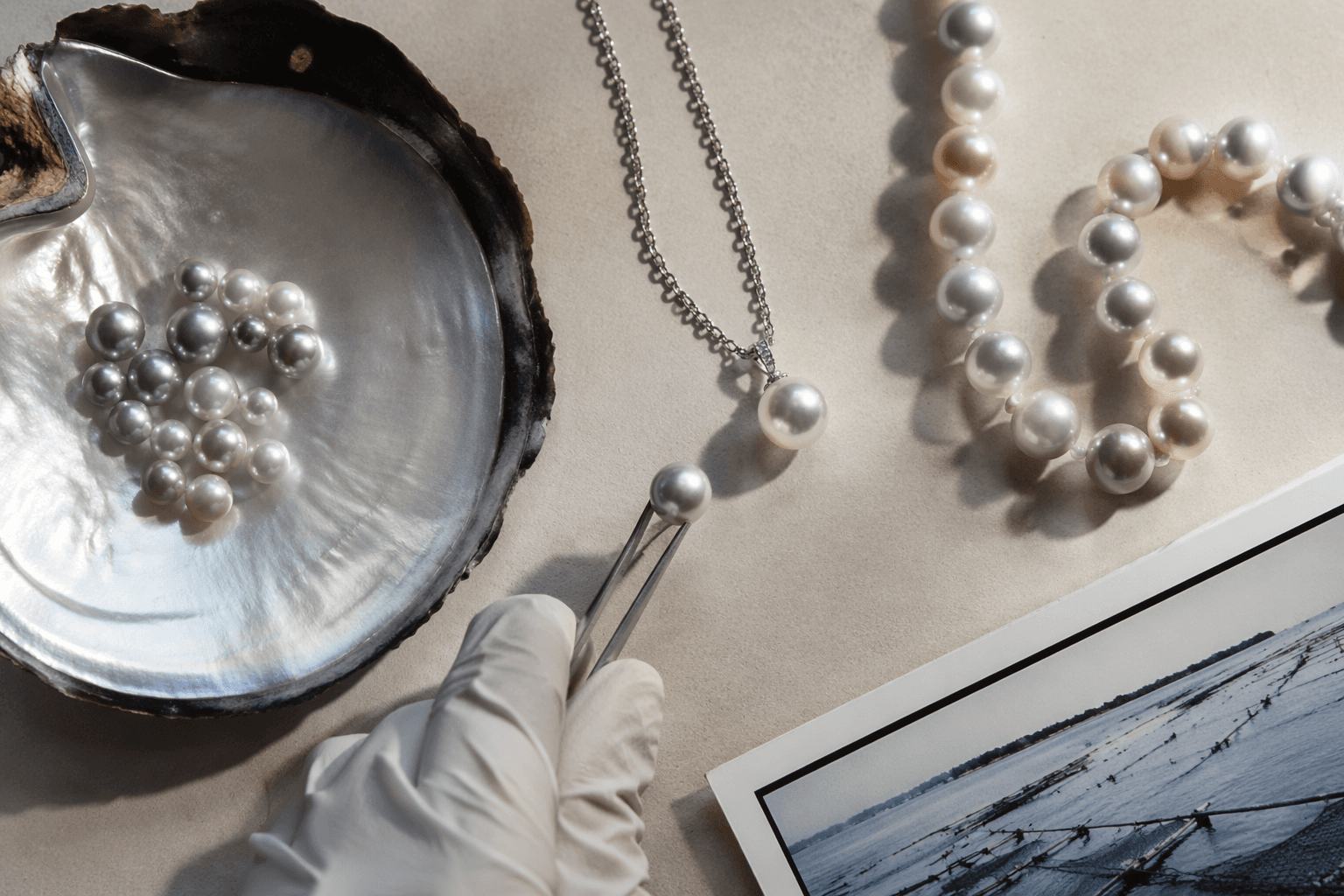
Pearl specialists showcase South Sea and Tahitian designs at JGA 2026
Golden South Sea and Tahitian pearls took center stage at JGA, where celestial necklaces and mixed strands signaled the next commercial pearl push.
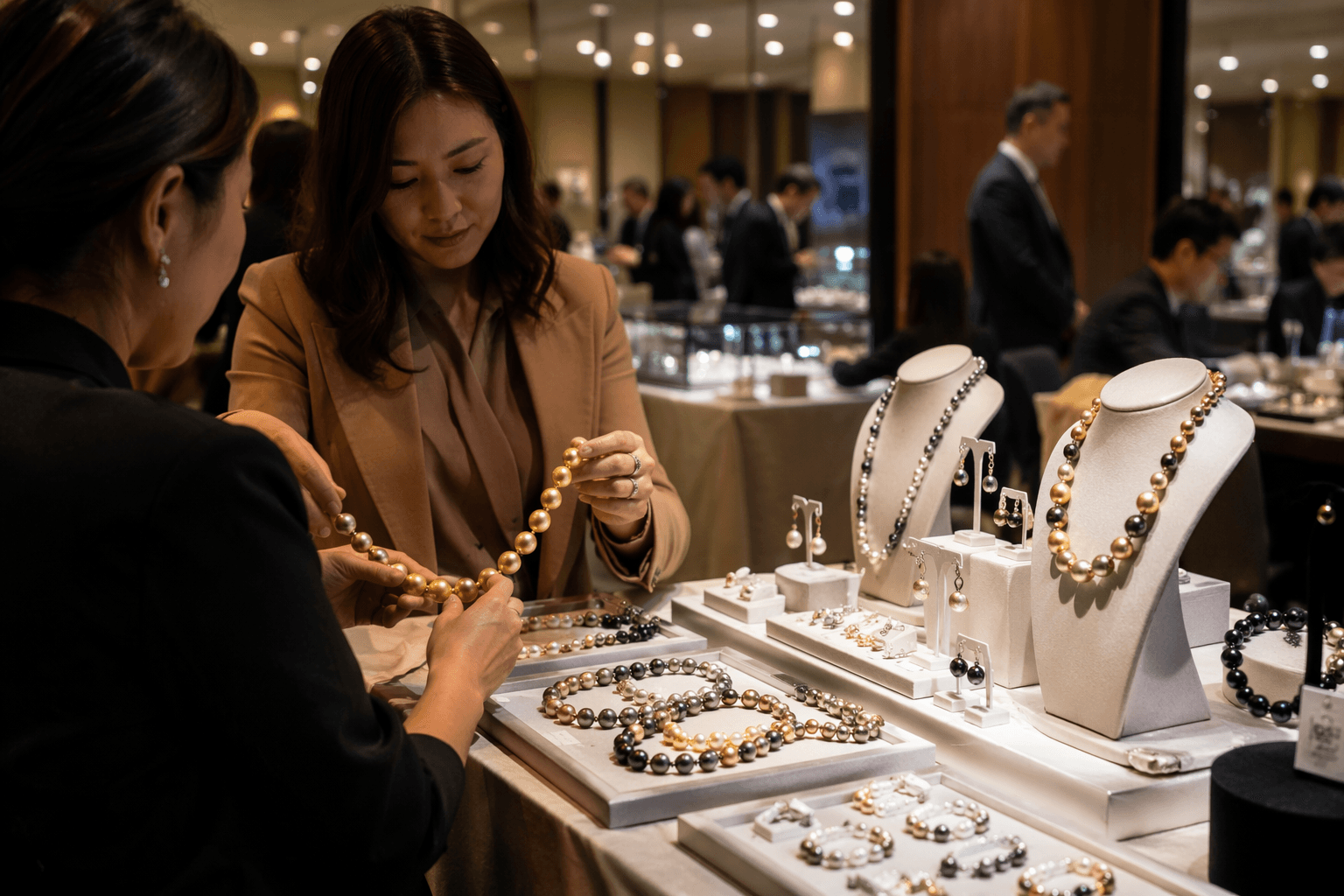
Pearl dealers at JGA 2026 leaned hard into scale, color and scarcity, with South Sea, Akoya and Tahitian pearls pitched as the category’s strongest commercial draw. The clearest buying signal was not a return to prim stringing, but a push toward larger, more characterful pearls, especially golden South Sea designs and Tahitian stones with the depth and rarity that keep buyers paying attention.
Held June 18 to 21 at the Hong Kong Convention and Exhibition Centre, the fair is billed by Informa Markets Jewellery as Asia’s No. 1 mid-year B2B jewellery sourcing destination, and pearls had their own place inside the dedicated Diamonds, Gemstones & Pearls section. That framing mattered on the floor: pearl specialists were not treating the category as a side note, but as one of the fair’s core sourcing stories.

The merchandising itself was telling. JNA’s June 20 show-daily coverage highlighted golden pearl jewelry, a 7Planet necklace and multicolor strands that mixed freshwater and South Sea pearls. Together, those examples suggest where the market is moving next. Golden South Sea pearls are being positioned as the luxury color story, while celestial-inspired names and multi-origin strands point to a more fashion-driven language that lets pearls read as contemporary, not ceremonial. Freshwater pearls bring volume and accessibility; South Sea pearls bring stature; Tahitian pearls bring edge. The combination gives buyers a way to build commercial assortments that feel layered rather than literal.
Tahitian pearls, in particular, remain a category to watch. A March 2026 JNA report quoted Chan Ming Wing, chairman of Chan Ming Wing Pearl International Ltd and president of the Tahitian Pearl Association Hong Kong, as saying demand and prices for high-quality Tahitian pearls remained solid, even as persistent supply constraints continued to challenge the market. That combination of steady demand and limited availability usually sharpens buyer focus on provenance, surface quality and matching, and it helps explain why the best Tahitian material keeps its pull.
The broader context is equally important. GIA traces the modern cultured-pearl industry to Japanese akoya breakthroughs, while Mikimoto dates Kokichi Mikimoto’s first successful cultured pearl to 1893. South Sea cultured pearls later expanded the category across a broad region from Southeast Asia to northern Australia and the Philippines. At JGA, that history was not treated as museum material. It was the backdrop to a clear commercial message: the next pearl wave is being built on golden South Sea volume, Tahitian rarity and styling that makes pearls feel newly directional again.
This article was produced by Prism’s automated news system from verified source data, official records, and press releases, then run through automated quality and moderation checks before publishing. The system is built and supervised by the people who set the standards it runs under. Read our full AI policy.
Did this article answer your question?