Pearls get a modern reset as designers embrace asymmetry and color
Pearls are in a modern reset, with designers favoring asymmetry, color and softer textures over formal strands. The result is a cooler, more wearable pearl language for everyday jewelry.
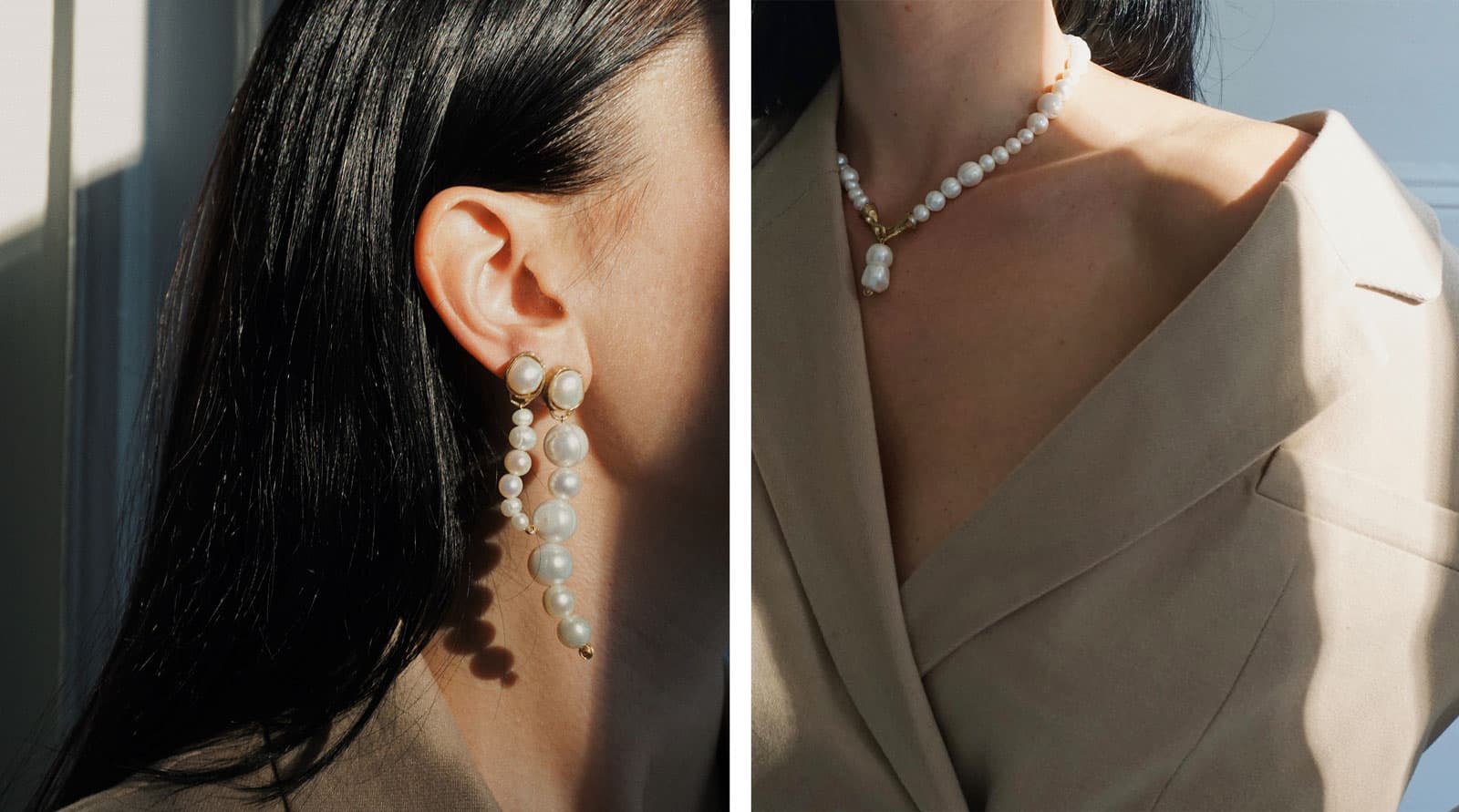
Pearls are shedding their old dress-code and stepping into a more relaxed, directional register. Designers are treating them less like heirlooms reserved for evening and more like shape-shifting materials, pairing seed pearls, freshwater pearls and mother-of-pearl with asymmetry, layering and mixed textures to make the category feel current again.
The pearl reset
The strongest pearl pieces now work because they resist symmetry. A mismatched drop, a baroque pearl with an irregular silhouette or a strand broken into loose clusters immediately changes the mood from ceremonial to effortless, and that shift is what gives the trend its momentum. Instead of asking pearls to behave like a matched set, designers are letting their natural variation do the styling.
That is also why color matters so much in this revival. Pale cream pearls still have their place, but the more compelling pieces often introduce soft overtones, darker body color or a mother-of-pearl sheen that reads fresher than a classic double strand. In practice, the modern pearl is less about perfection than personality.
Why the category feels bigger now
Pearls are not merely having a style moment; they are moving through a broader luxury cycle. One industry estimate places the global pearl jewelry market at about US$11.8 billion in 2023, with growth projected to US$31.9 billion by 2032. Another values the market at about US$13.1 billion in 2024 and sees it reaching US$34.4 billion by 2034.
China’s demand tells the same story from a different angle. Even amid ongoing economic pressure, the market has seen notably strong appetite for loose pearls and pearl jewelry, helped by product upgrades, brand building and overseas expansion. That matters because it shows pearls are not being revived only by runway styling; they are being pushed by commercial demand as well.
From heritage to everyday styling
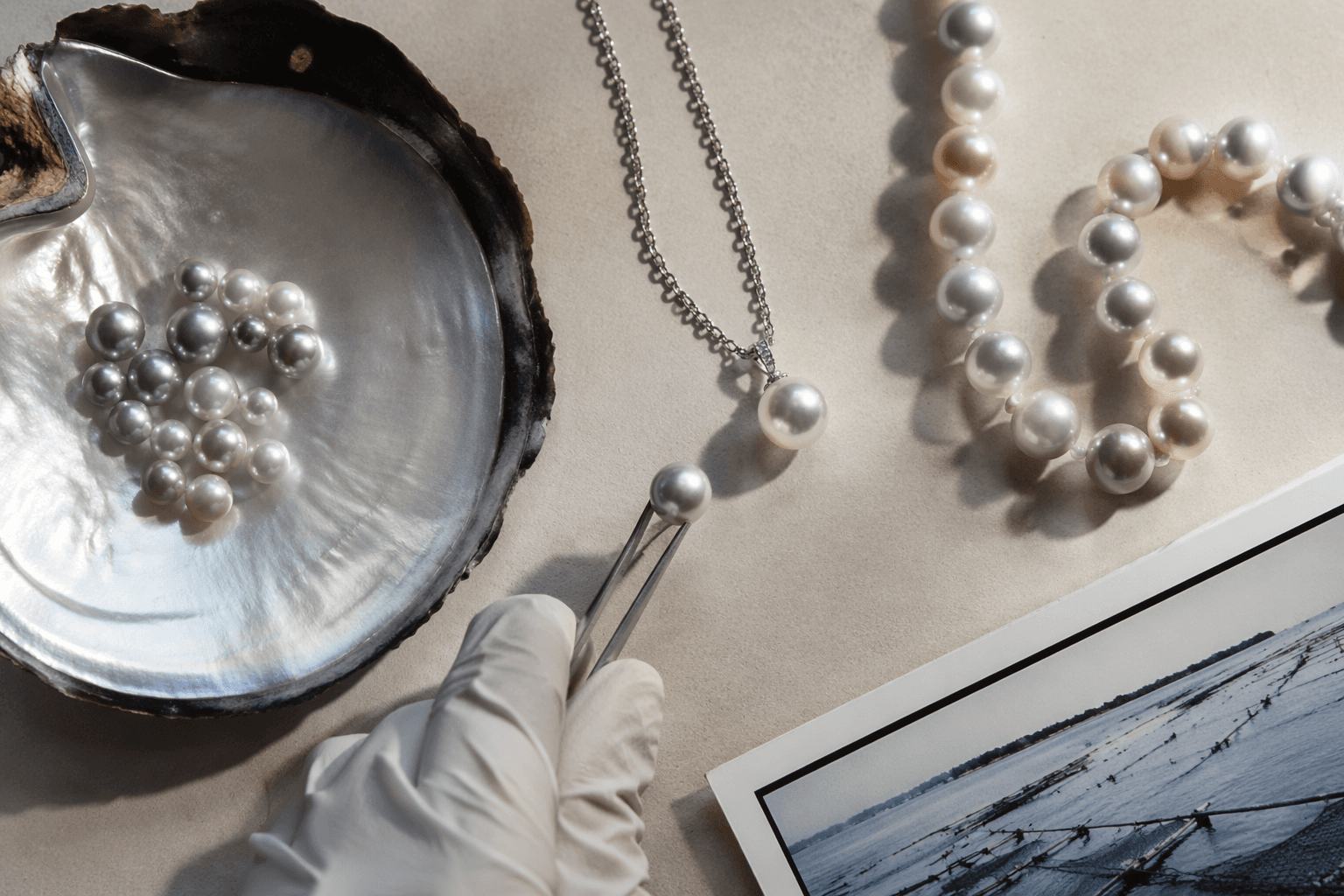
What makes this reset feel different from past pearl revivals is the way designers are stripping away formality. Seed pearls lend delicacy without stiffness, freshwater pearls soften the silhouette, and mother-of-pearl adds luminosity without the exacting polish of a classic matched strand. Together, these materials are being used in ways that feel more relaxed, sometimes even a little undone, which is precisely the point.
Layering is central to that attitude. A pearl bracelet mixed with chain, a pendant broken by an irregular pearl, or earrings that pair one elongated drop with a smaller accent all read as more editorial than traditional. The pearl no longer has to announce occasion; it can simply finish a look.
The high-jewelry houses are pushing the idea forward
Luxury houses have helped validate the shift by making pearls feel ambitious rather than nostalgic. Tiffany & Co. launched its 2025 Bird on a Pearl collection as a reimagining of its Bird on a Rock heritage, using natural saltwater pearls as the foundation for a modern high-jewelry narrative. That choice is telling: the pearl is not an accessory to the idea, it is the idea.
Mikimoto followed with Les Pétales, unveiled during Paris Haute Couture Week on July 8, 2025, underscoring how serious the category has become at the top end of the market. When a house so closely associated with pearls presents them in a couture setting, it reinforces the argument that the material is contemporary luxury, not inherited decorum.
What the runways made clear
Spring and summer 2025 runway coverage put pearls in the context of a wider jewelry turn toward personality and drama. The memorable pearl moments were not restrained, polite or purely classic. They showed up as oversized statements, pearl body armor and looks that treated volume and texture as the new formality.
That runway energy explains why asymmetry and color are resonating now. A pearl that is too perfect can feel conventional; a pearl that is exaggerated, offset or combined with other materials feels styled for the present. The trend is not about rejecting tradition so much as giving it movement.
Why the past keeps coming back
Pearls have always been fashion’s most adaptable classic. In the 1920s, long layered strands became entwined with Coco Chanel’s idea of modern chic, while the 1950s cast pearls in a more polished light through Audrey Hepburn, Grace Kelly and Jackie Kennedy. Those references still shape how people imagine pearls today, but the current version is looser, less buttoned-up and more personal.
That historical range helps explain the category’s staying power. Pearls can signal restraint, glamour, rebellion or ease depending on how they are cut, matched and worn. Designers are tapping that elasticity now, and the result is a pearl language that feels both familiar and newly free.
How to read the modern pearl
The most compelling pearl jewelry now tends to share a few traits:
- Irregularity, including baroque or mismatched forms
- Softer materials such as seed pearls, freshwater pearls and mother-of-pearl
- Layered or asymmetrical composition
- Mixed materials that break up the formality of a pure strand
- Colored or moodier pearls that move beyond the standard cream palette
Seen together, these details explain the reset. Pearls are no longer sitting still as symbols of inherited taste. They are moving, mixing and shifting shape, and that is exactly what has made them feel relevant again.
This article was produced by Prism’s automated news system from verified source data, official records, and press releases, then run through automated quality and moderation checks before publishing. The system is built and supervised by the people who set the standards it runs under. Read our full AI policy.
Did this article answer your question?