Pearls go modern, from Akoya to baroque layering styles
Pearls now work by mood, not rule. Akoya cleans up, freshwater softens the price, Tahitian adds depth, South Sea swells the silhouette, and baroque makes layering look current.

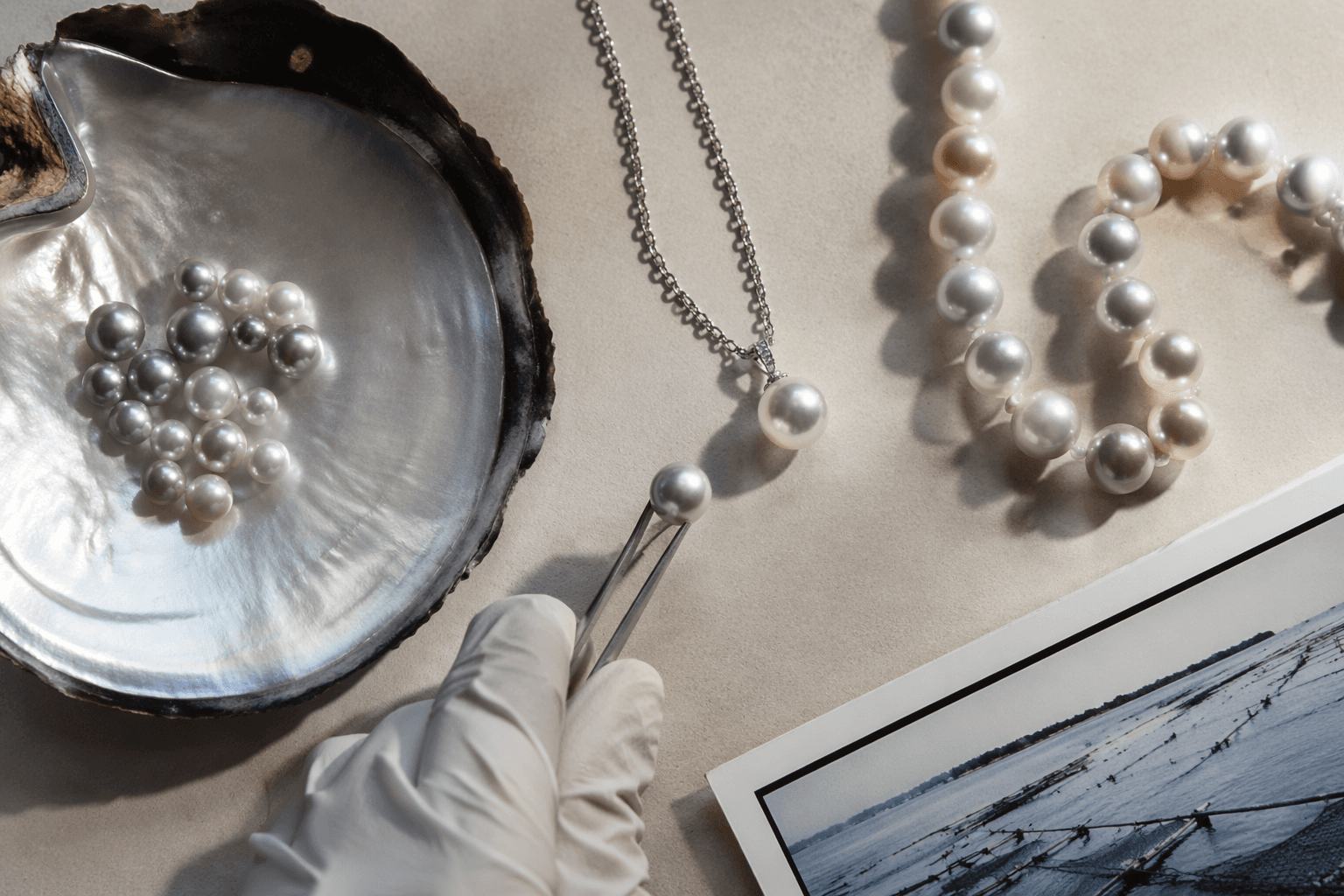
Pearls read differently now depending on the look you want them to carry. A neat Akoya strand can sharpen a blazer, freshwater can loosen the formality, Tahitian brings dark drama, South Sea scales up into visible luxury, and baroque shapes make mixed-metal layering feel deliberate rather than styled by accident. That shift is part of why modern baroque pearls have become one of the defining jewelry stories of the season, with green baroque pearls on Bottega Veneta’s spring/summer 2025 runway paired with gold beads and designers like Jalil Johnson and Mateo pushing irregular shapes for an organic effect.
Akoya for clean polish
If you want the classic pearl look with the crispest finish, Akoya is still the quickest route there. GIA describes Akoya pearls as the small white pearls most people picture first, usually round, white or cream, with a pink overtone and high luster, typically under 9 mm. They sit neatly against tailoring, silk shirts, and black knitwear because they bring brightness without overwhelming the outfit.
Akoya also makes sense when you want the pearl category to look precise rather than decorative. GIA’s Hanadama comment is reserved for cultured Akoya with round to near-round shape, white body color, excellent luster, clean to lightly spotted surfaces, very good matching, and sufficient nacre quality, which is the kind of benchmark that separates a polished strand from a merely pretty one. For buyers, that is the strand to choose when restraint matters more than size.
Freshwater for softness, range, and value
Freshwater pearls are the most flexible choice when you want the pearl idea without the full formality of Akoya. GIA notes that freshwater cultured pearls are the most commonly produced pearls, popular with shoppers and designers because they come in a wide range of sizes, shapes, and colors, and they sit at lower price points. They can appear in white, pink, peach, lavender, orange, and purple, and the Chinese market has even seen a surge in small bead-nucleated pearls with bright white bodycolor and excellent luster that can read surprisingly close to Akoya.
That breadth makes freshwater the easygoing option for layered looks, especially if you want one piece to bridge pearls and chain jewelry. It also gives you the most room to play with shape, from near-round drops to baroque forms with metallic luster, which means it can feel youthful and experimental without asking for a huge budget. If the goal is a softer, more forgiving pearl wardrobe, freshwater does the most for the least pressure.
Tahitian for dark drama
Tahitian pearls are the route to cool, moody color rather than straightforward black. GIA says they are often called black pearls, but actually appear in a broad range of dark hues, most commonly greenish gray, and they are typically 8 to 14 mm across. That palette works beautifully with monochrome dressing, sharp suiting, and eveningwear that needs one strong focal point instead of sparkle everywhere.
For provenance, these pearls are tied closely to French Polynesia and the black-lipped oyster Pinctada margaritifera. Sustainable Pearls says French Polynesia dominates black South Sea cultured pearl production, that the industry’s first successes came in the 1960s, and that the region produced 16.7 tonnes, about 10.2 million pearls, worth US$67 million, with a 0.8 mm nacre overgrowth required for export. That detail matters because it tells you the best Tahitian pearls are not just about color, but about disciplined farming and export standards.
South Sea for oversized luxury
South Sea pearls are the category to choose when size is the statement. GIA describes them as the largest cultured pearls, usually white or varying shades of yellow, often called golden in the trade, and says they typically range from 8 mm to 20 mm, averaging about 13 mm. They read best with simple necklines, cashmere, or bare skin, because the pearl itself does the work of a jewel plus a silhouette.
Their geography is broad too, stretching across the southern coast of Southeast Asia, northern Australia, and up to the Philippines. GIA traces the modern cultured South Sea industry to the first commercial pearling farm in Western Australia in 1956 and the first harvest of Pinctada maxima in Burma in 1958, with Japan and later China becoming major players in the wider cultured-pearl market. Those are the pearls to choose when you want volume that still feels natural rather than oversized for effect alone.
This article was produced by Prism’s automated news system from verified source data, official records, and press releases, then run through automated quality and moderation checks before publishing. The system is built and supervised by the people who set the standards it runs under. Read our full AI policy.
Did this article answer your question?