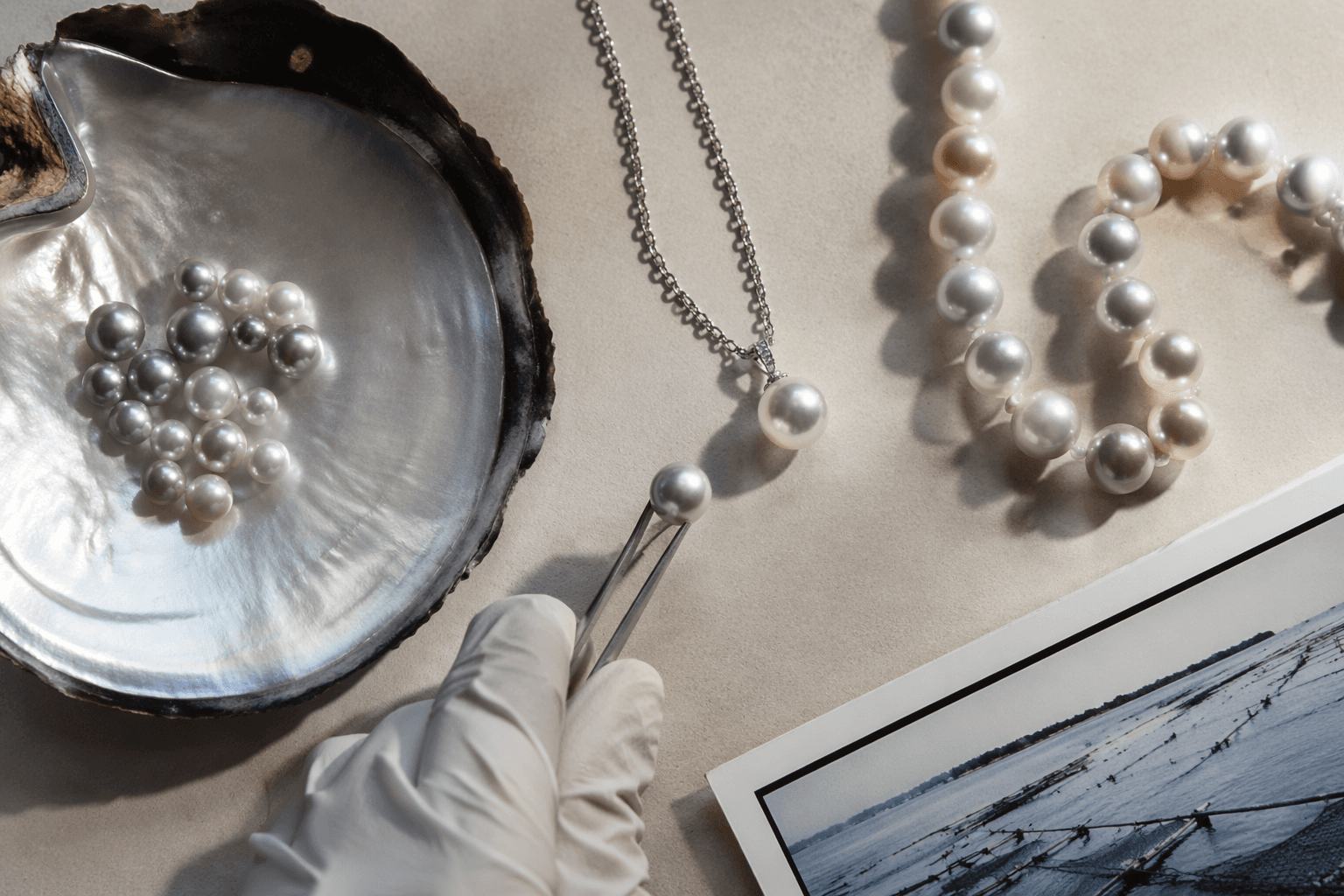
Pearls, June’s traditional birthstone, carry history, symbolism and rarity
Pearl still owns June because it reads instantly, carries deep symbolism and became more accessible without losing prestige.

Why pearl still dominates June
Pearl remains June’s most persuasive birthstone because it does three things at once: it is the easiest to recognize, the richest in symbolism and the most flexible to wear. Alexandrite and moonstone may appeal to collectors, but pearl has the wider cultural reach, the clearer gift language and the strongest presence in everyday jewelry, from studs and strands to pendants and mother-of-pearl details.
June is unusually fortunate in birthstone terms, with pearl, alexandrite and moonstone all tied to the month. Yet pearl is the one that most people can identify on sight, even without knowing gemology. That instant recognition matters in jewelry, where a stone often has to do emotional work before it does technical work.
What makes a pearl different
Pearls are the only gemstones made by living creatures. Mollusks create them by coating an irritant with layers of calcium carbonate, or nacre, and that same layered process is what gives a pearl its depth and glow. The Gemological Institute of America notes that pearls come from oceans, lakes and rivers around the world, which means they are not confined to a single landscape or mining story.
Cultured pearls changed the category without changing the material’s basic identity. In cultured production, a bead or piece of tissue is deliberately inserted into the mollusk, then covered with nacre over time. That distinction matters for buyers because it explains why pearl jewelry can range from highly prized natural examples to more widely available cultured pieces, often at very different price points.
Britannica describes pearls by their translucence, lustre and orient, the subtle optical life that makes them feel luminous rather than merely shiny. That softness is a large part of pearl’s appeal in jewelry. A pearl does not need a complicated setting to read as precious, and that simplicity has helped it survive shifting fashion cycles better than many colored stones.
A history that still carries weight
Pearl’s status long predates modern birthstone lists. GIA cites a Chinese historical reference to pearls from 2206 BC, and the American Gem Society points to the oldest known pearl jewelry, found with a Persian princess who died in 520 BC. Those dates are more than museum trivia. They show that pearls have been prized for millennia as objects worth storing, trading and burying with the elite.
Before cultured pearls, natural pearls were so rare that they were largely reserved for nobles and the very wealthy. That scarcity helped build pearl’s aura, and it also explains why the stone still feels emotionally loaded today. Even now, when pearls are easier to find than they once were, they carry the memory of exclusivity.
The symbolism runs across cultures. Britannica notes that mother-of-pearl has long been associated with purity, protection and wealth, while GIA notes that ancient Middle Eastern cultures believed pearls were teardrops fallen from heaven. Those ideas still shape how pearls are received as gifts. A pearl necklace or pair of earrings does not only say style; it also signals blessing, affection and ceremony.
Pearl is also the gem for the third and thirtieth anniversaries, which gives it an unusual life outside birthstone season. That anniversary role reinforces its reputation as a marker of milestones rather than a passing trend. It is one of the few gemstones that can feel equally appropriate for a new graduate, a bride and a couple marking three decades together.
Why pearl beats alexandrite and moonstone in the real world
Alexandrite and moonstone have their own admirers, but pearl wins on recognizability and gifting appeal. A pearl requires little explanation, and that is a powerful advantage in fine jewelry. When someone is buying a June birthstone piece for a birthday, a graduation or an anniversary, pearl immediately communicates meaning without asking the recipient to learn a niche gemstone story first.
Wearability matters just as much. Pearl suits a wide range of settings, from a single stud to a strand that feels formal enough for evening. Its pale body color and soft sheen make it easy to pair with gold, silver and mixed metal designs, and its visual calm means it can sit comfortably beside diamonds or stand alone. That versatility is part of why pearl continues to dominate the June category even as more unusual stones compete for attention.
There is also a practical market reason pearl remains powerful: Mikimoto’s cultured-pearl breakthrough made the category more accessible without stripping away its prestige. Kokichi Mikimoto pioneered commercial cultured pearls in the 1890s, and the Japan Patent Office says he obtained a cultured-pearl patent in 1896. That shift transformed pearls from a rarity for the elite into a gemstone that more people could actually buy, wear and inherit. The result was not a downgrade in status, but a broader audience.
How to read pearl jewelry now
The best pearl jewelry still depends on material quality and restraint. Look for the characteristics Britannica identifies, translucence, lustre and orient, because those are what give a pearl life on the skin. In design terms, the stone’s strength is that it can anchor both very traditional pieces and more modern ones, especially when mother-of-pearl is used for inlay or surface detail.
Pearl’s enduring hold on June comes from that rare mix of meaning and practicality. It is ancient without feeling remote, symbolic without feeling abstract and elegant without needing much explanation. Alexandrite and moonstone may share the month, but pearl still has the broadest cultural pull, the clearest gifting language and the most adaptable place in jewelry, which is why it remains June’s most compelling birthstone.
This article was produced by Prism’s automated news system from verified source data, official records, and press releases, then run through automated quality and moderation checks before publishing. The system is built and supervised by the people who set the standards it runs under. Read our full AI policy.
Did this article answer your question?