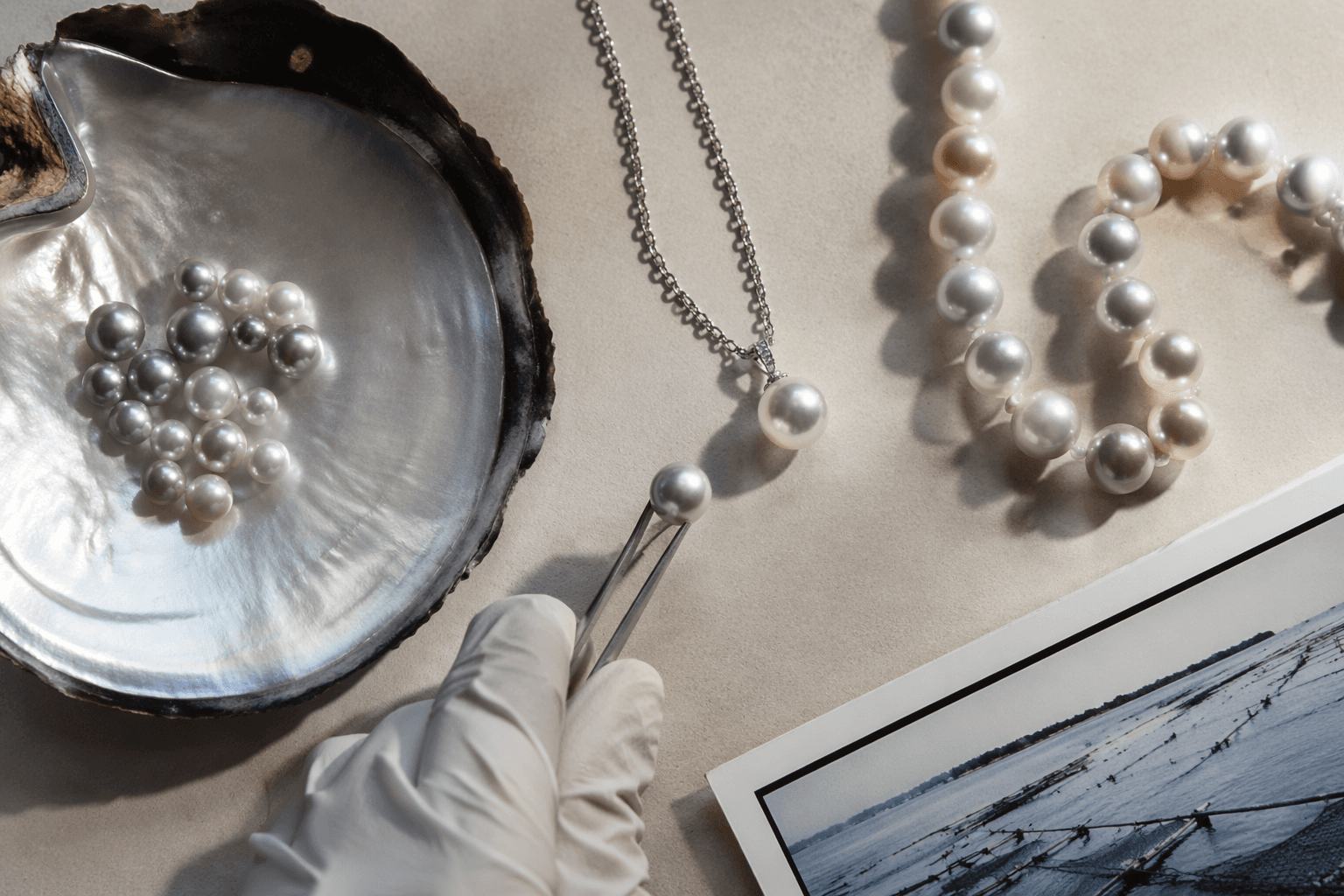
Pearls return in a white-metals revival as summer shifts cooler
Pearls feel newly modern in silver, platinum, and white gold, where their luster turns cooler, sharper, and more architectural. The shift is as much about styling as value, with platinum gaining appeal and mixed metals becoming central.

Pearls meet the white-metals cooldown
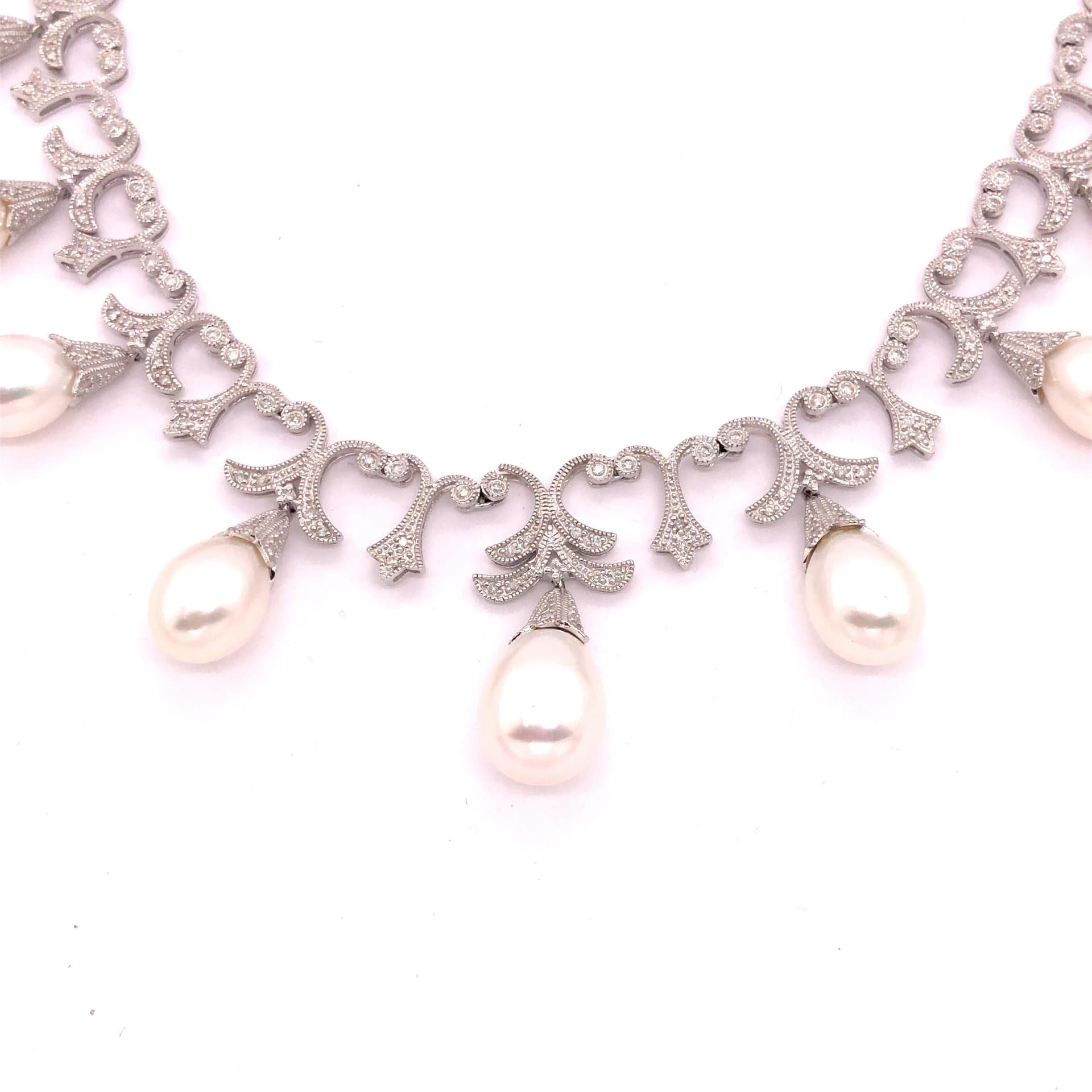
Pearls are returning to the conversation, but not in the yellow-gold frame that has so often defined them. The mood for summer 2026 is moving toward silver, platinum, and white gold, and that cooler palette changes the entire read of a pearl: softer light becomes sharper, more modern, and less nostalgic. A cultured pearl necklace in 14-karat white gold from Ashi Diamonds, priced at $10,999, captures the shift neatly. The pearl remains the focal point, but the white metal around it gives the piece a cleaner edge and a more contemporary temperature.
That change matters because pearls are not simply “back.” They are being reintroduced through a different design language. In yellow gold, a pearl often leans classic, even romantic. In white gold or platinum, the same stone can feel more graphic, especially when paired with diamonds, pared-back proportions, or a single suspended drop. The result is a pearl jewelry wardrobe that reads less formal and more architectural, with nacre highlighted by contrast rather than warmed by color.
Why white metals are suddenly the right frame
The renewed attention around white metals is part trend cycle, part market logic. National Jeweler points to the price gap between gold and platinum as one reason platinum is getting fresh consideration beyond high jewelry. That makes sense: when platinum stops feeling reserved for the rarest, most ceremonial pieces, it opens the door to everyday earrings, pendant necklaces, and rings that need a durable, refined white setting rather than a showpiece budget.
Industry watchers are aligning around the same shift. Jewelers Mutual says mixing metals has moved from once-taboo to a core styling choice, and it expects the look to become even more prominent in 2026. The Manufacturing Jewelers and Suppliers of America adds an important nuance: white metals never disappeared, but platinum, silver, and white gold have been absent from the main trend conversation for some time and are now returning as softer, refined, flexible options. Taken together, those views explain why pearls now feel particularly relevant in white metals. The old rules are loosening, and the palette is widening.
Which pearl designs feel most current now
White metals give pearls a new kind of clarity, and that changes which silhouettes feel freshest. A pearl-and-diamond necklace in white gold, like the Ashi Diamonds piece, has a polished precision that works because the setting does not compete with the pearl. The metal acts like a frame around a painting: present, but not noisy. That same logic favors pendant necklaces with a single pearl, where the white metal keeps the line crisp and the pearl luminous.
The most contemporary pearl jewelry also tends to rely on proportion rather than excess. Think restrained drop earrings, slim strands with clean diamond clasps, and rings where a pearl is held in a bezel or low-profile mount rather than a heavy, ornate prong setting. A bezel can make a pearl feel securely modern, almost like a cabochon set into a tailored jacket. Prongs, by contrast, create more visible structure and can push a piece toward a slightly dressier, more traditional mood. In white metals, those technical choices matter because they determine whether the pearl reads as fashion-forward or ceremonial.
Mixed-metal styling expands the possibilities further. A strand that incorporates white gold findings, a pearl ring worn with a platinum band, or diamond studs paired with a silver-toned bracelet all echo the current appetite for deliberate contrast. The point is not to eliminate warmth entirely, but to place pearls in a cooler register where their sheen feels more graphic and less inherited.
Pearls carry history, but the market keeps moving
The modern pearl story begins with Kokichi Mikimoto, who created the world’s first cultured pearls in 1893, a breakthrough that shaped the global pearl industry. That history still matters because cultured pearls remain the foundation of most fine pearl jewelry today, linking contemporary design to a lineage of innovation rather than mere tradition. Pearls have always depended on technique as much as beauty, and their current comeback is no exception.
That historical weight helps explain why pearls can survive trend cycles that would flatten other gems. They are deeply legible, instantly recognizable, and capable of changing character depending on metal, proportion, and setting. A pearl necklace in yellow gold tells one story; the same stone in white gold tells another. This season, the latter story is the one that feels most in step with the moment.
What the white-metals revival means for buyers
For buyers, the white-metals shift is useful because it broadens the cases in which pearls feel worth choosing now. Platinum and white gold lend themselves to investment-minded purchases, especially when the piece is made with disciplined construction and diamonds that reinforce the pearl rather than overwhelm it. Silver, meanwhile, brings an easier, more directional feel that can make pearl jewelry read younger and more immediate.
Ashi’s commercial reach gives the trend another layer of context. The company says it has served more than 1,000 independent retail jewelers in North America for more than 40 years, which signals that pearl jewelry in white metals is not confined to runway styling or red-carpet dressing. It is flowing through the trade, where buyers and retailers are deciding which silhouettes deserve a place in the case now. National Jeweler’s 2025 jewelry rewind already noted the re-emergence of white metals, so the current shift looks less like a one-season flourish than a broader recalibration.
The most convincing pearl pieces in this climate are the ones that let nacre do the talking while the metal sharpens the silhouette. White gold, platinum, and silver do not make pearls lose their classicism. They make that classicism feel freshly edited, cooler at the edges, and far more attuned to the way jewelry is being worn now.
This article was produced by Prism’s automated news system from verified source data, official records, and press releases, then run through automated quality and moderation checks before publishing. The system is built and supervised by the people who set the standards it runs under. Read our full AI policy.
Did this article answer your question?