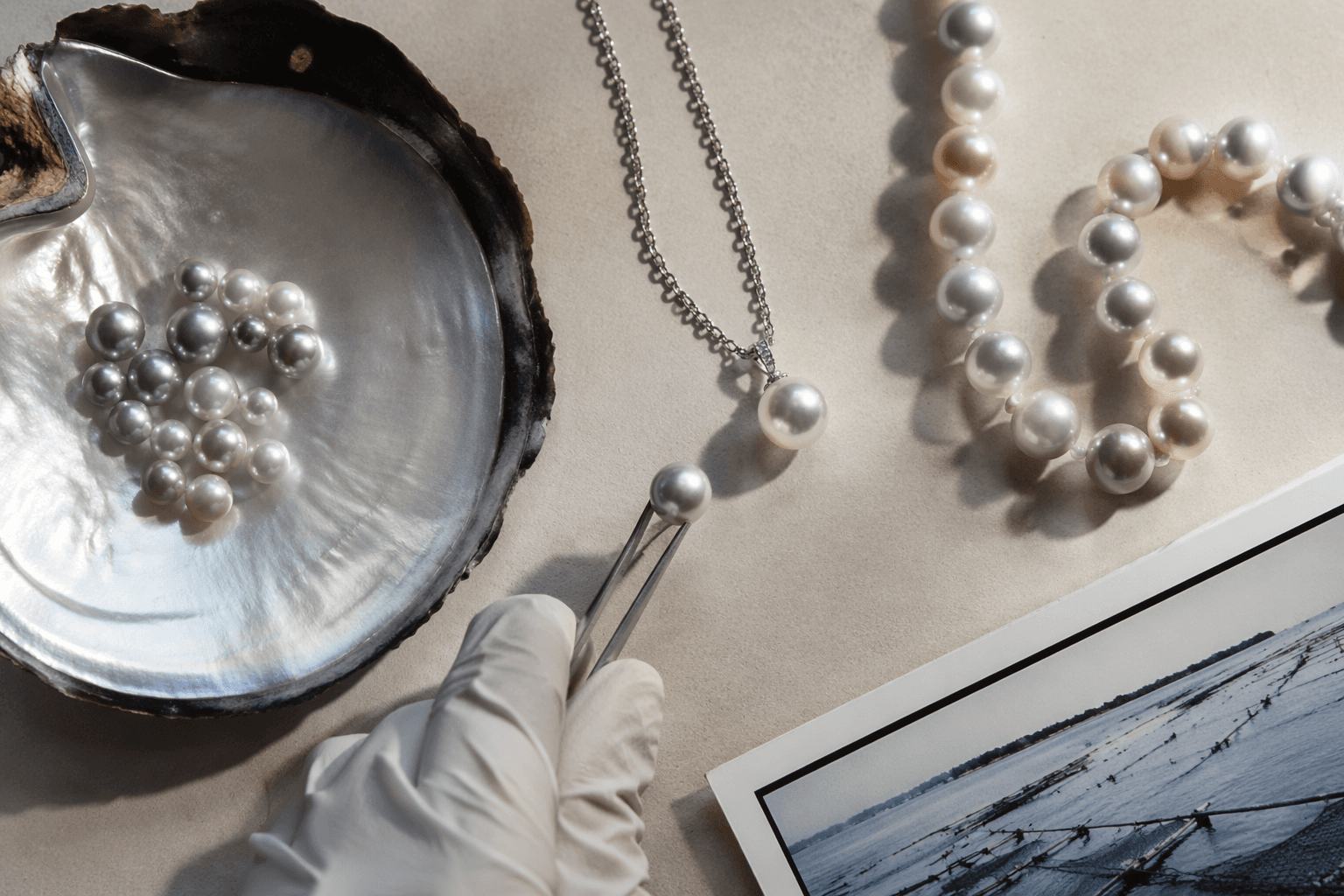
Presley Oldham reimagines pearls as modern heirlooms
Presley Oldham made pearls feel lighter and less formal by pairing them with an upcycled, handmade sensibility. His brand now reads like a modern heirloom line with fashion-world credibility.

Presley Oldham built his pearl business on a simple but sharp premise: pearls do not have to read as stiff, bridal, or reserved for special occasions. Since launching his namesake line in May 2020, he has framed the material through an organic, opulent, and elegant lens, giving it a softer, more contemporary register that feels closer to daily dressing than ceremony. That shift is the heart of his brand-building playbook, and it explains why his jewelry now sits comfortably between art object and wardrobe staple.
A pearl language that feels current
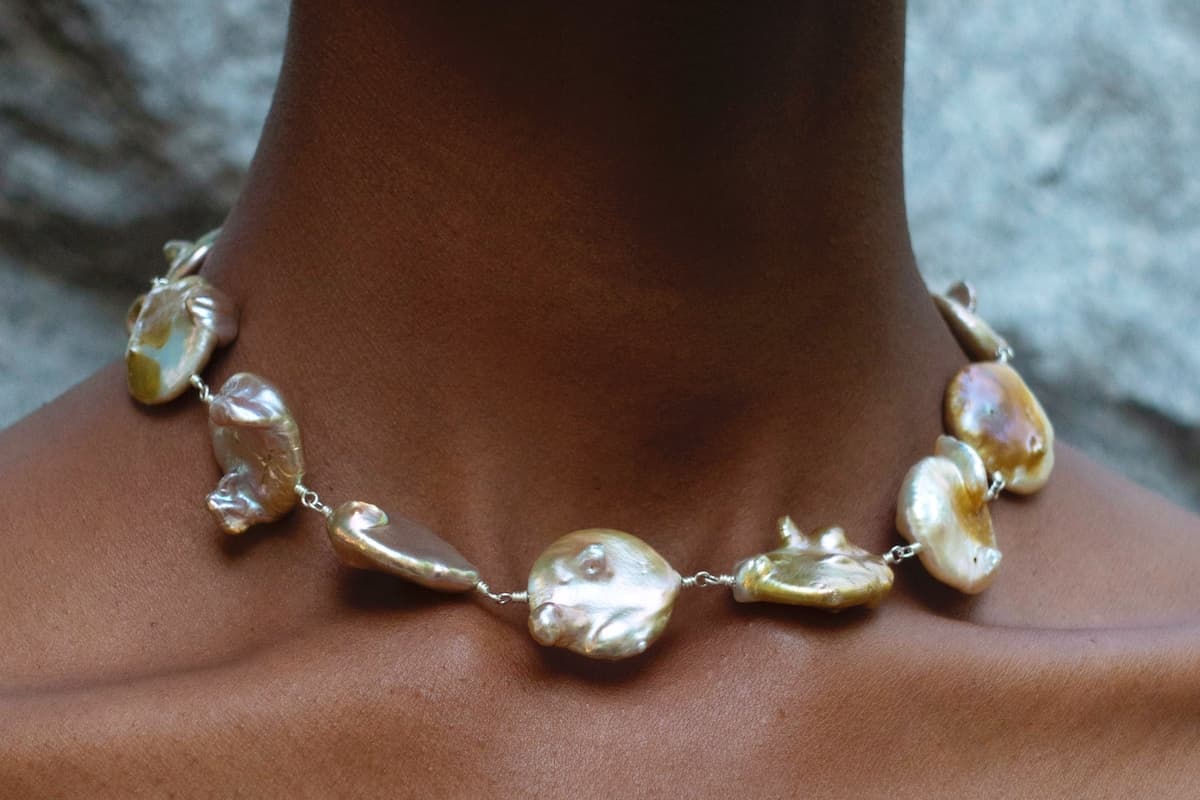
Oldham’s point of view is not about stripping pearls of romance. It is about removing the distance that once kept them locked in formalwear. His early work centered on an upcycled, sustainable jewelry line, and that sensibility still shapes the brand’s tone: tactile, hand-finished, and intentionally undone in the best sense. The pearls feel less like heirlooms pulled from a vault and more like pieces that entered circulation again, with a little more ease and personality.
That matters because pearls have long carried a heavy dress code. Oldham’s work loosens it by treating the material as one part of a broader, mixed vocabulary rather than the whole story. The result is jewelry that can sit on bare skin, a T-shirt, or a red carpet without changing character, which is exactly why the brand resonates with a newer customer looking for polish without stiffness.
The family story behind the craft
Oldham’s creative instincts are rooted in a family with art and fashion already in the bloodstream. He is the nephew of fashion designer Todd Oldham, and his father, Brad Oldham, is a sculptor. That combination helps explain why the pieces feel both visually considered and materially grounded. The jewelry does not lean on nostalgia alone; it has the structural confidence of a designer who understands form as well as adornment.
He works from studios in Hudson, New York, and Santa Fe, New Mexico, and has said he makes each piece by hand. That handmade approach is not just a marketing phrase here. It shows up in the brand’s uneven, organic surfaces and in the way the pieces balance refinement with a slightly freeform feel. Oldham also sources sterling silver from a local Indigenous metalsmith in Santa Fe, a detail that reinforces the brand’s connection to place and to craft traditions outside the usual fine-jewelry pipeline.

Beyond pearls, but still anchored by them
What makes Oldham’s brand-building especially instructive is that he did not freeze the label inside a single pearl formula. The collection now spans freshwater pearls, glass beads, natural stones, antique and bespoke glass, gemstones, and cast precious metals. That expansion gives the brand more styling range and keeps it from becoming repetitive, while still preserving pearls as the emotional center.
The product mix also helps Oldham speak to a broader customer. Necklaces, earrings, bracelets, anklets, and belts all appear in the line, which keeps pearls from feeling confined to the neck and ear. The pearl belly chain, in particular, signals how he has pushed the material into more unexpected territory. A white pearl piece around the waist is not traditional pearl dressing; it is a fashion gesture with enough wit to feel contemporary, especially when styled for skin-baring clothes and social media visibility.
For other pearl labels, the lesson is clear: the category grows when it moves. Pearls do not need to be reinvented beyond recognition. They need context, a cleaner visual code, and product silhouettes that let them show up in more parts of the wardrobe.
What the prices say about the brand’s position
Oldham’s retail positioning is another part of the story. Handmade pieces across the line, including necklaces, earrings, bracelets, anklets, and belts, appear at around $180 to $1,200 and up, with some fine-jewelry pieces priced higher. That range places the brand in a flexible middle ground: accessible enough for entry-level buyers, but with enough room at the top to support more ambitious materials and construction.
This is a smart place to build a pearl brand. Pearls can easily skew either costume or precious. Oldham’s pricing suggests a label that understands both realities and uses them strategically. The lower end invites first-time buyers into the universe; the higher end gives collectors and insiders a reason to stay. That kind of laddered pricing is one of the most practical ways to turn a design point of view into a lasting business.
Fashion credibility without losing the handmade core
Oldham’s visibility in the fashion world has also widened the brand’s reach. In 2024, he was named a CFDA/Vogue Fashion Fund finalist, placing him among a highly watched group of emerging designers. The Fashion Fund, established after 9/11, has supported 200 designers and awarded more than $8 million since its inception, making finalist status a meaningful marker of both craft and industry confidence.
That recognition matters because Oldham’s work already carries the kind of detail fashion insiders notice: distinctive materials, a clear point of view, and pieces that photograph well without looking purely performative. His reach has extended beyond the runway crowd as well. Actor Gayle Rankin noticed one of his white pearl belly chains on Instagram, which led to a custom red-carpet jewelry moment. That path from social media discovery to a bespoke public appearance shows how Oldham’s brand circulates now: visually distinctive enough to catch attention, personal enough to become custom.
What pearl labels can learn from Oldham
Oldham’s success is not built on a single viral silhouette. It comes from a brand architecture that is coherent from every angle. The aesthetic is soft but not precious, handmade but not rustic, fashion-aware but not overworked. Pearls remain central, yet they are supported by glass, stones, and metal choices that keep the line alive in more than one setting.
For pearl labels hoping to look relevant now, the takeaway is less about copying his materials than understanding his discipline. He gives pearls a lighter hand, a wider wardrobe, and a clearer cultural signal. That is what turns a classic material into something that feels like the present, and what makes the best pieces read as modern heirlooms rather than formal relics.
This article was produced by Prism’s automated news system from verified source data, official records, and press releases, then run through automated quality and moderation checks before publishing. The system is built and supervised by the people who set the standards it runs under. Read our full AI policy.
Did this article answer your question?