Three freshwater pearls on red leather make an easy summer necklace
Three freshwater pearls on red leather turn June’s birthstone into an easy, everyday necklace. It is the kind of pearl piece that works with tees, slip dresses, and layered chains alike.
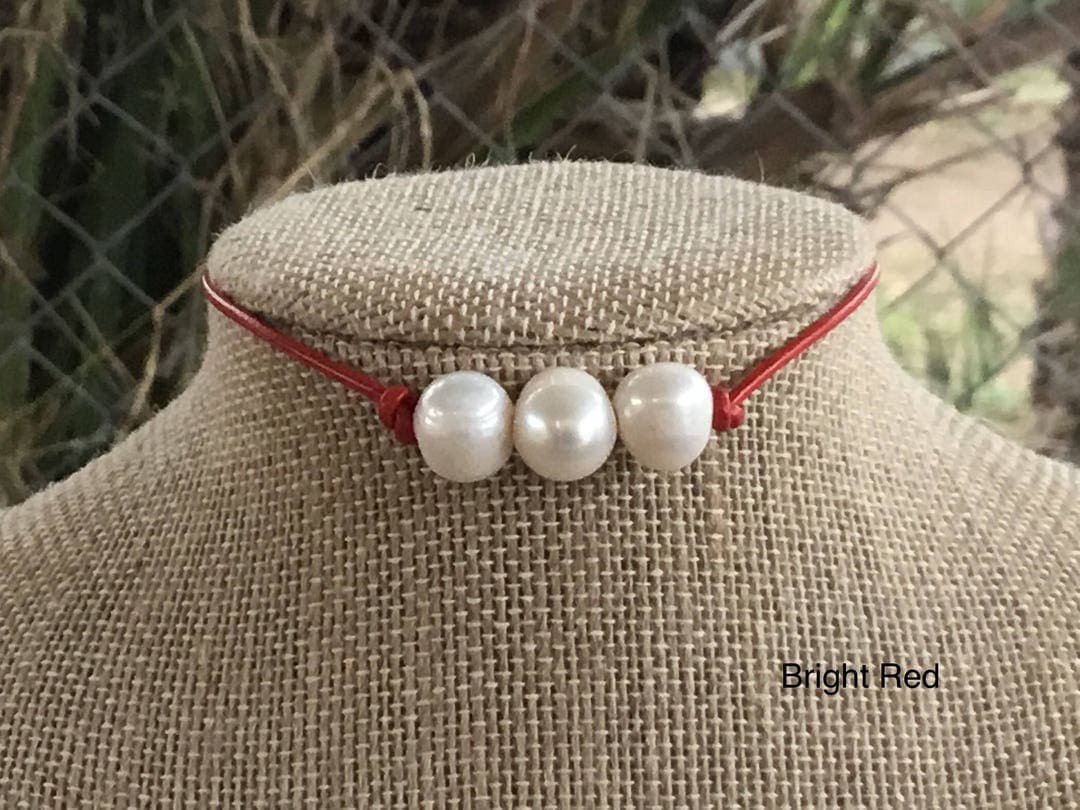
Three freshwater pearls on a red leather cord make pearls feel suddenly relaxed, even a little sunburned in the best way. Instead of sitting at the formal end of the jewelry box, this necklace reads as the kind of low-maintenance piece that slips on with a white tee, softens a slip dress, and adds texture when layered with slimmer chains.
The new casual pearl
That shift matters because pearls have long carried a dressed-up reputation. In this version, the appeal comes from contrast: the softness and translucence of the pearl against the slightly rugged red cord, plus the simplicity of only three stones spaced along the line. It is an easy entry point for anyone who wants pearls without the stiffness of a classic strand.
The result is especially timely for summer styling. Red cord gives the necklace a sporty, unfussy edge, while the pearls keep it from looking too casual. It feels wearable every day, but still recognizable as pearl jewelry at a glance.
Why pearls fit right now
Pearls remain the traditional June birthstone, and June is one of only two months with three birthstones: pearl, alexandrite, and moonstone. That alone gives pearl jewelry a strong seasonal hook, especially for gift-giving and for anyone looking for a birthstone piece that does not feel overly precious or fragile.
There is also a broader reason pearls keep resurfacing: they are one of the oldest forms of adornment still in active rotation. They have been worn for centuries, including in Ancient Greece, and the oldest known pearl jewelry was found in the sarcophagus of a Persian princess who died in 520 BC. The story of pearls has always been a story of status, beauty, and rarity, but today it is also a story of accessibility.
Historically, natural pearls were so rare that only the wealthiest nobles could afford them. That scarcity helped build the aura around pearls, but it also made them feel remote. Modern birthstone tradition, by contrast, is shaped not only by symbolism but by availability and cost, which is one reason pearls can now be positioned as an approachable, everyday choice rather than a ceremonial one.
How freshwater pearls are made
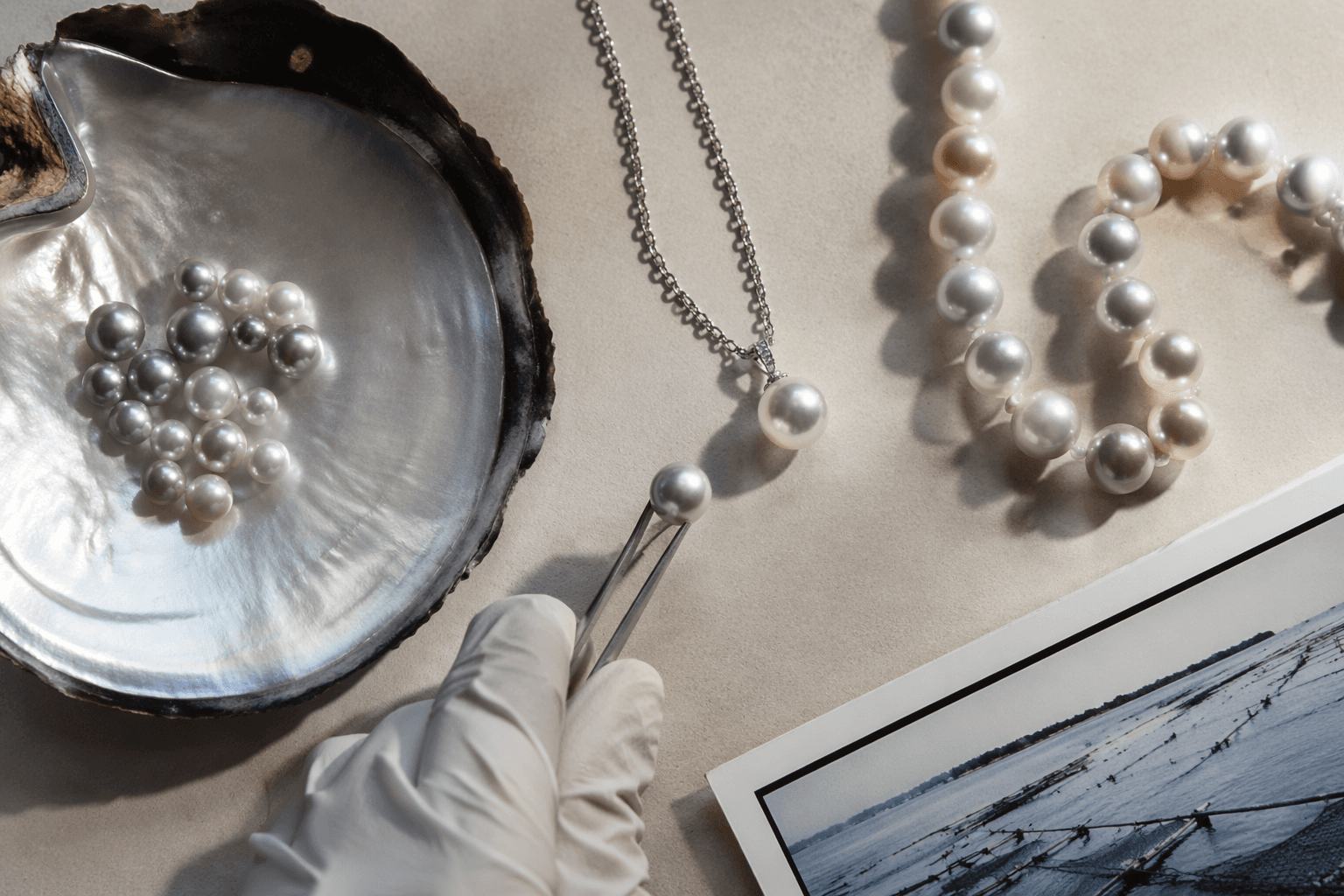
Freshwater pearls and saltwater pearls form in the same basic way: an irritant inside a mollusk triggers nacre production, and layers build around that nucleus until a pearl develops. Pearls are the only gemstone that comes from a living organism, which is part of what makes them feel so distinct from mined stones.
Freshwater pearls, however, often bring a different look. Compared with many saltwater pearls, natural freshwater pearls can have poorer luster and more irregular, baroque shapes. That irregularity is not a flaw in this kind of necklace. In a casual design, it can be exactly the point, giving each pearl a slightly organic presence rather than the uniform polish of a more formal strand.
Pearls are also characterized by their translucence and luster, and that visual softness is what lets them move so easily between settings. On a red cord, they look modern. Set beside a silk dress, they can still read as elegant. The same stones do both jobs.
Why the construction matters
A pearl necklace is made by drilling a hole through each pearl before stringing, and that detail matters more than most people realize. Once a pearl is drilled and placed on cord, it becomes much easier to wear every day, because the design is stripped down to the essentials: the pearl, the line it sits on, and the way it moves against the body.
That simplicity also makes the piece feel less formal than a full strand of uniform pearls. Three pearls spaced along leather create a light, graphic rhythm instead of a dense necklace profile. It is the kind of construction that works particularly well when the goal is not glamour alone, but repeat wear.
What to look for in an everyday pearl necklace
For a necklace like this, the details should feel intentional rather than ornamental for ornament’s sake.
- The pearls should show enough luster to catch the light, even if their shapes are slightly irregular.
- The red cord should feel sturdy and cleanly finished, since it does as much visual work as the pearls themselves.
- The spacing between pearls should be balanced, so the necklace reads as designed rather than improvised.
- The scale should stay easy and wearable, especially if the goal is to layer it with other chains.
That mix of restraint and texture is what makes the design useful. It is not trying to replace a formal pearl strand. It is translating pearls into something that can live in daily rotation.
The June birthstone angle
Pearl is still the classic June birthstone, but the month’s trio of stones gives buyers more room to choose according to style and budget. Alexandrite and moonstone bring their own appeal, yet pearl remains the most recognizable and the most versatile for someone seeking an accessible first step into fine or fine-adjacent jewelry.
That is why this necklace works so well as an entry-level pearl look. It carries the symbolism of June, the history of pearls, and the ease of a casual accessory all at once. For a reader who wants a piece that can move from a tee to a slip dress to a layered neckline without feeling overworked, three freshwater pearls on red leather offer exactly that blend of polish and ease.
Pearls began as treasures for princes and princesses, but the smartest modern versions do something subtler: they make that legacy feel easy to wear.
This article was produced by Prism’s automated news system from verified source data, official records, and press releases, then run through automated quality and moderation checks before publishing. The system is built and supervised by the people who set the standards it runs under. Read our full AI policy.
Did this article answer your question?