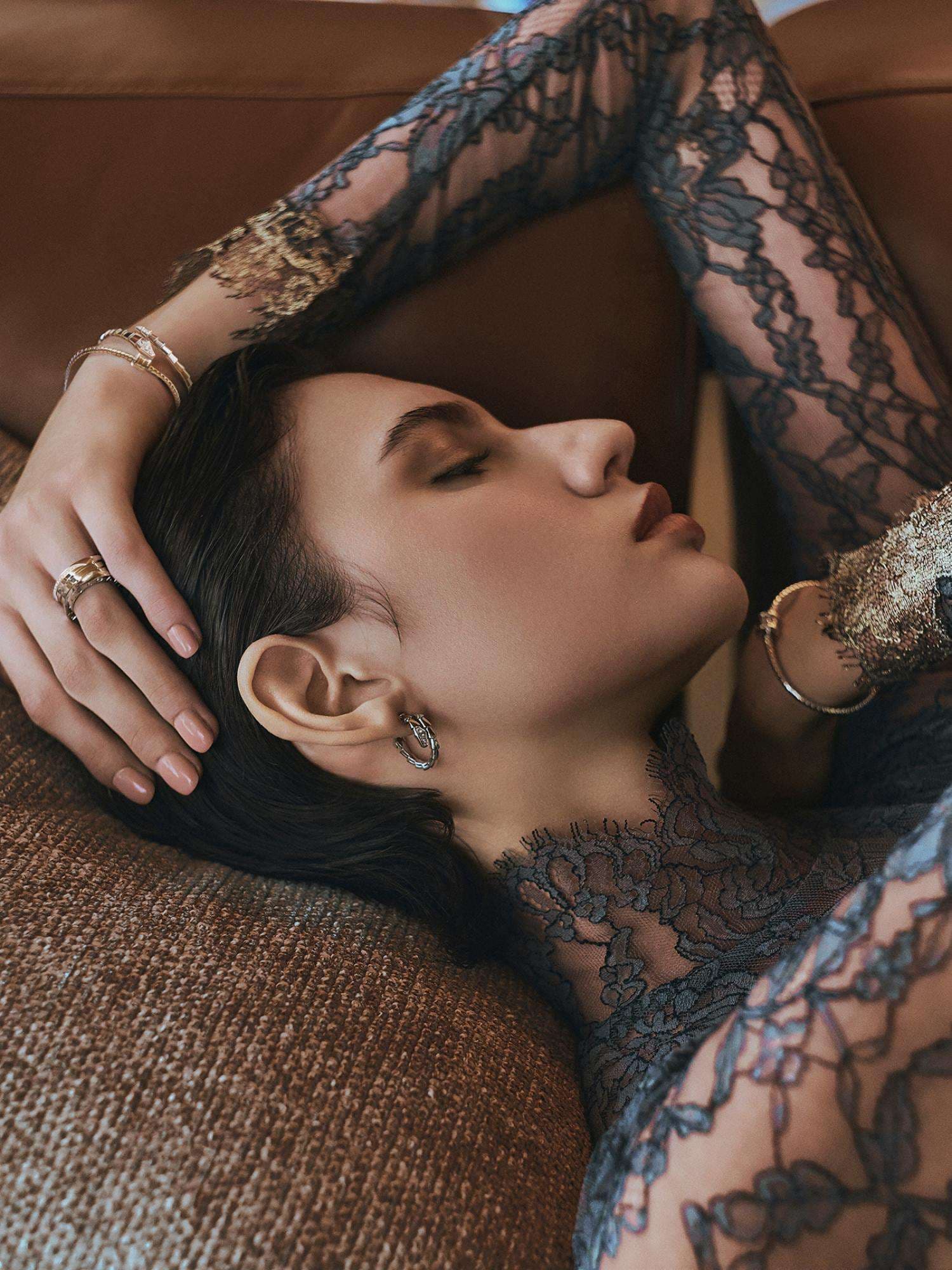
Why mother-of-pearl is a timeless jewelry material
Mother-of-pearl is the pearl family’s quieter, more modern face, with a soft shimmer that feels fresh in jewelry and rich in history.
Why mother-of-pearl feels current now
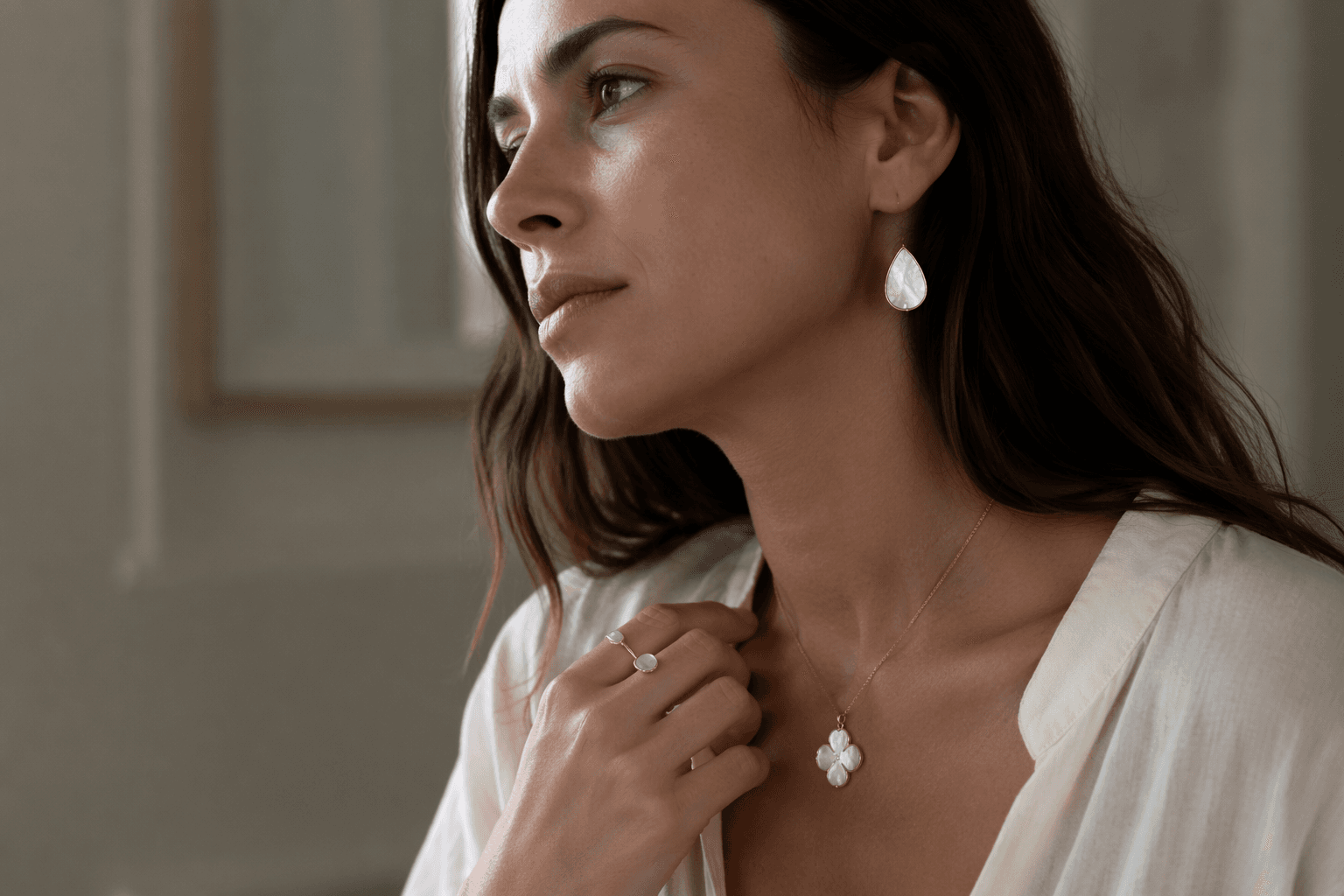
Mother-of-pearl is resonating because it gives you the romance of pearls without the familiar roundness of a classic strand. Its glow is softer, flatter, and more graphic, which is exactly why it works so well in pieces that feel modern rather than precious in a strict, old-school sense. That iridescent surface can read polished and serene in one setting, then unexpectedly architectural in another, especially in pendants, earrings, bracelets, and inlay details.
It also has range. Mother-of-pearl sits comfortably in fine jewelry, but it also moves across decorative art, which is part of its appeal to collectors and retailers alike. In a market that favors materials with visible texture and a story you can actually feel, it stands out as both elegant and adaptable.
Mother-of-pearl is not the same thing as a pearl
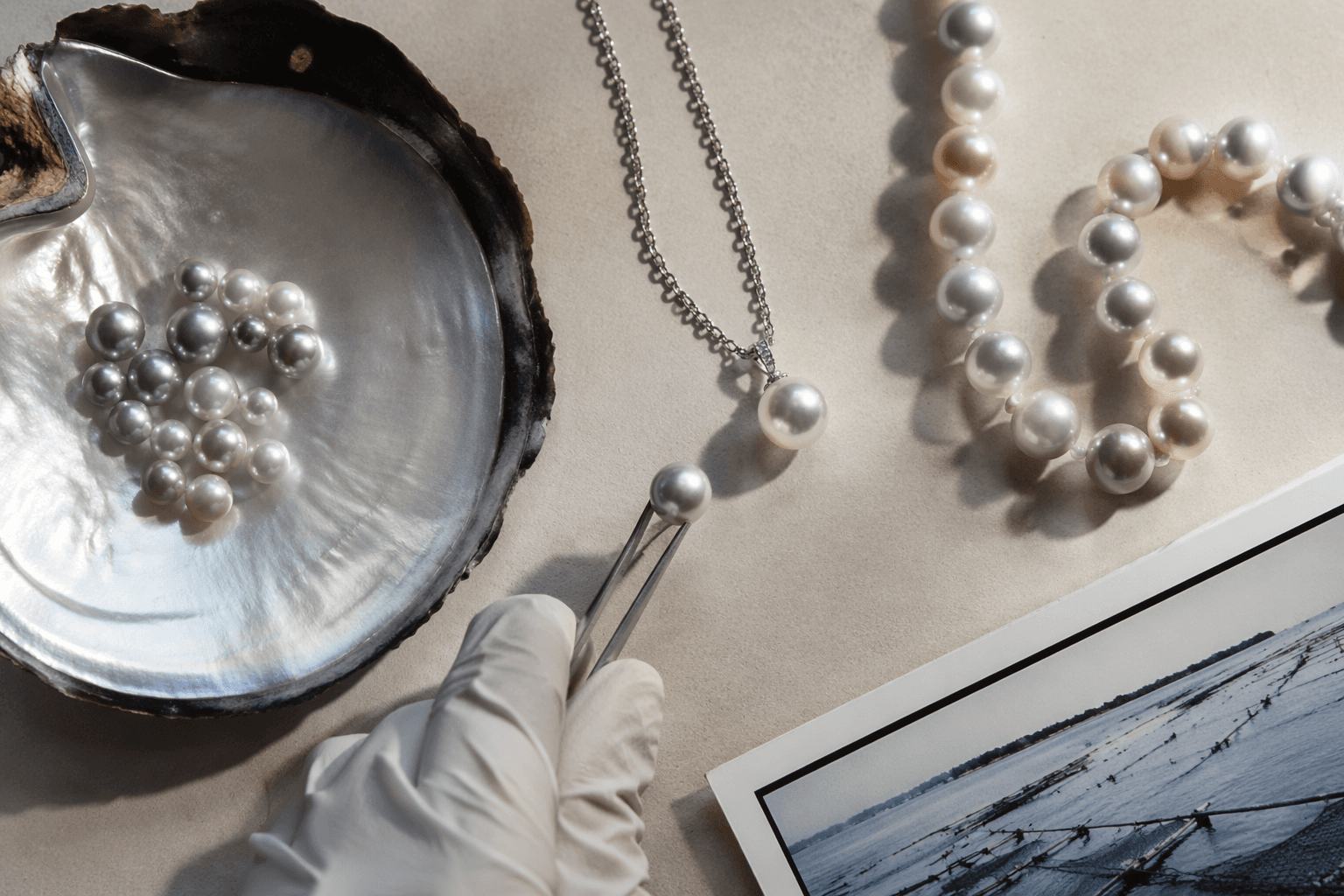
The distinction matters. Mother-of-pearl, also called nacre, is the iridescent inner shell layer produced by mollusks, while a pearl forms when that same nacre is secreted around an irritant. In other words, pearls are built with nacre, but nacre itself is the shell lining that gives mother-of-pearl its luminous surface.
That sheen comes from structure, not paint. The layered material creates constructive and destructive interference as light passes through it, which is why mother-of-pearl can look blue, silver, cream, pink, or green as it moves. It is made largely of aragonite, a crystalline form of calcium carbonate, with conchiolin also present, which helps explain why the surface feels both delicate and remarkably dimensional.
The shimmer is visual, but also tactile
Mother-of-pearl has always had a practical side. Smithsonian objects note that mother-of-pearl handles held onto a cool feeling longer than some other materials, which made them especially suitable for warmer months. That helps explain why the material has long felt at home in accessories meant to be worn, held, and handled rather than merely admired behind glass.
Its symbolism has also added to its staying power. Historically, mother-of-pearl has been used in jewelry, religious objects, and decorative items, and it has often carried associations with purity, protection, and wealth. Those meanings gave the material authority long before it became a style signal, and they still inform why it reads as quietly luxurious today.
A material with a long, traveled history
Mother-of-pearl and lacquer traditions can be traced to some of China’s earliest cultures, which places the material deep inside Asian decorative history rather than at the fringes of it. Works using lacquer and mother-of-pearl dating as early as the 8th century have also been found in Korea, Japan, and Thailand, showing how widely this visual language traveled. By the 12th century, artisans in southern China were using smaller and thinner pieces, a technical shift that allowed for more elaborate inlay and finer detail.
That evolution matters because it shows mother-of-pearl was never only a surface choice. It was part of a broader artistic exchange, and objects decorated with it played an important role in interregional trade from the 12th to the 19th century. Seen that way, mother-of-pearl is not just decorative. It is a material with migration, commerce, and craftsmanship built into its history.
How it moves through jewelry today
Modern jewelry uses mother-of-pearl in ways that highlight its versatility rather than forcing it into one fixed look. You see it in pendants, earrings, necklaces, bracelets, cufflinks, watch fobs, and inlay details, where the material can soften metal, brighten lacquer, or add a pale flash inside a more structured design. That is part of why it bridges jewelry and decorative art so naturally.
The Victorian era and the years that followed helped widen its vocabulary, especially in men’s items such as cufflinks and watch fobs. That expansion still matters now, because it shows mother-of-pearl has never belonged to one category of wearer or one definition of style. It can feel formal, masculine, feminine, antique, or contemporary, depending on the cut and the setting.
Why it reads as a smarter alternative to classic pearls
Classic pearls can lean traditional, even ceremonial. Mother-of-pearl feels more like a material detail than a single statement, which makes it easier to wear across different wardrobes and occasions. Its iridescence gives it visual depth, but its tone stays gentler than the full round gleam of a pearl strand.
That softness is precisely what makes it look fresh in 2026-style jewelry moods. It answers the appetite for materials that are recognizable but not overly predictable, and for pieces that bring light without shouting for attention. When mother-of-pearl is used well, it looks less like a relic of formality and more like a refined, living surface.
What to notice when you are looking at it
The best mother-of-pearl pieces let the material do the work. Thin slices, careful inlay, and thoughtful placement make the layered color play visible without overwhelming the design. Because the material has a long history in both jewelry and decorative art, it can hold its own in very small applications, from cufflinks to watch accents, or in larger pieces like necklaces and pendants.
Most importantly, mother-of-pearl earns its place through specificity. It is not just a pale substitute for pearl, but a distinct material with its own texture, history, symbolism, and practical charm. That is why it keeps returning, not as a novelty, but as one of the few jewelry materials that can look ancient and modern in the same glance.
This article was produced by Prism’s automated news system from verified source data, official records, and press releases, then run through automated quality and moderation checks before publishing. The system is built and supervised by the people who set the standards it runs under. Read our full AI policy.
Did this article answer your question?