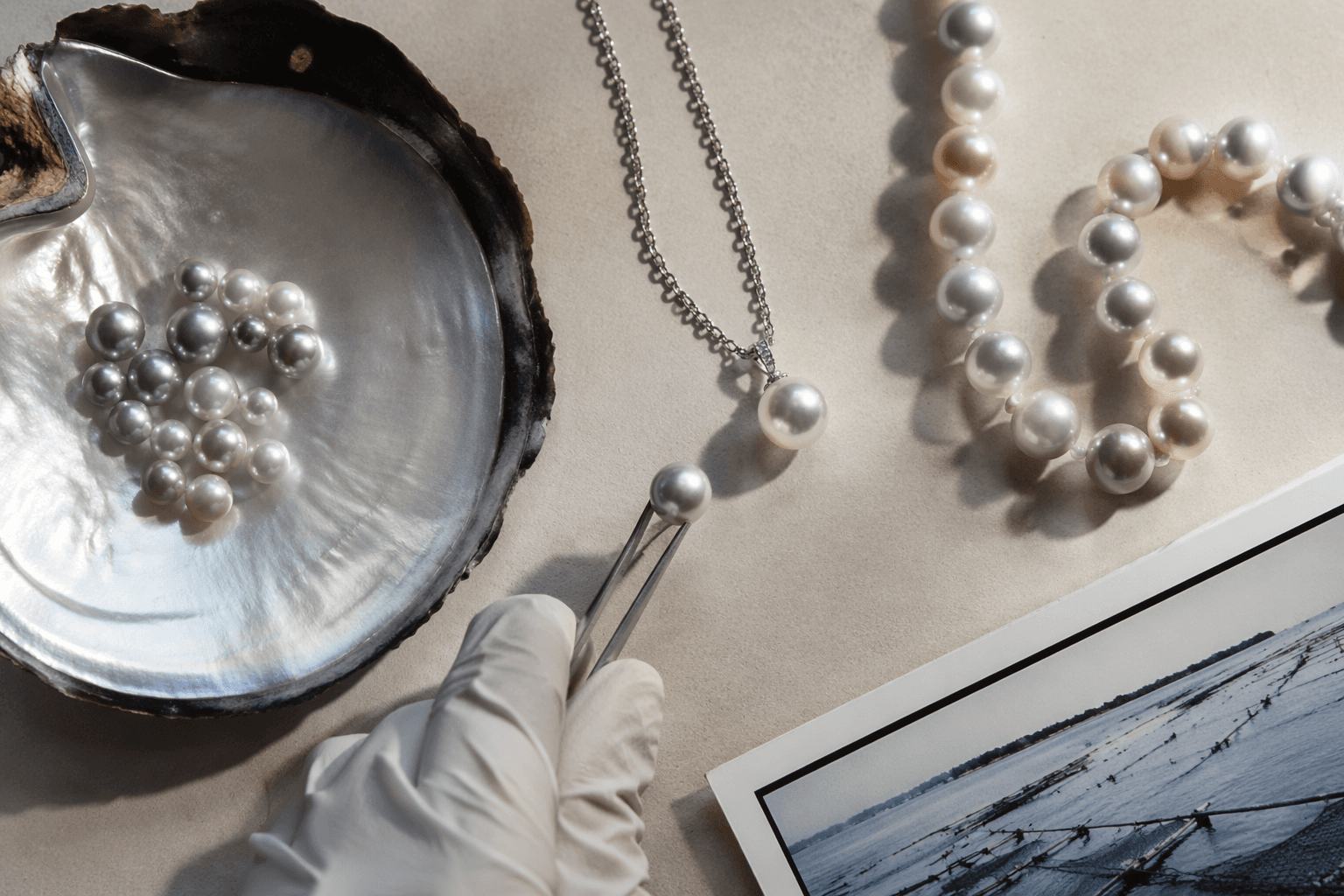
Why pearls should never be cleaned with hot water
Hot water can loosen pearl settings, dull nacre, and crack cultured stones. A soft cloth after wear is the safer move for everyday pieces and heirlooms.

Hot water can discolor, split, or crack cultured pearls, and intense light heat can dehydrate nacre until it cracks. Put pearls on after beauty products, then wipe them with a soft cloth after wear.
Why hot water is such a bad fit for pearls
Pearls are organic gemstones, not hard, indifferent crystals, so they react to the environment around them. Acid, alkaline substances, extremes of humidity, chemicals, and all acids can damage them; Mikimoto flags the first set of risks, and GIA the second. The problem is not just temperature. A sink rinse can also expose pearls to residue and sudden change.
Hot water is also risky because it can affect the jewelry that holds the pearl, not just the pearl itself. On rings, pendants, and earrings, heat can loosen settings before surface damage is even obvious. Pearls share this vulnerability with other porous stones like opals and turquoise, but their nacre gives them a particular sensitivity: once the surface dries out or cracks, the luster that defines the gem is harder to recover.
What everyday wear does to pearl surfaces
The daily enemies of pearls are often invisible. Hair spray, perfume, cosmetics, and perspiration are common culprits. Pearls should not be treated like gold or diamond jewelry that can be tossed on before a full beauty routine. Sprays and creams leave films; perspiration brings salts and acids; both can dull the soft glow that collectors and first-time buyers pay for.
Mikimoto recommends making pearls the final step after makeup and hair styling. That single habit keeps them out of the path of products that cling to the surface and settle into tiny imperfections in the nacre. After the piece comes off, a soft cloth is the safest daily cleaning tool, because it removes surface residue without the shock of heat, soaking, or harsh cleaners.
The storage mistake that shortens a pearl’s life
Pearls do not belong in dry, hot environments. Heat and dryness can dehydrate the nacre and weaken the materials that keep a necklace or bracelet together. A jewelry box near a radiator, a sunny vanity tray, or a storage drawer that bakes in summer can do more damage over time than one dramatic spill.
Strands need attention of their own. Pearl necklaces may need periodic restringing because silk string can darken, stretch, or wear thin over time, and many necklaces are knotted so that if the strand breaks, only one pearl comes loose.
How to judge whether a pearl is worth the care
When you are buying or evaluating pearl jewelry, value is measured in more than size alone. GIA evaluates pearls by size, shape, color, luster, surface quality, nacre quality, and, for pieces with two or more pearls, matching. Heat, chemicals, and rough handling work against those traits.
Luster is especially important because it is the first thing the eye reads on a pearl. A well-kept strand has a clean surface, even color, and a reflective glow that looks deep rather than flat. Once nacre is dehydrated or cracked, that depth is harder to preserve.
The safest pearl routine, in one line
Skip the hot rinse. Put pearls on after beauty products, wipe them with a soft cloth after wear, store them away from dry heat, and have strands restrung before the silk wears thin.
This article was produced by Prism’s automated news system from verified source data, official records, and press releases, then run through automated quality and moderation checks before publishing. The system is built and supervised by the people who set the standards it runs under. Read our full AI policy.
Did this article answer your question?