Custom jewelry moves beyond nameplates to handwriting and memory
Handwriting, signatures, and sketches are replacing basic nameplates, turning custom jewelry into intimate keepsakes with real emotional weight.
A nameplate once said everything you needed to know about a piece of jewelry. Now the most compelling custom pieces say something far more intimate: they preserve a hand, a signature, a child’s drawing, or a note that never needed polishing in the first place. That shift lands in a category valued at $3.79 billion in 2025 and projected to reach $7.17 billion by 2033, while the U.S. jewelry market grew 5% in 2024 to $85.4 billion.
From nameplate to archive
The modern nameplate has deep roots, but its cultural meaning has always been bigger than decoration. JCK has described the tradition of wearing one’s name as jewelry as “as old as written language,” with overlapping histories that stretch back millennia. In more recent form, the nameplate necklace is commonly traced to Black and Latino communities in the 1970s, 1980s, and 1990s, especially in New York City, where it became a declaration of style, presence, and self-definition.
That lineage matters because the current wave of customization is not a break from the past. It is a refinement of it. Hip-hop has long treated jewelry as storytelling, and the American Museum of Natural History’s Ice Cold: An Exhibition of Hip-Hop Jewelry, which opened on May 9, 2024, made that point visually with pieces associated with Slick Rick, The Notorious B.I.G., Jay-Z’s Roc-A-Fella medallion, Nicki Minaj, Erykah Badu, A$AP Rocky, Joey Bada$$, FERG, and Tyler, the Creator. The message is clear: jewelry has never been only about sparkle. It has always been about identity.
Why handwriting feels different
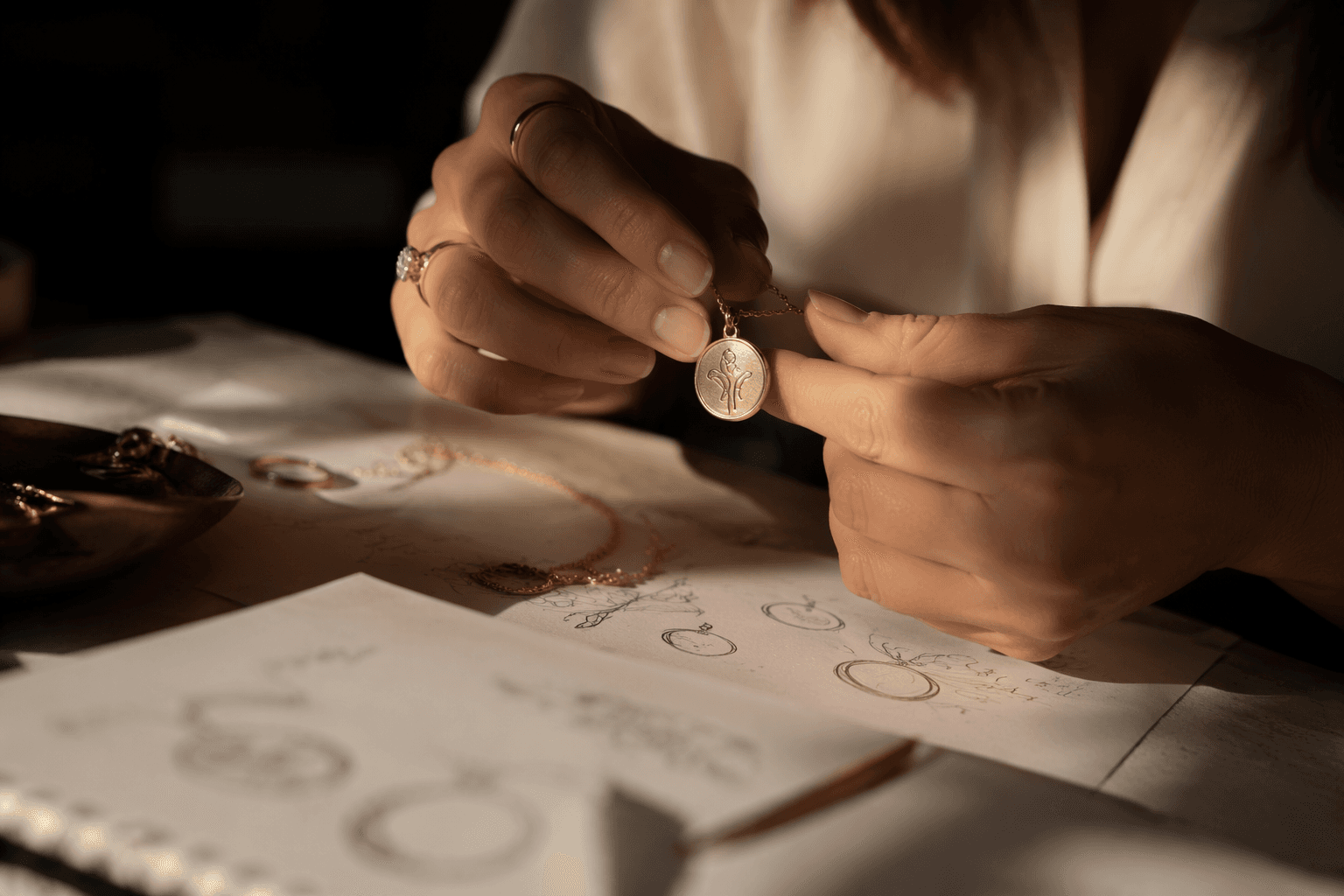
The new luxury in personalization is specificity. A nameplate tells the world who you are; a handwritten engraving tells it who you belong to, what you remember, or what you refuse to lose. Carol Woolton has argued that jewelry speaks about identity, memory, family, and loved ones, and that frame explains why signatures, sketches, and intimate marks feel so potent now. They turn a pendant or bracelet into a portable archive, something closer to an heirloom in progress than a trend piece.
That is also why the category is broadening beyond obvious sentimentality. Etsy currently lists thousands of personalized handwriting and signature jewelry items, including memorial pieces, kids’ handwriting bracelets, and custom signature necklaces. The range matters: some buyers want remembrance, others want a child’s first scrawl preserved in metal, and others simply want a piece that feels more personal than an engraved initial ever could.
The best of these pieces have a quiet confidence. They do not need a heavy-handed phrase or a crowded composition. A single line of handwriting, especially one that carries the pressure and rhythm of an actual pen stroke, often feels far more luxurious than a polished slogan.
What the market is rewarding now
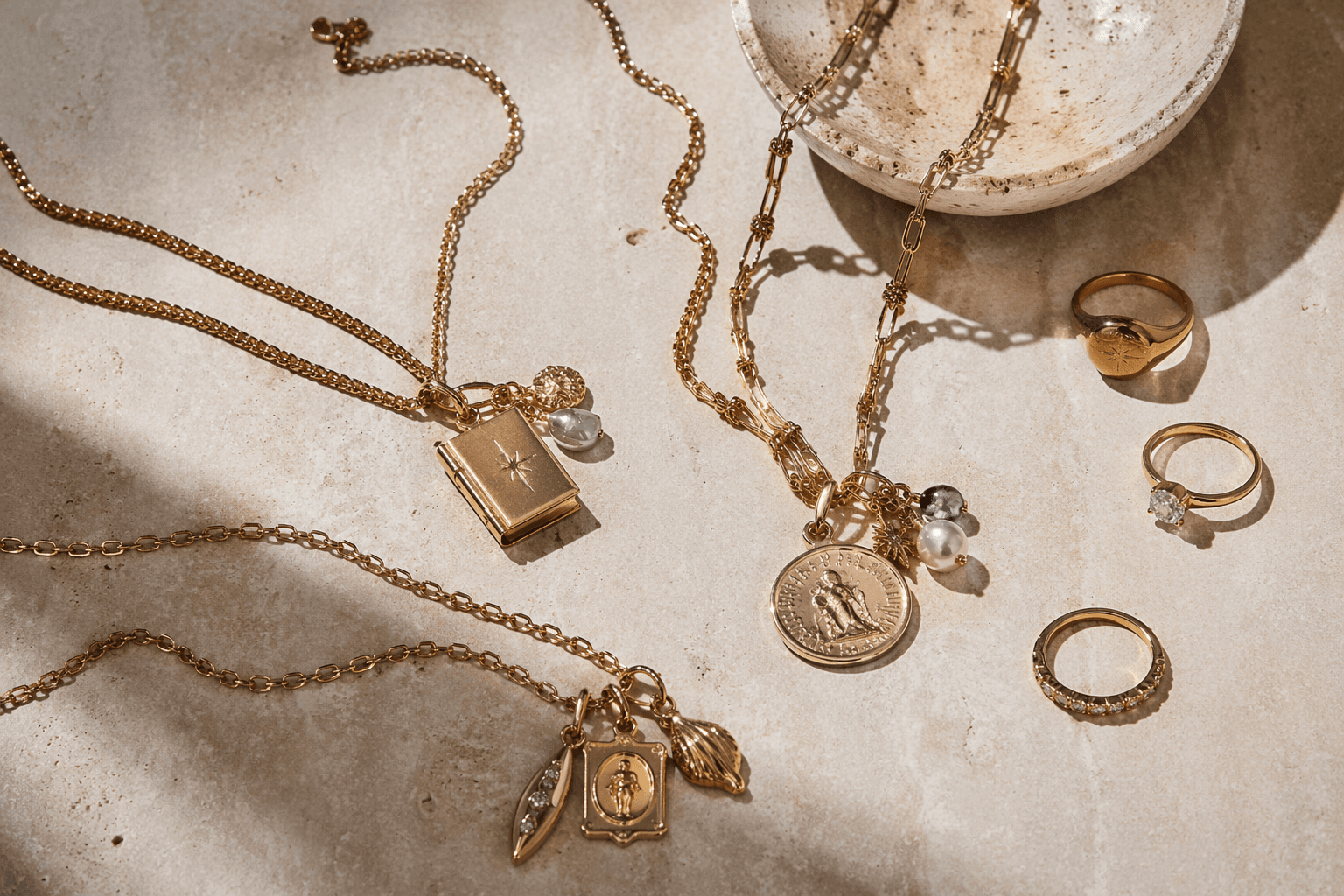
Pandora has pushed this shift into the mainstream with engraving options that move well beyond initials and dates. Its online Photo & Draw feature allows customers to upload a handwritten note or drawing, while its in-store Doodle option lets customers draw directly on the engraving area. The company says engravable items include bracelets, necklaces, pendants, rings, charms, and gift sets, and online engraving orders require an additional day for processing.
That breadth is important because it shows how personalization has moved from niche service to product architecture. Customization is no longer confined to the atelier. It is being built into the purchase path itself, which is one reason the category is growing so quickly. When a brand makes room for a child’s note, a signature, or a tiny sketch, it gives the customer a way to convert memory into something wearable.
A piece like this works best when the surface has enough room to let the mark breathe. A flat pendant, a generous tag, or a signet-style face gives handwriting clarity; a cramped charm or a narrow band can make a signature lose its emotional force. If the engraving is meant to be read every day, legibility is part of the design, not an afterthought.
How to choose an engraving that feels lasting
The most successful custom jewelry does not try too hard. It feels specific, but not forced. It should seem like it could have existed long before the trend cycle noticed it.
- Choose marks that come from a real hand, not a decorative font. A signature, a child’s drawing, or a short handwritten phrase carries more life than a scripted name in a generic typeface.
- Keep the message concise. The strongest engravings are often the smallest, because they preserve the character of the original mark instead of flattening it into copy.
- Let the object support the meaning. If you are adding a birthstone, the setting matters: a bezel setting gives the stone a protective rim and a clean, architectural look, while prongs allow more light and a slightly airier feel. For daily wear, bezel settings often read as more durable and more modern.
- Resist novelty for its own sake. A joke or a trend-led phrase can date quickly; a signature, a sketch, or a family mark usually outlives the moment because it is tied to a person, not a slogan.
The distinction between timeless and gimmicky usually comes down to origin. If the engraving points back to an actual relationship, it holds its power. If it exists only because the surface was available, it tends to feel thin.
Why this wave feels more valuable
The appeal of this new customization wave is not just emotional, though emotion is the point. It is also stylistic. Handwriting and sketches have texture, irregularity, and human scale. They look less like branding and more like evidence, which gives them a subtle authority that mass-produced personalization rarely achieves.
That is why the strongest custom pieces now feel less like accessories and more like keepsakes with a point of view. Nameplates still matter, and they always will, because they carry history and identity with such force. But the next chapter of personalized jewelry belongs to the marks that feel lived in: the signature that is no longer needed on paper, the note you cannot throw away, the drawing that says more than words ever could.
The market is expanding, but the idea is becoming more intimate. In that shift, jewelry stops being a label and becomes a record.
This article was produced by Prism’s automated news system from verified source data, official records, and press releases, then run through automated quality and moderation checks before publishing. The system is built and supervised by the people who set the standards it runs under. Read our full AI policy.
Know something we missed? Have a correction or additional information?
Submit a Tip