Initial Jewelry Takes Center Stage, from Pendants to Signet Rings
Gold initials are edging out zodiac charms, turning pendants, signet rings, and charms into the most personal everyday jewelry with real gift appeal.
The new identity piece
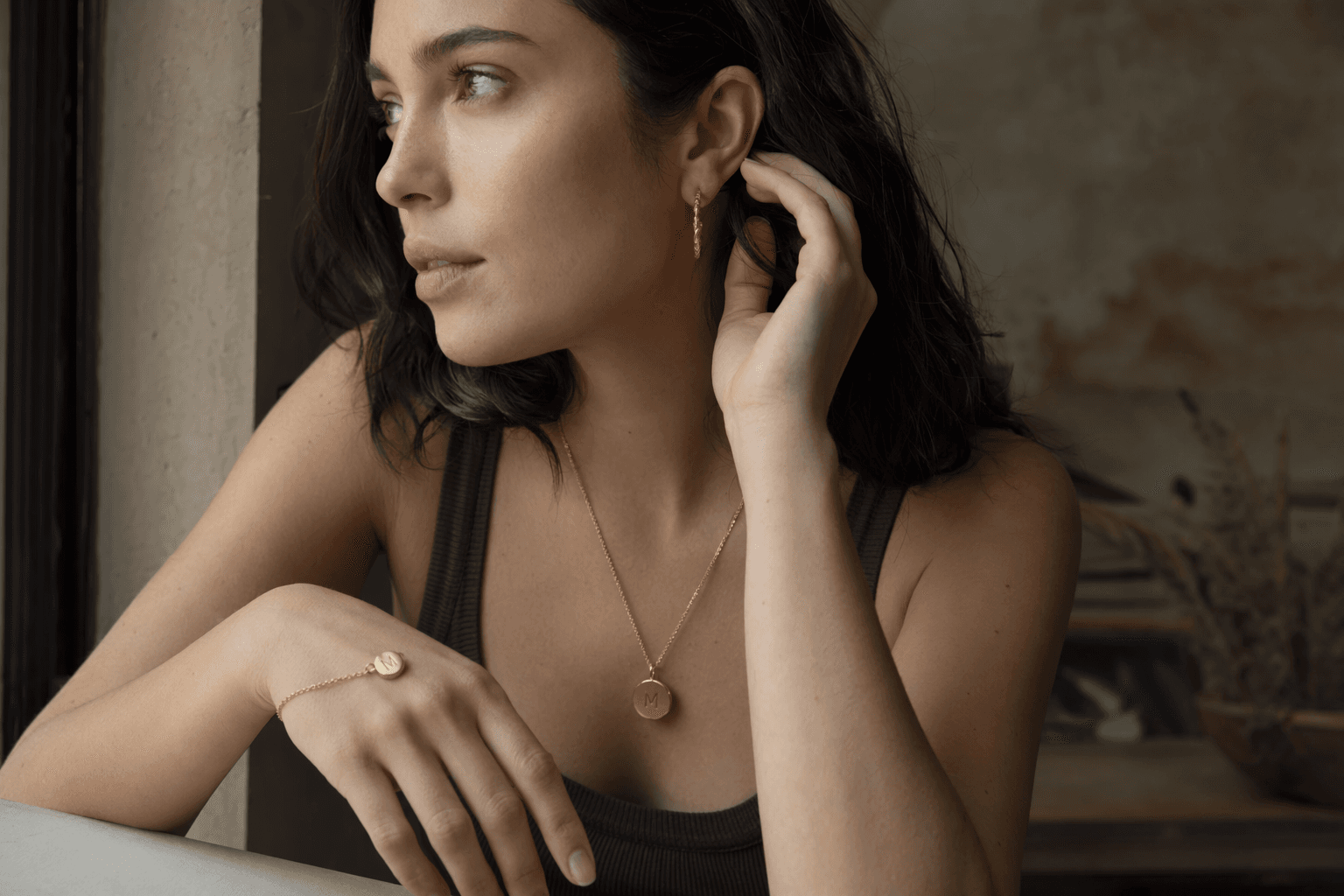
Initial jewelry is taking over the role that zodiac pieces once played as the easiest way to signal identity in a single glance. A letter feels more exact than a sign, more intimate than a motif, and easier to wear every day without looking overstyled. Forbes captured the shift neatly by describing initial jewelry as sentimental, fashionable, and built for daily wear, which is exactly why the category keeps moving from trend to habit.
What makes the piece work now is its clarity. A single initial can stand for your own name, a child’s name, or someone close to you, and that personal charge gives the jewelry instant meaning. The best versions do not lean on novelty. They turn a small detail into a permanent part of the wardrobe.
Why the signet ring keeps coming back
The signet ring gives this trend its backbone. These rings date back thousands of years and were originally used as personal seals, making them one of jewelry’s oldest forms of identity marking. JCK has tracked that history for years, calling gold signet rings a perennially popular item and highlighting them as a wardrobe staple for women in 2009.
That long view matters because it shows initials are not arriving from nowhere. JCK said signet rings experienced a renaissance at JCK 2023, then reported again in June 2024 that signet and pinky rings were having a moment. The point is not that the silhouette is new, but that its meaning keeps resurfacing whenever shoppers want jewelry that feels both personal and enduring.
From pendants to pinky rings
The strongest part of the trend is how many forms it can take. Initial pendants sit closest to the face, where a letter reads like a private signature, especially when worn on a slim chain or layered with a second necklace. Signet rings give the same idea a harder edge, with the letter engraved or raised on a flat face that feels more permanent and architectural.
That flexibility is what separates initial jewelry from a passing charm trend. A pendant can be delicate and sentimental, while a ring can feel almost inherited from the start. Layering charms extend the idea further, letting a letter sit alongside other symbols without losing its identity. For a gift, that range makes the category unusually easy to personalize without requiring the buyer to overthink the recipient’s style.
Why yellow gold keeps winning
JCK singled out yellow gold as especially on-trend in its signet coverage, and the metal choice makes sense here. Yellow gold gives initials warmth, contrast, and a more classic read than ultra-polished silver or heavily embellished mixed-metal designs. It also helps the piece feel less like an accessory tied to a specific season and more like something that can stay in rotation.
If you want the look to feel refined rather than cutesy, keep the design clean. A crisp letter, a balanced scale, and a chain or ring shank with enough substance to hold up to repeated wear will age better than a novelty font or an oversize flourish. Initial jewelry works best when the craftsmanship carries the sentiment instead of competing with it.
How to wear it without making it feel precious
The smartest way to wear initials is to let them do one job well. A pendant can anchor a necklace stack, especially if the other layers stay slimmer or longer. A signet ring can stand alone on the pinky or index finger, where its shape reads as intentional rather than decorative clutter.
If you are gifting, initials solve a common problem: the piece already carries the meaning, so the recipient does not have to match your taste for the gift to feel thoughtful. A letter pendant is easy to wear to work or on weekends. A ring feels slightly more assured and often reads as more collectible. Either way, the appeal is the same, it feels chosen for one person rather than bought for a category.
Why the market keeps leaning into personalization
The business case is as strong as the emotional one. Mintel said the U.S. jewelry market was expected to grow 4.5% in 2024, while Statista placed the U.S. jewelry market at about $63 billion in 2023. Signet Jewelers, one of the market leaders, reported more than $7.1 billion in U.S. sales in 2024. Those numbers explain why personalized jewelry keeps getting attention: it sits at the intersection of sentiment and steady commercial demand.
WWD also noted that younger consumers have been gravitating toward heritage jewelry styles, including signet rings, tennis styles, diamond studs, and pearls. That broader shift helps initials make sense in the modern jewelry box. The appeal is not just that the pieces feel personal. It is that they feel familiar enough to gift, polished enough to wear daily, and substantial enough to keep after the trend cycle moves on.
In the end, initials are succeeding because they offer identity without excess. They are specific where zodiac motifs can feel broad, meaningful without being fussy, and classic enough to move from pendant to signet ring to charm without losing relevance. In a market full of jewelry trying to mean everything, a single letter is proving that one clear signal can be the most lasting of all.
This article was produced by Prism’s automated news system from verified source data, official records, and press releases, then run through automated quality and moderation checks before publishing. The system is built and supervised by the people who set the standards it runs under. Read our full AI policy.
Did this article answer your question?