Kavant & Sharart spotlights trapeze diamonds in Mingle collection
Kavant & Sharart turns the trapeze cut into a modular fine-jewelry statement, pairing rare geometry with secure, wearable settings.
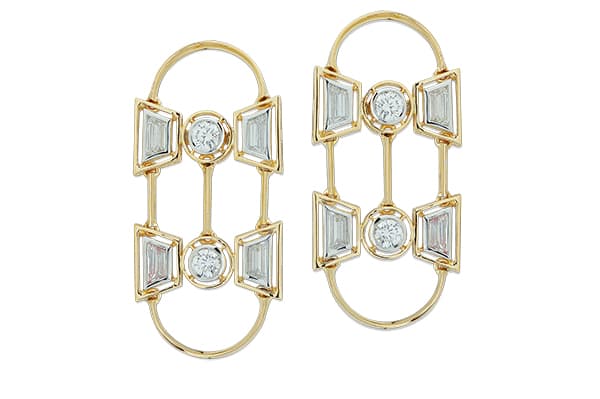
Kavant & Sharart gives the trapeze diamond something it rarely gets in jewelry: center stage. In the Mingle Trapeze collection, the shape moves from supporting role to signature, turning earrings, rings, and necklaces into sharp, architectural pieces with a distinctly personal edge.
Why the trapeze cut feels so fresh
The trapeze, or trapezoid, cut has a long but overlooked history in geometric jewelry design, with roots traced to the early 20th century, when symmetry and architecture shaped the look of modern adornment. Today it still reads as uncommon, which is exactly why it works so well for anyone looking for personalization that does not default to a round or oval center stone.
It is also a demanding shape. Trapeze diamonds require intricate craftsmanship and high precision, and they are often more suited to larger stones, which is part of why they remain relatively rare in everyday fine jewelry. Their narrower tips can be vulnerable, so the best versions depend on secure settings that respect the cut’s angles rather than softening them.
That tension between beauty and difficulty is what gives the shape its appeal. A trapeze stone can feel more bespoke than familiar silhouettes, but it also asks more of the setter, the designer, and the wearer.
How Mingle turns geometry into the main event
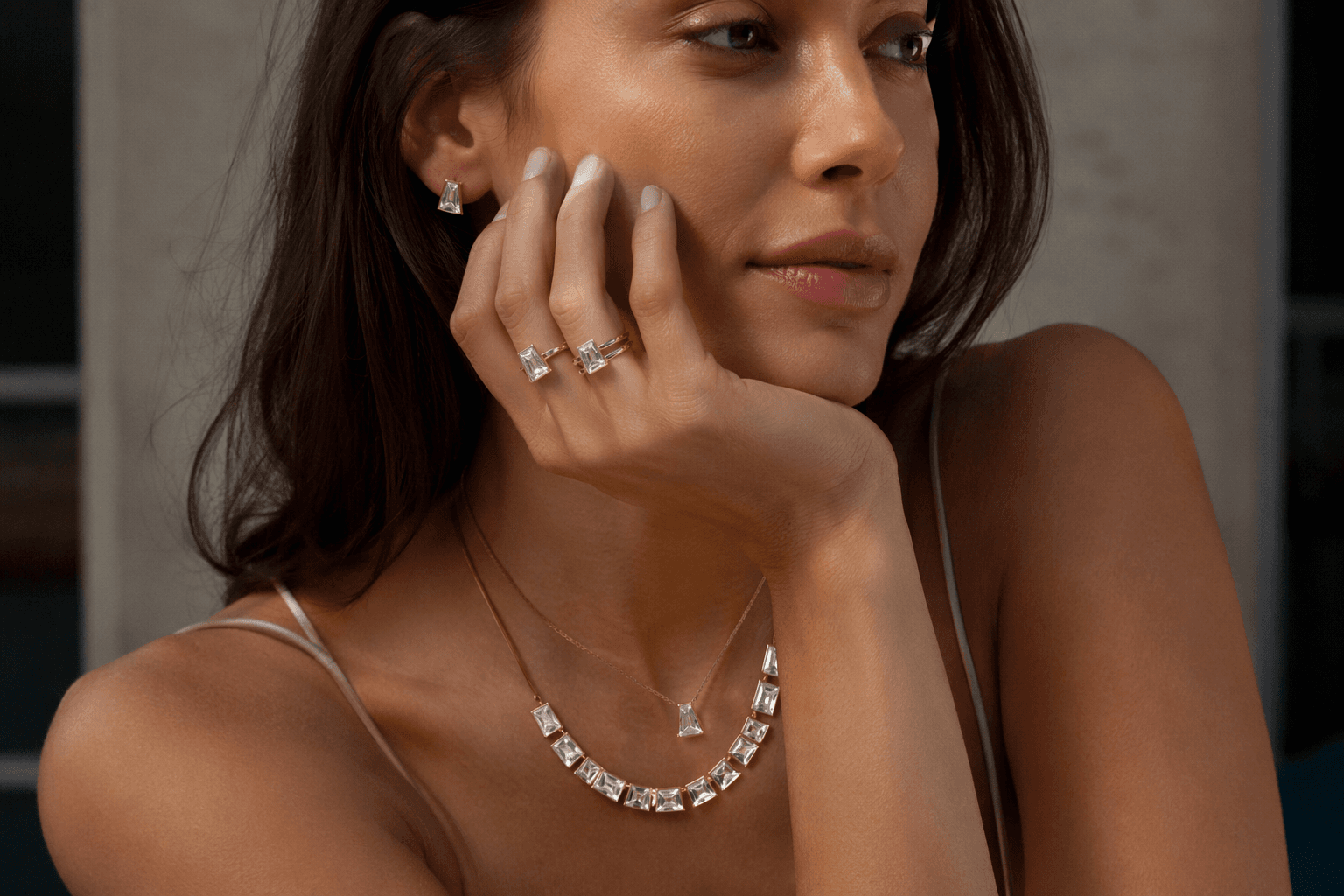
The Mingle Trapeze collection is built around that challenge, presenting the 18k yellow gold and natural diamond line as a meditation on geometry, structure, and movement. Kavant & Sharart wanted trapeze diamonds to “step into the spotlight” as the hero of the design, and the phrase fits because the collection does not hide the shape inside a conventional setting. It lets the cut define the rhythm of the jewel.
The earrings are especially telling. Each pair uses a bold gold oblong frame, with two rows of trapeze-cut diamonds, each stone held in its own trapezoid-shaped frame, flanking a central round brilliant. That combination gives the design both order and contrast: the round center provides a visual anchor, while the angled stones pull the eye outward and create a clean, almost graphic silhouette.
The line extends beyond earrings into rings and necklaces, including the Mingle Trapeze Step ring, listed in 18k yellow gold with 0.68 ct. t.w. diamonds at $9,880. That price places the piece squarely in fine-jewelry territory, where the value is tied not just to carat weight but to the labor of getting an uncommon shape to look effortless. The Mingle Trapeze Edge diamond necklace pushes the idea further, translating the trapeze form into a solid block of gold that feels sculptural yet restrained.
A shape made for custom design
Because trapeze diamonds have often been used as accent stones or side stones, making them the lead element changes the entire personality of a jewel. The shape lends itself naturally to asymmetry, framing, and layered compositions, which makes it useful in custom work where a designer wants to echo an heirloom stone, offset a central gem, or build a ring, pendant, or earring around a more individual profile.
That is where the cut becomes especially interesting for family-story pieces. A trapeze diamond can act like a hinge between old and new, or like a frame around a stone already carrying history. In a bespoke setting, the geometry can emphasize lineage without becoming literal, which is a subtler kind of personalization than engraving or initial motifs.
The fact that the shape can be cut as either a step cut or a brilliant cut only adds to its versatility. Step cuts will emphasize clarity, line, and mirror-like planes, while brilliant cuts bring more sparkle and movement. For collectors, that means the trapeze cut is not just a visual novelty; it is a design language that can be tuned to different moods.
How the collection wears
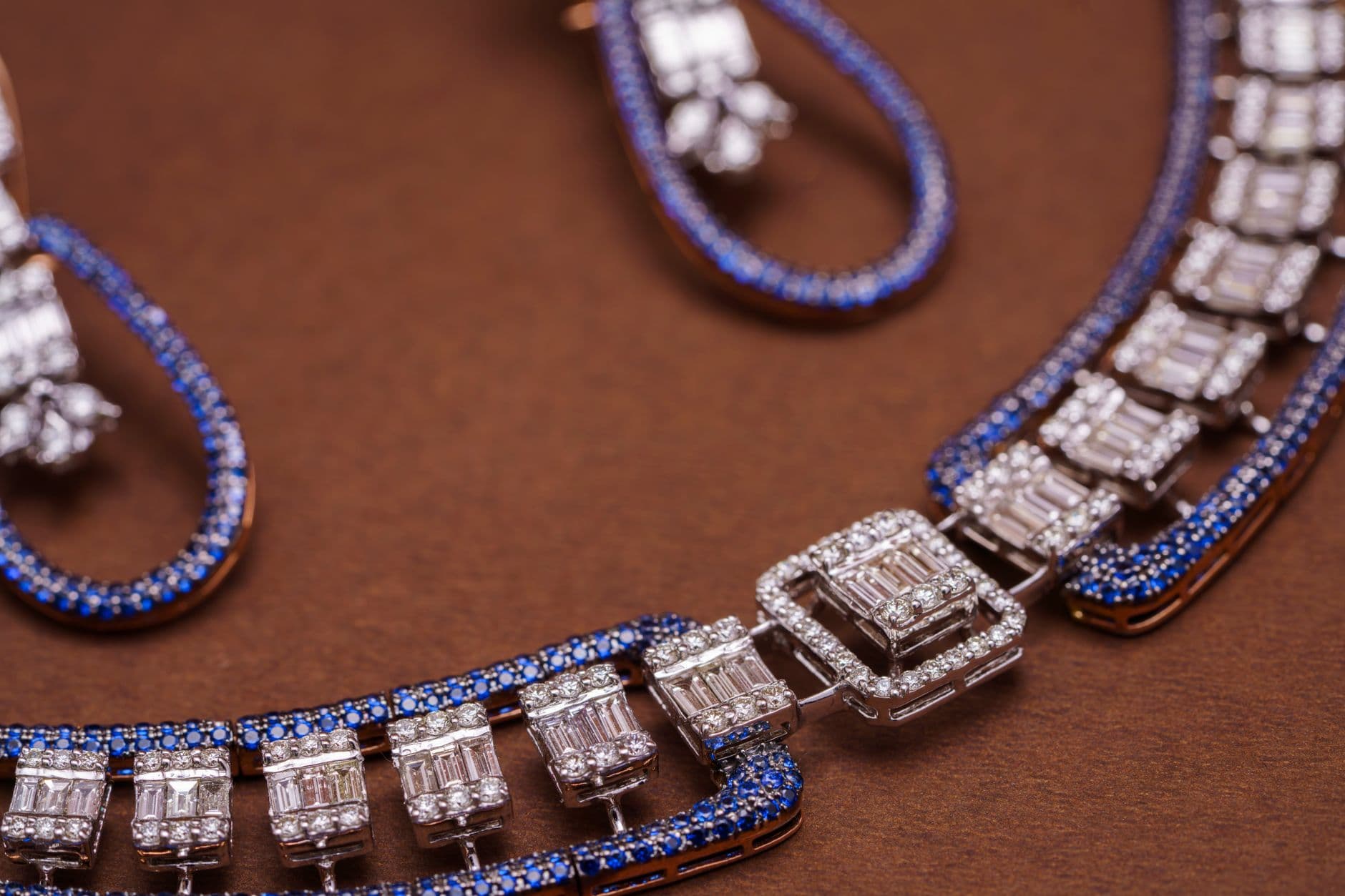
Kavant & Sharart frames Mingle as a collection meant to blend into an existing wardrobe, complementing, contrasting, and elevating what the wearer already owns. That idea matters because it moves the line away from one-off statement dressing and toward a more modular way of building a jewelry collection. The pieces are meant to interact with what is already in your box, not replace it.
The brand’s broader Mingle pieces, including bracelets, continue that logic. Each jewel carries its own character, yet the strongest effect comes when the shapes are layered together, so the collection feels considered rather than maximal. In practice, that makes the trapeze motif less about spectacle and more about structure.
Kavant & Sharart itself, founded in 2011 by Nuttapon, also known as Kenny, Yongkiettakul, and Shar-Linn Liew, is a Thai fine jewelry designer label with a polished, modern hand. The Mingle Trapeze pieces capture the house’s point of view neatly: rare enough to feel special, precise enough to feel serious, and architectural enough to look intentional every time they are worn.
In a market crowded with safe silhouettes, the trapeze cut offers a different kind of desirability. It feels bespoke because it is uncommon, and it feels valuable because its beauty depends on exacting craftsmanship, secure setting, and a designer willing to let geometry take the lead.
This article was produced by Prism’s automated news system from verified source data, official records, and press releases, then run through automated quality and moderation checks before publishing. The system is built and supervised by the people who set the standards it runs under. Read our full AI policy.
Know something we missed? Have a correction or additional information?
Submit a Tip