Mama Jewelry Leads Mother’s Day Sales, Personalized Gifts Gain Momentum
Explicit mama jewelry is winning because it says the sentiment out loud, and Mother’s Day shoppers are rewarding that clarity with gold, birthstones and initials.
Mama jewelry is having a clear, practical moment
The appeal is almost disarmingly simple: it says “mom” without translation. That directness is exactly why mama and mom jewelry lands so well for Mother’s Day, especially when the gift needs to feel personal at first glance and still be wearable every day. The category also arrives with serious commercial momentum, as U.S. consumers were expected to spend $34.1 billion on Mother’s Day 2025, with jewelry leading all gift categories at $6.8 billion.
That spending power helps explain why the best pieces are not trying to be coy. They spell out the relationship in gold letters, add a birthstone, or tuck a family detail into a clean silhouette, so the piece reads like a keepsake rather than a puzzle. In a season crowded with flowers, gift cards and dinner reservations, jewelry that is immediately legible has an advantage: it delivers the emotional meaning before the box is even opened.
Why the message works when it is visible
Personalization has become more than a decorative extra, it is a buying language. A global BCG survey of 23,000 consumers found that about four-fifths are comfortable with personalized experiences, which helps explain why pieces that plainly identify the wearer as a mother feel so current. Deloitte’s research sharpened that point by showing that consumers recognized only 43 percent of their experiences as personalized, while brands believed they were personalizing 61 percent on average. In jewelry, that gap is easy to close when the message is physically present, not hidden in a story card.
There is also a long memory beneath the trend. Jewelers of America traces the official birthstone list to 1912, when the American National Retail Jewelers Association standardized the month-and-gem pairing. Retail histories commonly place the modern mother’s ring in the 1950s, when a jeweler reportedly combined two wedding bands and added children’s birthstones as a Mother’s Day gift. That lineage matters because today’s mama jewelry uses the same emotional grammar: names, birthstones and family markers turn a generic gold piece into something unmistakably tied to one person.
The necklace remains the most direct canvas
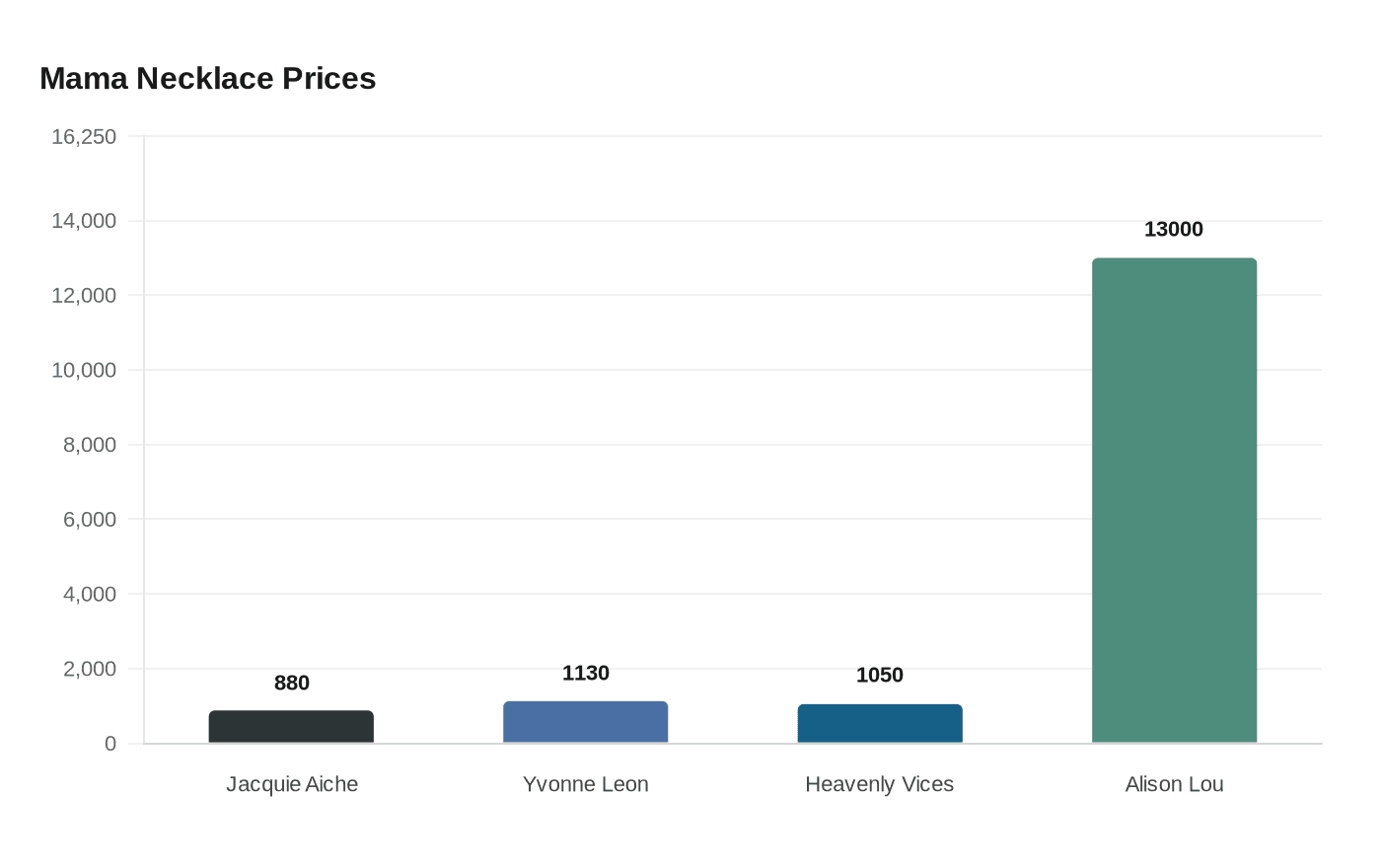
Necklaces are the easiest place to say the quiet part out loud. JCK’s roundup spans a Jacquie Aiche mama necklace at $880, a Yvonne Léon mama necklace at $1,130, a Heavenly Vices mom necklace at $1,050, and Alison Lou’s mama lock necklace at $13,000. The spread tells the whole story of the category: one end is approachable fine jewelry; the other is sculptural luxury that treats the word “mama” as a design motif in its own right.
Jennifer Meyer’s Mama Shop pushes the same idea in a softer register, with 18-karat gold pieces positioned as gifts for mothers on any special occasion or, just as importantly, for “just because.” That phrasing captures the best version of this trend. The necklace does not need a milestone to justify it, because the relationship is the milestone. For a new mother, a simple word pendant feels immediate; for a grandmother, it carries the comfort of recognition without excess ornament.
Bracelets bring the sentiment closer to daily life
Bracelets tend to feel especially intimate because they move with the hand, which makes them ideal for a message that should be seen often, not saved for occasions. JCK includes a mama birthstone ID bracelet priced at $6,700, a reminder that the category can stretch into serious high jewelry territory when designers add custom stones and a more substantial build. Alison Lou’s mama tennis bracelet extends the idea in a more classic line, pairing the familiarity of a tennis bracelet with the unmistakable family cue.
Jacquie Aiche’s MAMA birthstone ID bracelet shows how flexible the form has become. It comes in multiple gold colors and can be customized with additional birthstone charms or even custom design requests, which makes it especially useful for shoppers who want one central piece that can grow with the family. If necklaces speak first, bracelets often become the most lived-in version of the story.
Rings and initials make the message compact
When the gift needs to be small but unmistakable, rings and initial jewelry are the sharpest options. Rebel Jewelry’s mama ring, priced at €1,450, or about $1,700, condenses the idea into a piece that can sit in a daily ring rotation without losing its meaning. Jennifer Zeuner’s Initial blocks necklace, at $1,410, takes a more graphic route, using block lettering to make the family reference readable in a cleaner, more modern way.
These formats work because they do not ask the viewer to decode the emotion. Initials, especially when paired with “mama” or “mom,” are immediate. For a late shopper, that clarity is a gift in itself: there is no ambiguity about who the piece is for, and no need to explain the sentiment after the wrapping paper is gone.
The real upgrades are the ones you can see at a glance
The strongest personalization choices are not the most elaborate, they are the most legible. Birthstones remain the classic upgrade because they add family structure and a color cue at once, which is why they still anchor everything from the mother’s ring tradition to modern ID bracelets. Names and initials do a similar job, while visible metal choices, such as different gold tones, let the wearer match the piece to an existing collection rather than isolate it in a jewelry box.
That is also why explicit “mama” jewelry outperforms more abstract Mother’s Day tokens. A bouquet fades, a gift card gets spent, but a word pendant or birthstone bracelet keeps delivering the same message every time it is worn. In a market where personalized jewelry is estimated at roughly $42.5 billion in 2024 and still projected to grow through 2031, the category’s strength comes from a simple truth: when sentiment is visible, the gift feels both easier to buy and harder to misread.
This article was produced by Prism’s automated news system from verified source data, official records, and press releases, then run through automated quality and moderation checks before publishing. The system is built and supervised by the people who set the standards it runs under. Read our full AI policy.
Did this article answer your question?