Nine AI Tools for Jewelry Design Tested, Ranked, and Compared in 2026
Only 2 of 9 tested AI jewelry tools produce manufacturing-ready designs. Here's which ones actually serve working jewelers.
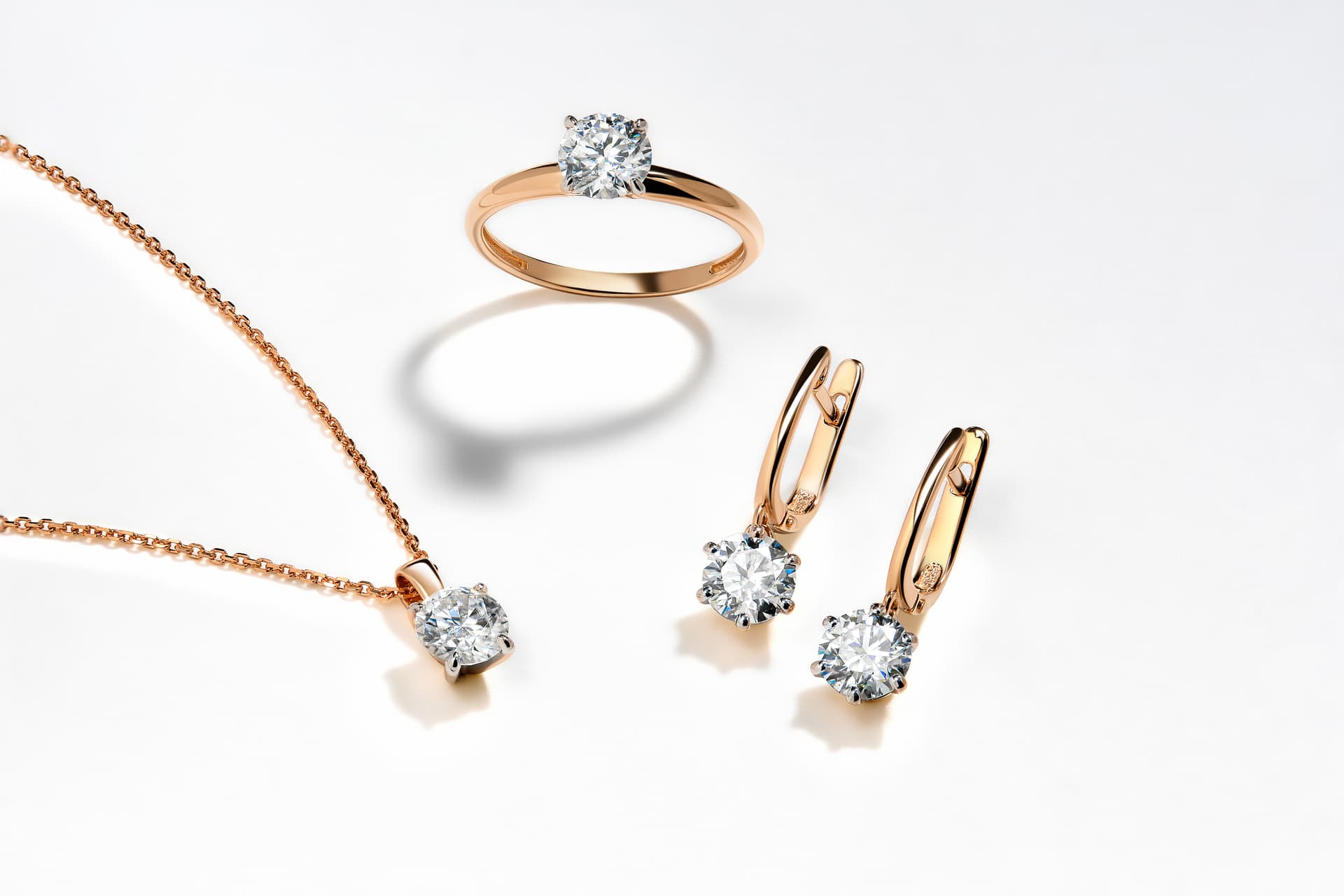
After 60-plus hours of testing, one finding cuts through the noise in AI-assisted jewelry design: most of these tools will give you a pretty picture, but almost none will get you to the bench. The Tashvi AI team's comparative review, published March 1, 2026, examined nine tools and found that only two produce outputs serious enough to feed into a manufacturing workflow. For jewelers who need more than mood-board inspiration, that distinction matters enormously.
The core divide in this space runs between purpose-built jewelry AI platforms and general image generators pressed into service for jewelry work. Evaluation criteria that separate the useful from the decorative include understanding of jewelry-specific terminology, the ability to communicate settings, shanks, and gem placements with precision, and whether the output can travel downstream toward production. Here is how nine tools rank, from most production-capable to most limited.
1. Tashvi AI
Tashvi AI is the only platform in this roundup designed from the ground up for jewelry design workflows. It offers guided design modes and prompt-based creation built around the vocabulary of the trade, and both the Tashvi team's own comparison table and a separate Style3D AI analysis mark it as the sole AI tool in the field that is both jewelry-specific and manufacturing-oriented. Its free tier is available, and the deeper workflow runs on a ChatGPT Plus subscription at $20 per month. One important caveat: the same Tashvi review that lists the tool as manufacturing-ready also includes a "cons" bullet stating "No manufacturing output - Images only," a contradiction the publisher has not yet publicly reconciled. Prospective professional users should verify current export capabilities directly with the vendor before committing to a production pipeline.
2. Midjourney
For pure visual quality, nothing else tested here matches Midjourney's output. The Tashvi team's own bottom-line verdict is direct: "If you just want inspiration images, Midjourney produces the most artistic results." It has no jewelry-specific knowledge, cannot interpret technical terms like pavé or bezel flush, and produces no manufacturing-ready files. A subscription starts at $10 per month, with no free tier. Think of it as the most talented concept-rendering tool available, one best handed off to a CAD specialist once a direction is chosen.
3. DALL-E 3
DALL-E 3, accessed through a ChatGPT Plus subscription at $20 per month, earns its place for speed and accessibility rather than depth. It handles quick concept generation competently and benefits from its conversational interface, which allows iterative prompting in plain language. Like Midjourney, it carries no jewelry-specific knowledge and produces images only, not manufacturing files. Its best use case is early-stage ideation: showing a client three rough directions before committing to detailed CAD work.
4. Leonardo AI
Leonardo AI stands out as the most accessible entry point in the image-generator category, offering a free tier of 150 images per day without any payment. Unlike Midjourney, it requires no Discord account and runs entirely in a browser. Its image-to-image function, which lets a designer upload an existing sketch and iterate on it, gives it practical value in early design stages. It is not jewelry-specific and produces no manufacturing outputs, but for studios running on tight budgets or designers testing AI for the first time, 150 free renders a day is a serious resource.
5. Stable Diffusion
Stable Diffusion occupies a different niche from the other image generators: it is the tool for technically inclined users willing to self-host and configure their own setup. The trade-off for that effort is full control over the model, outputs, and data, with no subscription cost. Style3D AI categorizes its primary strength as "full technical control," and that framing is accurate. It has no jewelry-specific focus and is not manufacturing-ready, but a studio with an in-house developer could theoretically fine-tune a jewelry-specific model on top of it, something none of the other image generators permit.
6. SelfCAD
The conversation shifts here from AI image generation to professional 3D modeling software. SelfCAD, ranked first in a separate roundup of jewelry design software, brings precise control over rings, pendants, earrings, and custom patterns through freehand drawing, Boolean operations, sculpting tools, and parametric shape generators. Its accessibility pitch is genuine: the platform is designed so that users with no prior 3D modeling experience can produce accurate, fine-grained models. At $185 per month, it is a serious investment, but it is producing geometry that can move directly toward casting or printing, not just inspiration imagery.
7. Rhinojewel
Rhinojewel is a jewelry-specific build on top of Rhino3D, one of the industry's most respected 3D modeling environments. At $660 per year, it targets professional studios and luxury designers who need to produce complex, realistic 3D models for client presentations and manufacturing briefs. The platform supports designs from the straightforward to the intricate and is positioned explicitly for the luxury sector. For any studio already running Rhino3D, Rhinojewel's dedicated toolset represents a logical and relatively affordable upgrade.
8. MatrixGold
MatrixGold is professional parametric design software built specifically for custom jewelry production. It handles the full range of design tasks that a bench jeweler or CAD specialist needs: renders, shank construction, gem placement, and complex custom configurations generated to a client's specification. It sits at the serious end of the production workflow and, unlike the AI image tools higher in this list, is built for outputs that will actually be worn. Pricing was not available in the sources reviewed for this article; contact the vendor for current licensing details.
9. Blender
Blender closes the list not because it is the least capable tool for 3D work, but because its jewelry-specific utility requires the most skill to unlock. It is free and open-source, supports the entire 3D pipeline from modeling and sculpting through rendering and animation, and exports to a wide range of file formats compatible with downstream production software. The catch is that Blender is mesh-based rather than parametric, which means precision jewelry construction demands a higher technical investment than purpose-built platforms like SelfCAD or Rhinojewel. For students, independent designers, and experimenters willing to invest the learning time, the price point is unbeatable.
The split between this list's top five and bottom four reveals the real story of AI in jewelry design in 2026. The image generators, including the best of them, are idea machines. The CAD and modeling platforms are production machines. A genuinely efficient jewelry studio in 2026 uses both in sequence: AI tools for rapid concept exploration and client communication, followed by purpose-built 3D software to translate the chosen direction into something a caster can work with. The two categories are not competitors; they are consecutive steps in the same pipeline.
Know something we missed? Have a correction or additional information?
Submit a Tip