Personalized stacking defines summer 2026’s shift from minimalism
Personalized stacking is replacing bare minimalism with curated layers of initials, charms, and mixed metals, turning each piece into a more intimate story.
The clean stack has become personal. For Summer 2026, jewelry is moving toward marine motifs, bold florals, personalized stacking, and bright color, and the strongest of those signals is the one that feels closest to the body: jewelry that carries a name, a date, a symbol, or a private code. The shift is not about piling on more pieces, but about making every layer count.
Why personalization is winning now
Forbes places personalized stacking among the four defining runway directions for Spring and Summer 2026, alongside marine-inspired motifs, bold florals, and saturated color. Taken together, those cues mark a clear break from bare minimalism. The luxury language of the moment is more textured, more expressive, and more interested in personal significance than in the quiet, almost anonymous polish that dominated the last few seasons.
The commercial backdrop is just as revealing. De Beers Group’s June 2026 consumer research, based on a study of 18,500 women in the United States, shows that natural diamonds remain the most desired luxury jewelry product, average purchase prices have risen 25%, Gen Z is now the second largest generation buying diamonds, and non-bridal occasions account for three-quarters of overall U.S. demand. That matters because it confirms a market that is not only healthy, but increasingly open to jewelry that feels individually chosen rather than ceremonially prescribed.
The appetite is also broader than diamonds alone. Recent industry commentary has described 2026 as a personalization era, with layered necklaces and permanent necklaces among the categories gaining ground. In other words, stacking is no longer a styling trick reserved for the fashion set. It has become a consumer behavior, one that turns jewelry into a wearable diary.
How the new stack actually looks
The most current version of stacking is cleaner than the maximal charm chaos of the past. Jewelers Mutual notes that stacking jewelry is not new, especially in rings, bangles, and earrings, but in 2026 it is expected to look more curated, more intentional, and more thematic. That means pieces that share a visual logic, whether through metal color, stone shape, motif, or scale, even when they are mixed together.
- a single initial in a pendant or ring, rather than several competing letters
- one charm cluster with a discernible theme, such as celestial symbols, hearts, or marine references
- mixed metals used deliberately, not accidentally, with one metal acting as the anchor
- stones placed with breathing room so the eye can register each layer
A strong stack now usually follows one clear idea:
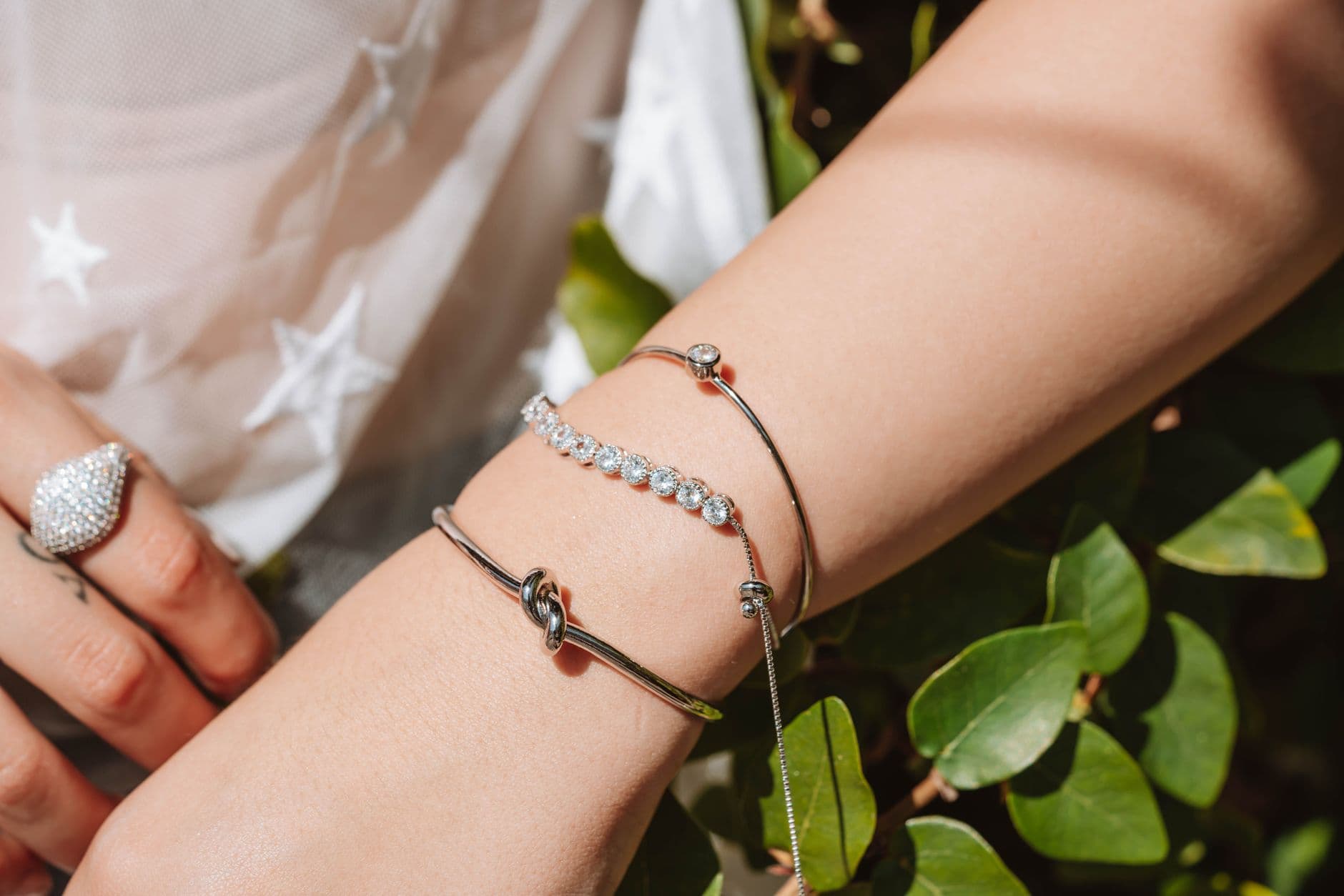
This is where the styling becomes more editorial than decorative. A slim gold chain, a diamond tennis bracelet, and a silver cuff can coexist if one element leads and the others support it. The point is not uniformity. It is rhythm.
Initials, charms, and the return of meaning
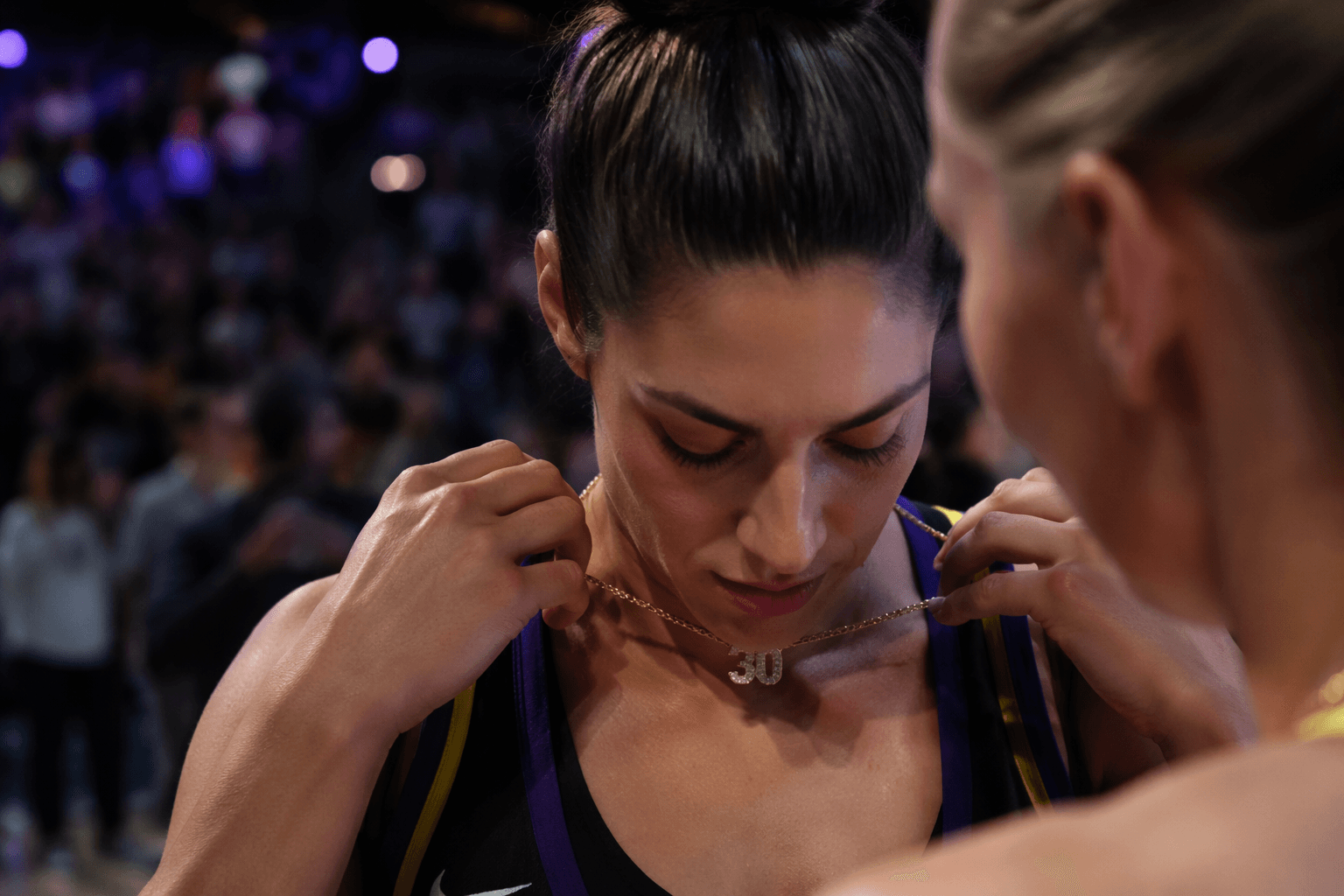
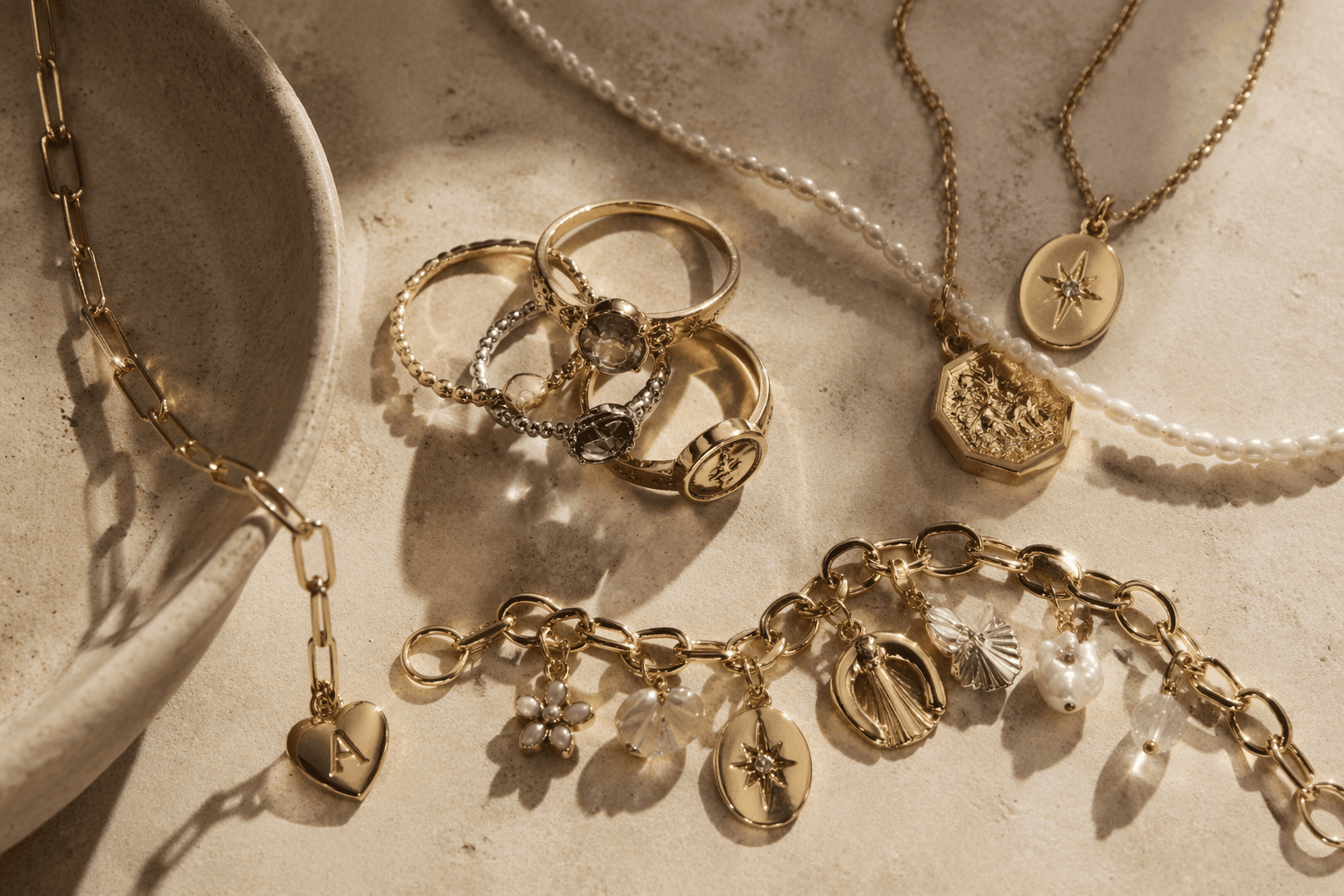
The fresh appeal of personalized stacking comes from specificity. Initials feel intimate without being sentimental overload. A single letter can signal a partner, a child, a surname, or simply the wearer’s own first name, and the best versions are restrained enough to read as design, not declaration. Charms work the same way when they are edited carefully: one birthstone, one emblem, one token with a clear reason for being there.
This is also where craftsmanship matters. A small pendant set in a bezel reads differently from one held in prongs. Bezel settings feel sleeker and more protective, especially on jewelry meant for constant wear, while prongs can create more light and lift around a stone. For stacking, that distinction matters because the jewelry has to work visually in motion and practically against skin, sleeves, and other pieces. The most wearable personal pieces are the ones built for daily friction, not just a flat-lay photograph.
Mixed metals, but with discipline
Mixed metals are one of the easiest ways to make a stack look current, but the difference between chic and cluttered is control. The strongest versions use contrast to sharpen the silhouette, not to create noise. A warm gold chain against a white metal ring can look deliberate and modern if the shapes are pared back and the spacing is considered.
What feels fresh right now is a stack with one dominant tone and one accent tone. What already feels overdone is the indiscriminate blend of every available finish, especially when it is layered with multiple fonts, multiple motifs, and too many dangling elements. Personalization should clarify taste, not obscure it.
What to buy if you want the look to last
De Beers’ data helps explain why buyers are gravitating toward pieces with substance. Average purchase prices for natural diamonds have increased 25%, and non-bridal occasions now make up three-quarters of U.S. diamond demand. That suggests the modern customer is not waiting for a proposal to justify a better stone, and is increasingly willing to invest in jewelry that can move between everyday wear and milestone dressing.
If you want personalized stacking to feel enduring rather than trend-chasing, choose pieces with real material presence. A small diamond pendant, a solid gold ID bracelet, or a single engraved ring will outlast a stack built from thin novelty pieces. The best personalized jewelry has enough integrity to stand alone, which is exactly why Jewelers Mutual’s emphasis on wearability, whether layered, stacked, or solo, feels so apt.
The line between updated and overdone
- Keep one focal point per zone, one necklace, one wrist story, one hand story
- Repeat a material or shape so the eye sees a pattern
- Use negative space; a little bare skin keeps the stack luxurious
- Choose meaning over volume, because one well-placed initial says more than five competing tokens
Personalized stacking looks most convincing when it suggests a life, not a theme park of symbols. A few rules separate the polished from the precious:
What feels overdone is the instinct to make every piece perform at once. Too many charms, too many initials, and too much symmetry flatten the individuality the look is supposed to express. The new stack is emotional, but it is edited. It leaves room for the wearer to be seen clearly.
That is why personalized stacking has emerged as the season’s most convincing response to minimalism. It gives jewelry back its narrative force, while keeping the polish, precision, and permanence that luxury demands.
This article was produced by Prism’s automated news system from verified source data, official records, and press releases, then run through automated quality and moderation checks before publishing. The system is built and supervised by the people who set the standards it runs under. Read our full AI policy.
Know something we missed? Have a correction or additional information?
Submit a Tip