Queer-owned brands reshape engagement rings with custom, gender-neutral designs
Queer-owned labels turned engagement rings into personal signatures, and Automic Gold’s 91-design collection shows how stone, setting, and size now carry the meaning.
In 1947, De Beers copywriter Frances Gerety coined the slogan “A diamond is forever.” Queer couples helped push engagement rings out of the old one-solitaire script and into something more expressive: alternative gemstones, gender-neutral settings, and pieces that feel closer to identity than convention.
From tradition to a personal brief
The diamond engagement ring has always been presented as tradition, but the modern version was also built by marketing. De Beers traces its own history to 1888 and still treats “A diamond is forever” as one of the most durable pieces of category advertising ever made. De Beers puts its current share at around a third of the world’s rough diamonds and has returned to renewed category marketing to strengthen demand for natural diamonds.
When queer-owned and queer-led labels make room for nontraditional stones, multiple metal choices, and rings that do not read as strictly feminine or masculine, they widen a category long shaped by older rules.
The design language has changed
Automic Gold is one of the clearest examples of how this new language is being built. The brand is queer, trans-owned and queer and Indigenous owned, and every piece is handmade in its New York City studio using recycled gold, platinum, and silver, with ethically sourced or recycled natural and lab-grown stones. It also offers ring sizes from 2 to 16, a detail that sounds practical but has outsized emotional weight when a couple is choosing an engagement ring meant to fit an actual body instead of a bridal stereotype.
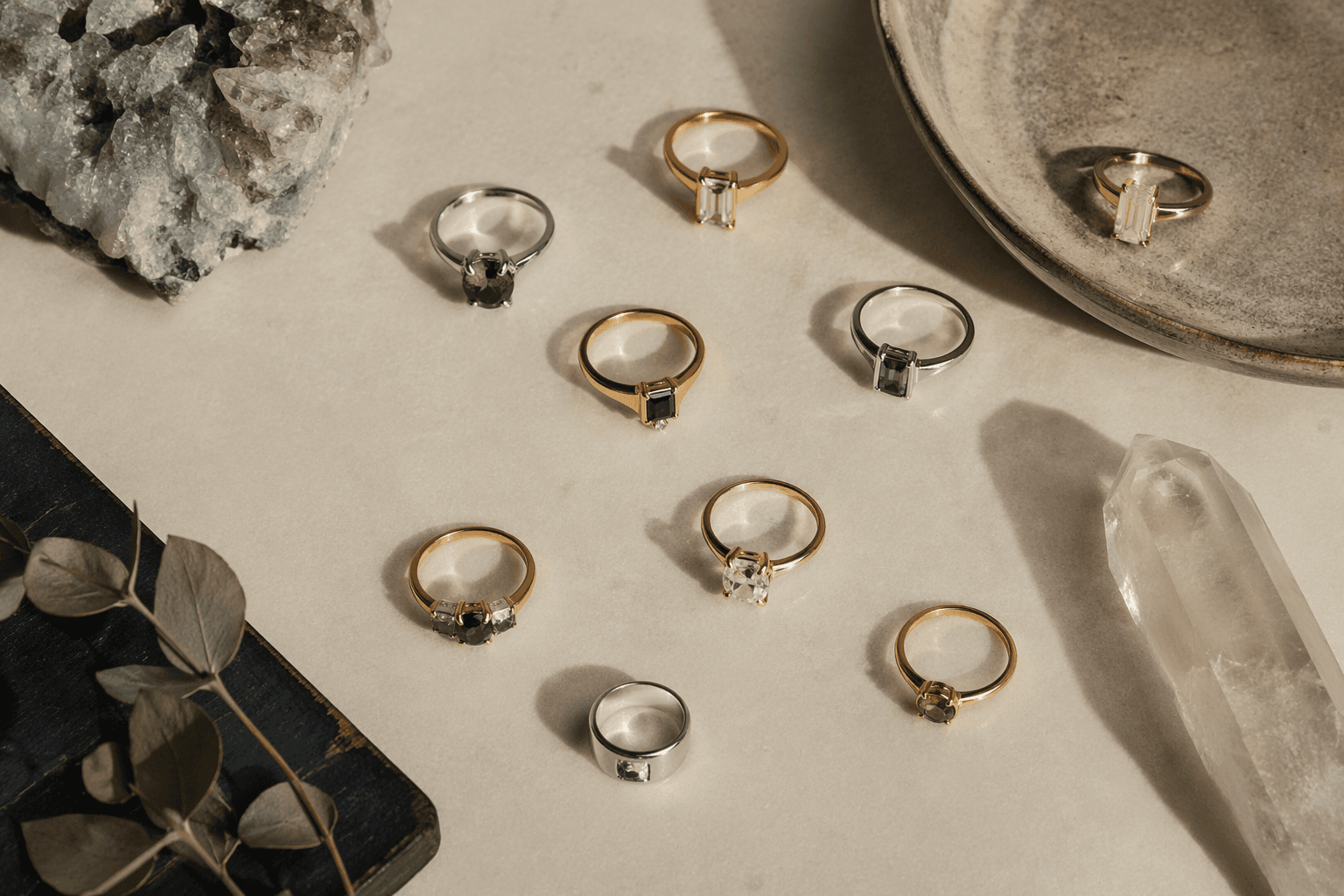
Its engagement collection shows how expansive that idea can be. The lineup lists 91 products, including diamond tension rings, signet rings, bezel-set styles, gemstone bands, lab-diamond options, and designs like the Claddagh, industrial, and leaf-inspired rings that read as talismans as much as bridal jewelry. The collection consists of solid 14k gold or 950 platinum engagement rings that are gender neutral.
How to choose a ring that feels like yours
Start with the story you want the ring to tell, then let the materials follow. If the relationship feels tied to color or meaning, alternative gemstones can do more emotional work than a conventional colorless diamond. If daily wear matters most, a lower-profile setting or a bezel can keep the stone protected, while a tension ring or open design gives the piece a more architectural presence. Choose the stone and setting with intention instead of defaulting to the bridal aisle’s oldest formula.
- If size and comfort are the first concern, look for brands that publish a broad range of fits. Automic Gold offers sizes 2 to 16.
- If symbolism matters, let the shape carry it. A signet ring can feel intimate and modern, a Claddagh can signal heritage or devotion, and leaf or vine motifs can suggest growth.
- If you want flexibility, look for gender-neutral collections with multiple metal and stone options. Automic Gold’s engagement lineup includes 14k gold, 950 platinum, lab diamonds, and gemstones.
Why the shift reaches beyond queer buyers
Ashley McGinty, founder and designer of Chouette Designs, describes fine jewelry as “historically very traditional.” Queer consumers have often been earlier than the mainstream to question what an engagement ring is supposed to look like, and that pressure has widened the field for everyone else. The result is visible in the market now: custom-minded rings, mixed materials, and shapes that do not depend on one couple fitting one script.
That broader appeal reaches beyond LGBTQ customers. A ring with an alexandrite, a salt-and-pepper diamond, or a lab-grown stone can be a better match for color preference, budget, durability, or the way a person actually dresses every day.
This article was produced by Prism’s automated news system from verified source data, official records, and press releases, then run through automated quality and moderation checks before publishing. The system is built and supervised by the people who set the standards it runs under. Read our full AI policy.
Know something we missed? Have a correction or additional information?
Submit a Tip